
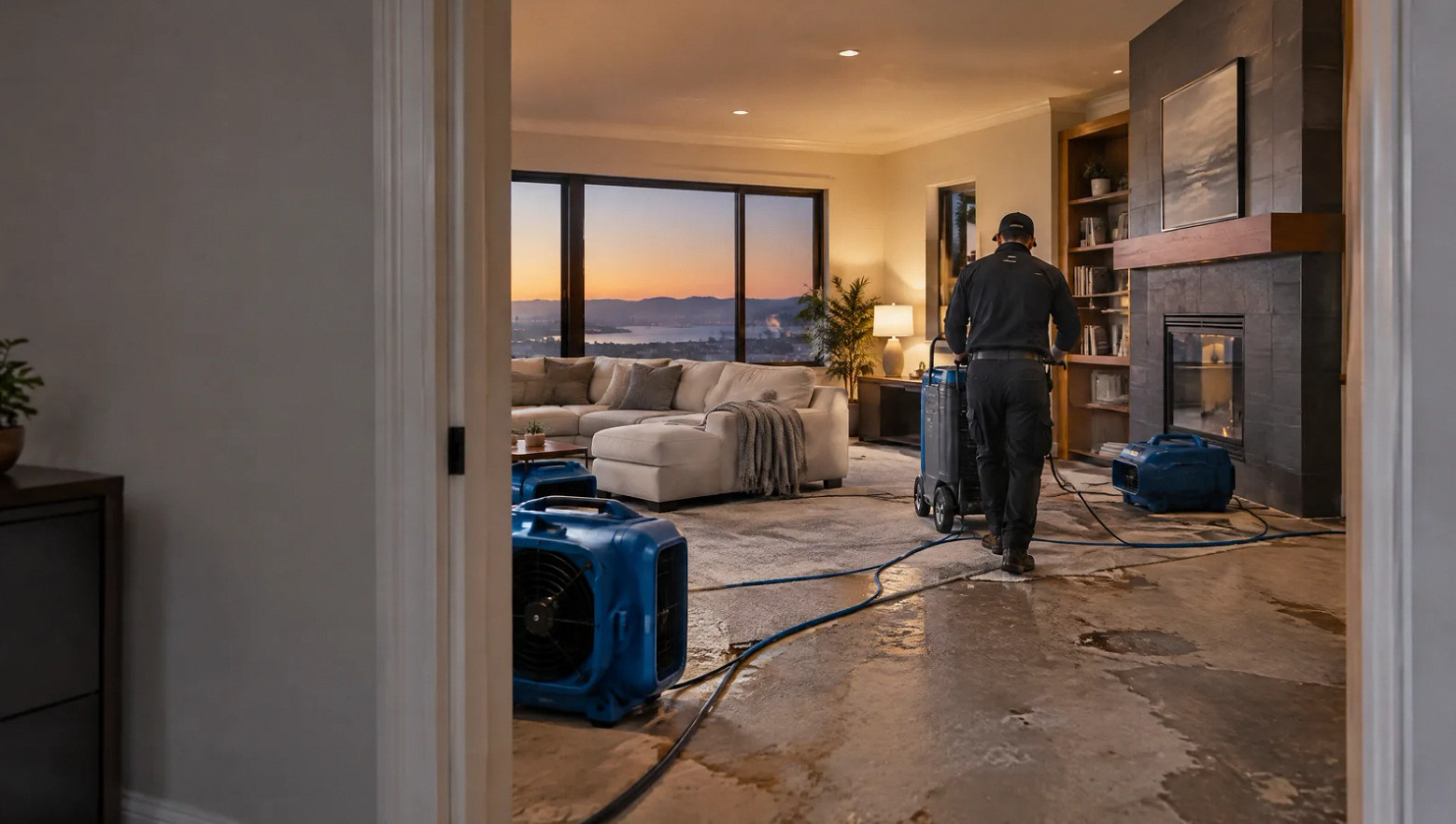

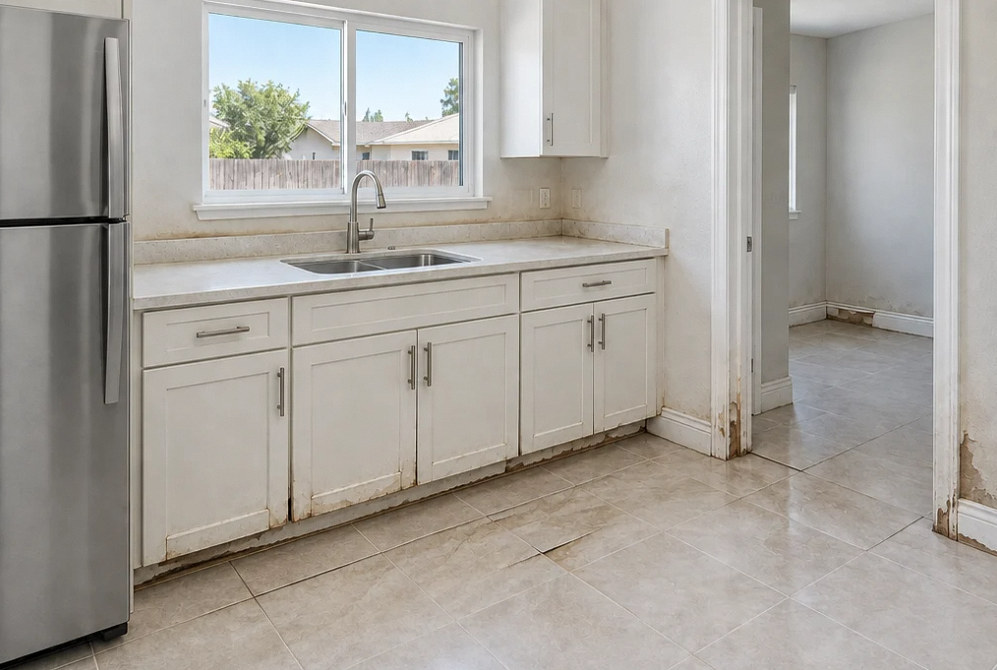
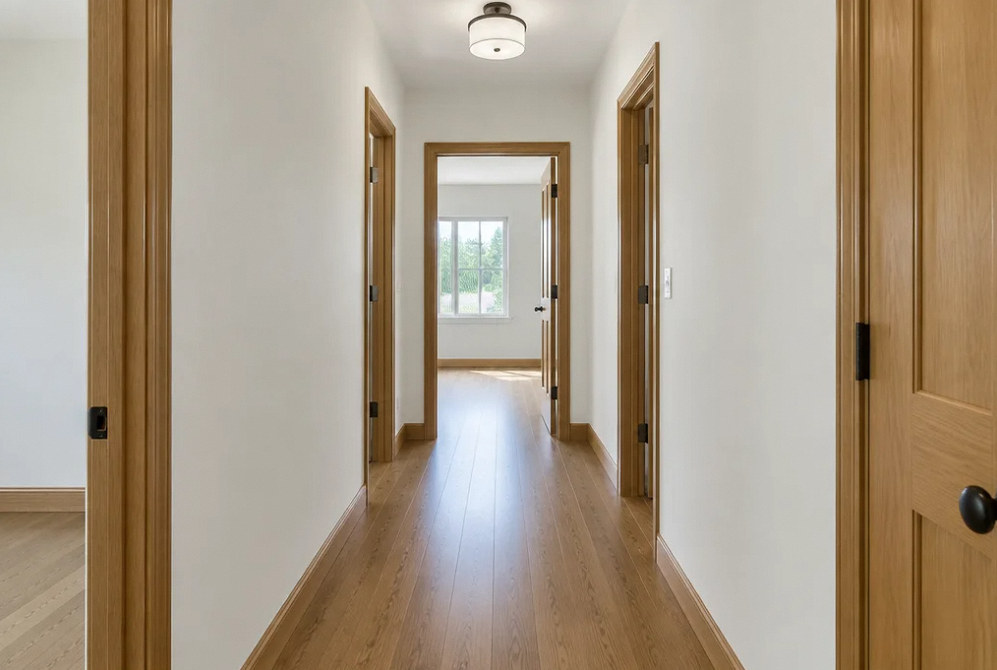
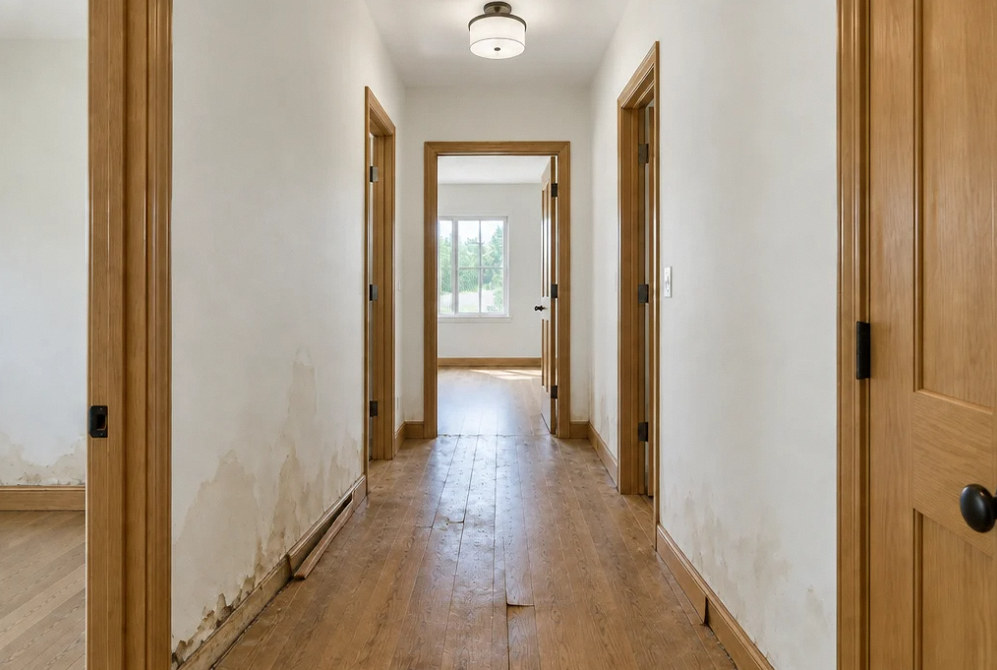
Bay Area home at dusk, YKCA Restoration responds around the clock — illustrative service image

Water Damage

There Is Water In The House. Here Is What To Do.

The first call gathers the source, affected areas and any immediate hazards. Confirm availability and the expected next step. Stop the water only when you can reach and operate the appropriate shutoff safely; keep clear of electrical hazards and sagging ceilings.

Free inspection on restoration work · Licensed C-10 & General B · Answered 24/7

The first ten minutes, before anybody arrives.

In order. If you only get through the first two, that is fine, we will do the rest.

  1. 01

    Kill the water

    Main shutoff is usually where the supply enters the house: garage wall, a side yard box near the street, or under the kitchen sink in older Peninsula homes. Turn it clockwise until it stops. If the source is a fixture, its own angle stop under the sink or behind the toilet is faster.

  2. 02

    Kill the power to that area

    Never enter standing water to reach a panel or touch electrical equipment with wet hands or feet. If the panel or access route may be affected, stay out. Contact the utility or emergency services when there is immediate danger, and arrange assessment by a qualified electrician.

  3. 03

    Photograph before you move anything

    Wide shots of each affected room, then close shots of the source, the water line on the wall, and every damaged item. This takes two minutes and it is the single most valuable thing you can do for your claim. Nobody can photograph it later.

  4. 04

    Lift what you can, leave what you cannot

    Move belongings only when access is safe and doing so will not expose you to contaminated water or electrical hazards. Avoid cutting or removing building materials yourself. Decisions to retain or remove materials should consider contamination, condition, access and appropriate measurements, with photographs where safe.

  5. 05

    Do not throw anything away

    Not the ruined rug, not the failed supply line, not the burst hose. The failed part is the evidence of what happened and the reason the loss reads as sudden rather than gradual. Bag it and set it aside.

What the first assessment should establish.

Describe the observed source, affected rooms and any safety concerns during the initial call. Contamination and material decisions need site assessment; a phone description does not establish the water category or which materials can be saved. Confirm access arrangements and the expected response.

The site assessment should establish safe access, source control, affected materials and hidden areas that may need investigation. Appropriate moisture measurements help define the work. Thermal images show temperature differences and need interpretation and confirmation; they do not directly show water.

Arrange qualified electrical assessment where needed, then use extraction and drying equipment appropriate to the conditions and agreed scope. Confirm the documentation and monitoring plan. Share photographs and records with the insurer only as authorized, and identify any outstanding specialist checks.

Prompt source control and water removal can limit further damage. Whether a material can be dried in place depends on contamination, its condition and access to the wet layers. Time alone does not decide demolition.

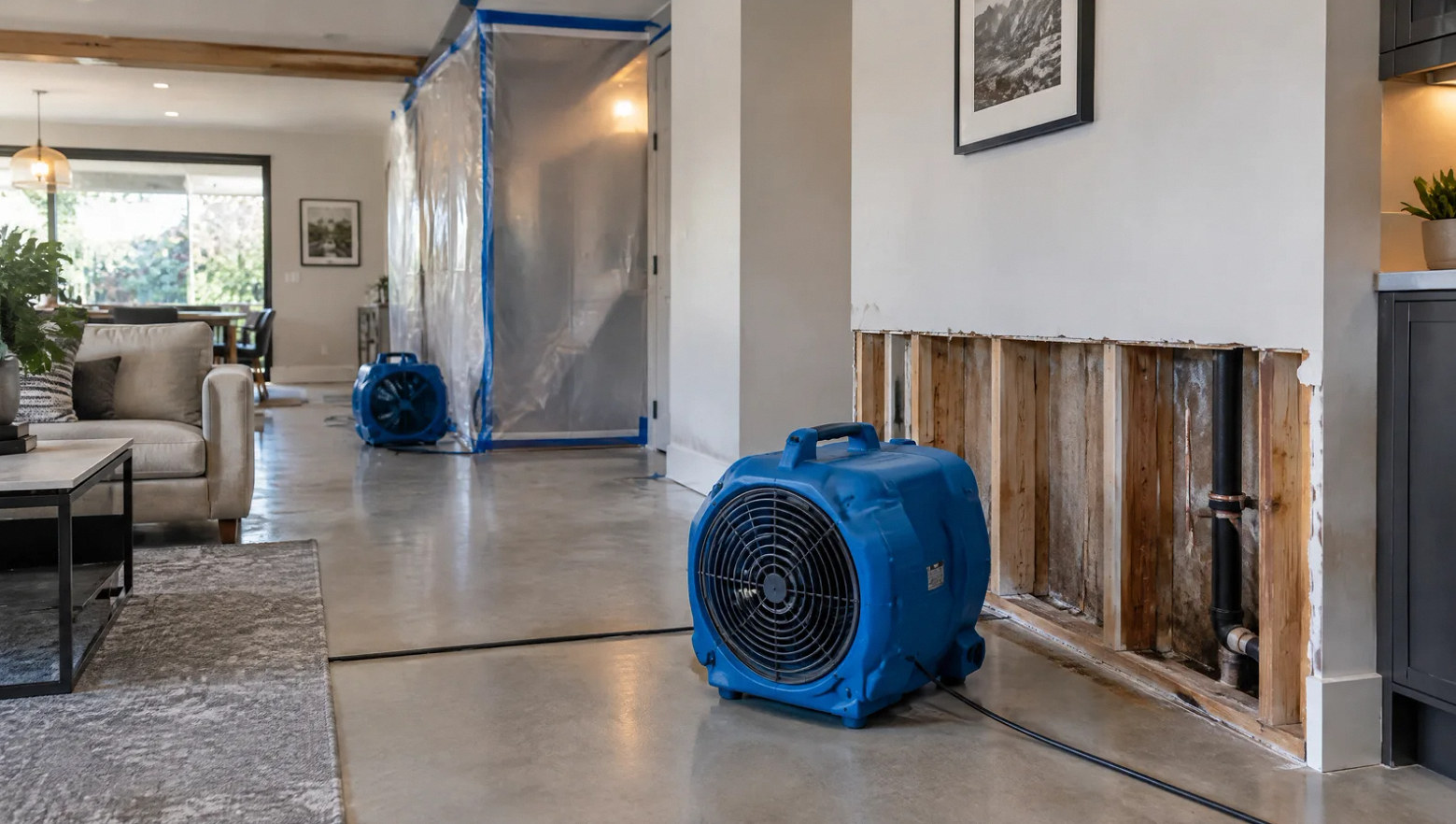
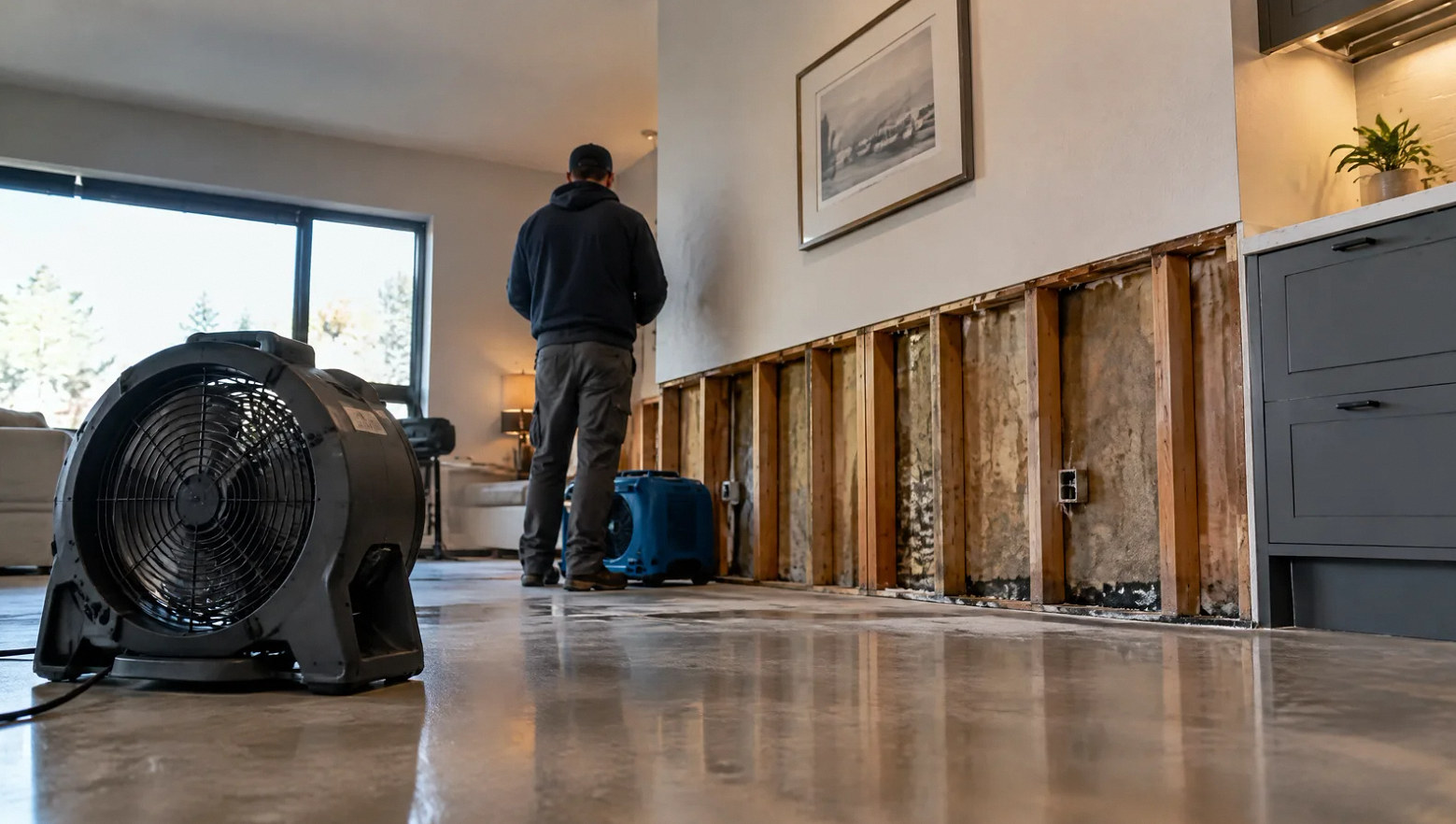
Air mover running inside containment, wall opened to dry the cavity — illustrative service image

Assessment, cleanup, drying and reconstruction follow a documented scope.

Who pays, and for what.

General shape of a standard California homeowners policy. Yours is the one that governs, so read it or ask your agent. We are contractors, not adjusters, and we will not tell you what your policy says.

Sudden and accidental is the phrase that matters

Sudden discharge from a supply line or appliance may be treated differently from gradual leakage or floodwater. Report the observed facts and ask your insurer which terms apply. Retain photographs and the failed part when safe; the contractor does not decide coverage.

Slow seepage is usually excluded

Gradual leakage may be subject to exclusions or limitations, and resulting damage may have separate conditions. Ask the insurer to explain the applicable wording and decision. Documentation should describe observed conditions without assuming how long an unseen leak existed.

Rising water is a separate policy

Creek and storm water entering at ground level is flood, and flood is not part of a standard homeowners policy anywhere in California. It needs NFIP or private flood coverage. Sewer backup usually needs its own endorsement too.

Your deductible is yours

Ask your insurer how the deductible applies to this claim. The estimate and invoice should accurately describe the work and charges. Confirm your expected payment responsibility and any disputed amount with the insurer before relying on a contractor’s promise about reimbursement.

Mitigation and reconstruction are separate phases that may involve different work, approvals and contractors. Confirm each scope, responsible contact and schedule in writing. Insurance payment arrangements depend on the claim and policy. How we document a claim.

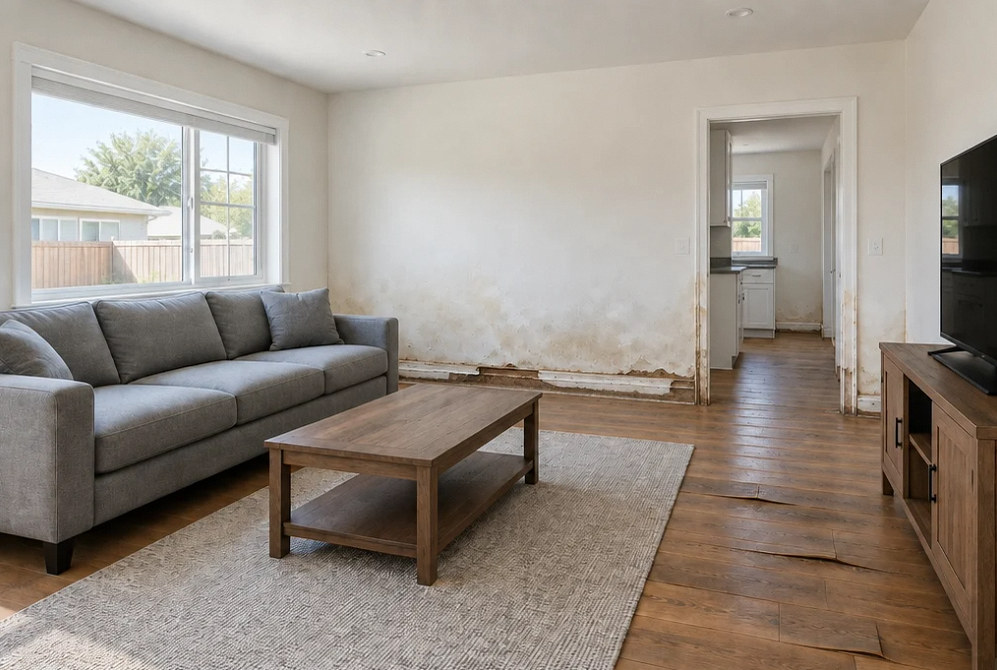
There Is Water In The House. Here Is What To Do. — illustrative service image

Hold Anybody To This

Six ways to spot a bad drying job.

Including ours. If we do any of these on your property, say so and we will fix it.

Equipment arrives without anybody taking a moisture reading first. If nothing was measured on day one, there is no way to prove anything dried later.

No explanation is given for opening or retaining an assembly. Ask how the source, contamination, material condition, access and measurements support that decision.

Equipment is used without an explanation of the drying method, moisture removal and monitoring plan.

No daily log. A drying job with no dated readings is the version of the job carriers question and homeowners cannot audit.

A number quoted over the phone before anybody saw the loss. Nobody can scope a water loss from a description of it.

An offer to "take care of" or "work with" your deductible.

What people actually ask at 2 a.m.

Arrange help promptly and stop the source only if it is safe to do so. Stay out of standing water near electrical equipment, and keep clear of a sagging ceiling. Early action can limit damage; the need for removal depends on what is wet, contamination and material condition, not a fixed number of hours.

Necessary protective work may need to begin before an adjuster’s inspection, but follow your insurer’s reporting and authorization instructions. Document conditions when safe and define the emergency scope before authorizing it. Starting work does not guarantee coverage or reimbursement.

No. In California you choose your own contractor. Carriers keep preferred vendor programs and they will often suggest one, but a recommendation is not a requirement, and it is worth knowing that those programs involve pricing agreements between the vendor and the carrier that you are not party to.

That is a question for your agent, not for a contractor, and anybody who answers it confidently is guessing about your policy. What we can tell you is the shape of the decision: mitigation on a small loss sometimes costs less than the deductible, in which case there is nothing to claim, and we will tell you that plainly rather than talk you into a claim you do not need.

The initial drying estimate should be checked against repeat readings of the affected materials. Hidden layers, contamination and damaged assemblies can change the plan. Agree on the equipment operating and monitoring plan, including nighttime noise and what to do if a unit alarms or power fails. No single duration fits every loss.

DIY suitability depends on the source, extent, affected materials and hazards. Hidden layers or contaminated water warrant professional assessment. Fans alone do not establish that an assembly is dry; the plan should address moisture removal and appropriate measurements.

Next on the same job.

24/7 Emergency Response

Every hour the water sits, the job gets bigger and the bill moves.

Licensed C-10 & General B · CSLB #1158693 · General Liability Insured

Restoration work

A closer look at the work

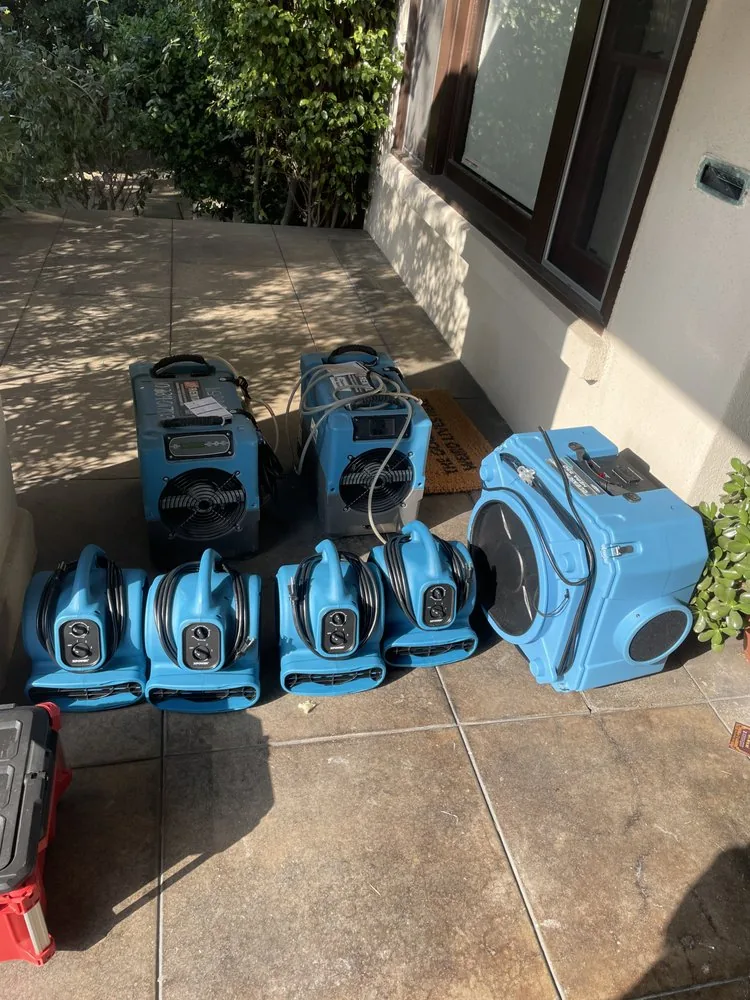
Air movers and restoration equipment arranged outside a building.

Water damage restoration · Detailed answers

Questions worth resolving before work begins.

Can I change restoration companies after drying has started?

A change needs a coordinated handoff: current moisture records, remaining work, equipment removal and replacement, and separate billing for each contractor. Review the existing agreement and communicate with your insurer before assuming costs will transfer.

Read the full guide: Changing Restoration Companies While Your Home Is Still Drying
How do I check whether a referred contractor's demolition scope is necessary?

Request the source history, moisture map, instrument details and a reason for opening each material. Compare safe targeted inspection with the proposed removal; arrange another assessment when evidence is unclear without delaying necessary damage control.

Read the full guide: A Plumber Referred a Restoration Company: Is the Demolition Necessary?
What should I coordinate when water comes from the condo above?

Notify building management and the relevant owners, confirm source repair, arrange access to affected shared assemblies and keep one room-by-room damage map. Ask each insurer and the association to explain its position; source location alone does not establish who pays.

Read the full guide: Water From an Upstairs Condo: Coordinate the Damage Assessment
How do I decide whether a small leak needs professional assessment?

Consider the source, water route, inaccessible layers, physical damage and ability to verify drying. A small visible puddle can conceal a larger affected assembly. Contaminated water, unsafe access or unmeasured cavities call for qualified assessment.

Read the full guide: A Small Water Leak: When Is Professional Restoration Worth an Assessment?
How do I evaluate a proposal to remove kitchen cabinets after a leak?

Separate access needed for drying from damage that requires replacement. Ask which cabinet parts and concealed layers are affected, what can be inspected through limited access, and how countertops, plumbing and finish repairs are included in the scope.

Read the full guide: Kitchen Water Damage: Must the Cabinets and Countertop Come Out?

All water damage restoration guides

Water damage • Homeowner resources

Practical help for the decisions ahead.

01 / KEEP IN MIND

Start your photo record from a safe doorway

Take a wide photograph before close-ups, and label each group with the room and discovery time. Stay out of water near electrical equipment and away from unstable ceilings. If an area cannot be reached safely, mark it as uninspected and ask the responding team to document it.

Read the explanation

02 / KEEP IN MIND

Ask what was checked beneath the surface

When a floor looks dry, ask which layers were evaluated beneath it. Record whether the assessment included the subfloor, adjacent wall bases, or cabinet areas affected by the water. Leave lifting, drilling, and removal to the responsible professionals; a visible finish alone cannot answer every question about the assembly.

Read the explanation
03 / KEEP IN MIND

Resolve the moisture question before repainting

Put paint, trim, and finish choices on the repair list while the affected material is assessed. Ask what evidence supports covering it and whether cleanup or substrate repairs remain. A stain can be a useful location marker for the team; hiding it does not resolve the original moisture problem.

Read the explanation

Contact Us

Request A Consultation

Local Services

We're in your city.

Choose your city and tell us what you need. We'll plan the project around your location.

Choose your city to include it with your project details.

Or call us to discuss your project:

(650) 550-0819

Send your project details to YKCA.

Project: There Is Water In The House. Here Is What To Do.

Request received

Thank you. Your request has been received.

×

Contact Us

For More Info!