
Charging-use brief
Document expected users, time on site and target service needs. Separate the number of connectors from the number of vehicles expected to charge simultaneously.
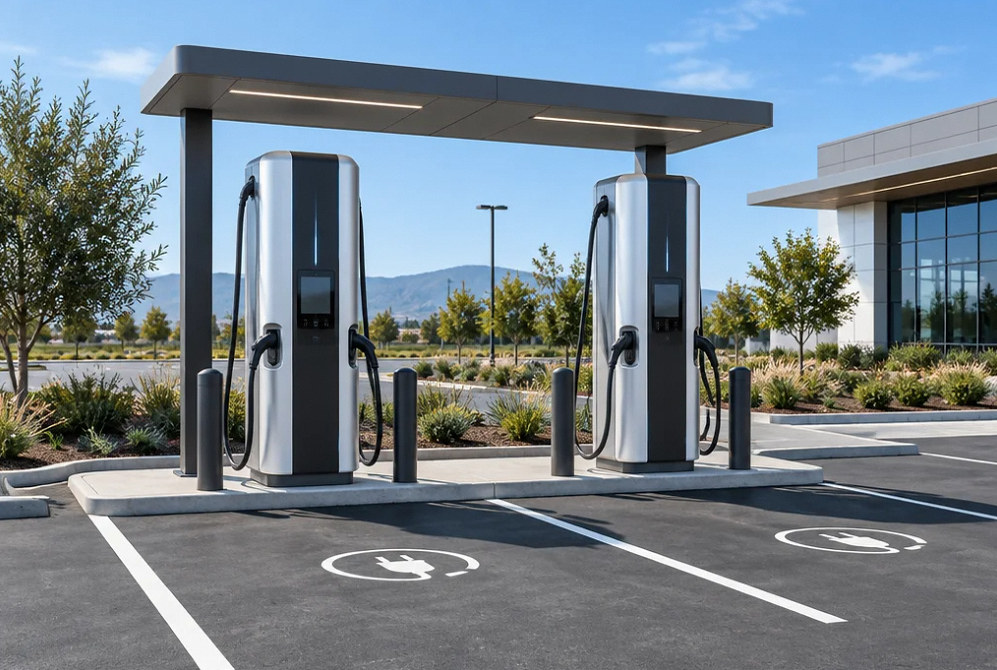
DC Fast Charging
Align the charging need, utility supply and equipment layout before setting the construction scope or a target opening date.
What & Why
DC fast charging projects need a coordinated plan for electrical supply, equipment and the way drivers use the location. A charger’s advertised output does not establish the power available at a property or the charging performance of every vehicle.
YKCA helps define the electrical and construction work with the site owner, utility, design team and equipment provider. Equipment selection, utility commitments and operating responsibilities are resolved as part of that coordination.
Use case
Public stops, destination use or fleet needs
Power
Supply available for the proposed demand
Equipment
Stations, power cabinets and connectors
Operation
Network, support and maintenance plan
Project Scope
Define the dependencies before treating an equipment purchase as a complete project.
Document expected users, time on site and target service needs. Separate the number of connectors from the number of vehicles expected to charge simultaneously.
Engage the serving utility on the proposed load and required supply work. Confirm the information and approvals needed before scheduling energization.
Coordinate the selected charger package, distribution equipment and design requirements. Verify actual product interfaces with the manufacturer or provider.
Plan station access, equipment footprints, vehicle protection and underground routes. Coordinate applicable accessibility and site approval requirements.
Define electrical and civil responsibilities, equipment delivery dependencies, inspection stages and the process for utility connection.
Agree who verifies charging operation, configures the network and accepts the site. Name the party responsible for ongoing service and customer support.
Decisions That Matter
A nearby transformer or a large existing service label does not answer the project’s capacity question. Obtain a site-specific review.
Assess the applicable electricity rate and operating model with the utility and provider, alongside construction and equipment costs.
Decide who handles a station fault, failed payment or damaged cable. Construction handoff and long-term operation are distinct obligations.
Before Your Consultation
A preliminary discussion can start before a charger brand is selected.
Provide the site address, site control, available electrical records and utility correspondence.
Describe likely users, expected parking duration and the intended number of stations and simultaneous sessions.
Identify the owner, designer, charger provider and eventual operator, including any roles still to be selected.
FAQ
DOE’s guidance explains capacity review, equipment, construction planning and operating considerations. The utility supply and installation requirements are established for each site. The CEC’s adopted standards define California charger reporting and reliability duties, including applicability conditions and exemptions.
Your Next Step
Share the property, intended users and equipment information you have. We’ll identify the next feasibility decisions.
Frequently asked project questions
Explore the causes, choices and practical next steps behind common project questions.
Compare relevant arrivals, attempted starts, completed sessions and repeat use over a stated observation period. Few arrivals call for a location and discoverability review; arrivals that leave without starting or after failed starts call for access, price, payment or reliability corrections. Test one suspected barrier and measure again before expanding.
Read the full guide: A fast charger is barely used: find where prospective customers drop out ↗Review California CBC accessibility scoping and layout, the applicable payment methods under HSC 44268.2, retail energy-price and measurement requirements, cable reach, hours and fault reporting. Test the full customer journey. Passing an electrical functional test does not establish that these separate requirements are satisfied.
Read the full guide: A working fast charger can still be unusable: access, cables, and payment ↗Contact Us
Local Services
Choose your city and tell us what you need. We'll plan the project around your location.
Choose your city to include it with your project details.
Or call us to discuss your project:
(650) 550-0819Thank you. Your request has been received.
Contact Us
For More Info!