
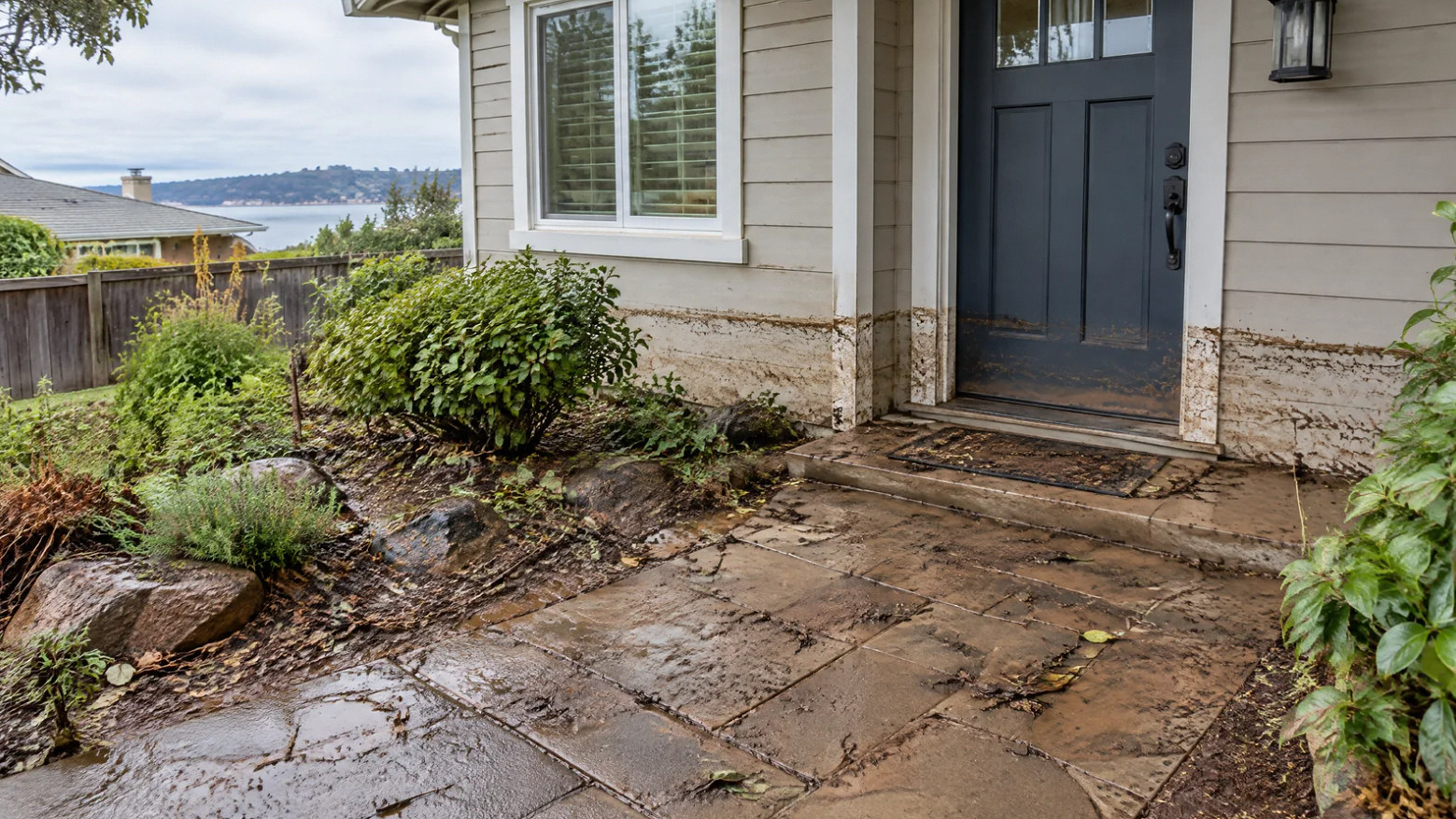
Restoration / Outside water
Water from outside changes the cleanup.
When street runoff or rising water enters a building, the question is bigger than how to dry the floor. Recovery starts with safe access and an assessment of what the water carried in, where it traveled and what it touched.
Start here
Separate these decisions
Reentry and access
Identify who has assessed the structure and utilities, whether local restrictions remain in place and how the crew can reach the property. A dry sidewalk does not establish that the interior is safe.
Cleaning and material removal
List exposed materials and contents, the reason each is retained or removed, and how affected items will move through the building. Drying equipment does not replace the cleanup decisions.
Drying and repair
Keep moisture verification, any needed specialist assessment and reconstruction as identifiable stages. Ask what records will support the decision to close walls or install finishes.
A familiar situation
The rain stopped. Mud is still under the cabinets.
Illustrative scenario
Imagine runoff entered a ground-floor kitchen through a patio door. The tile surface can be wiped, but the toe kicks, cabinet bases and adjoining wall cavities tell a different story. A useful scope accounts for the water path and hidden areas, not just the mud you can see.
The route in matters as much as the damage inside
Record the entry point and visible waterline from a safe location. Note whether water came from the street, an overflowing drain, a nearby slope or a source that has not been confirmed. The repair plan should identify who will assess the entry problem before the next storm.
Keep the loss description factual
Photograph visible conditions when safe, make a belongings list and retain receipts. Report what happened to your insurer and ask which policy provisions apply. A contractor’s use of the word “flood” is not a coverage decision.
Organize the claim records →Restoration concepts
Rebuilding, room by room
Drag the divider to compare before and after, or open a comparison for a closer look.


Drag to compare


Drag to compare
Questions before work begins
A clearer next step
Is outside floodwater handled like a broken supply pipe?
It should not automatically receive the same scope. Outside water can introduce contaminants. The assessment needs to account for the source and exposed materials before cleaning, removal and drying methods are selected.
Can the room be rebuilt as soon as it looks dry?
The handoff should address completed cleanup, retained-material condition and documented drying, together with any required inspections or specialist findings. Appearance alone does not answer those questions.
What if water is still entering during the storm?
Tell the responding team that the source is ongoing. Safe access, changing conditions and the entry problem affect what can be done. Do not enter the affected area to collect photos or belongings while conditions remain unsafe.
