
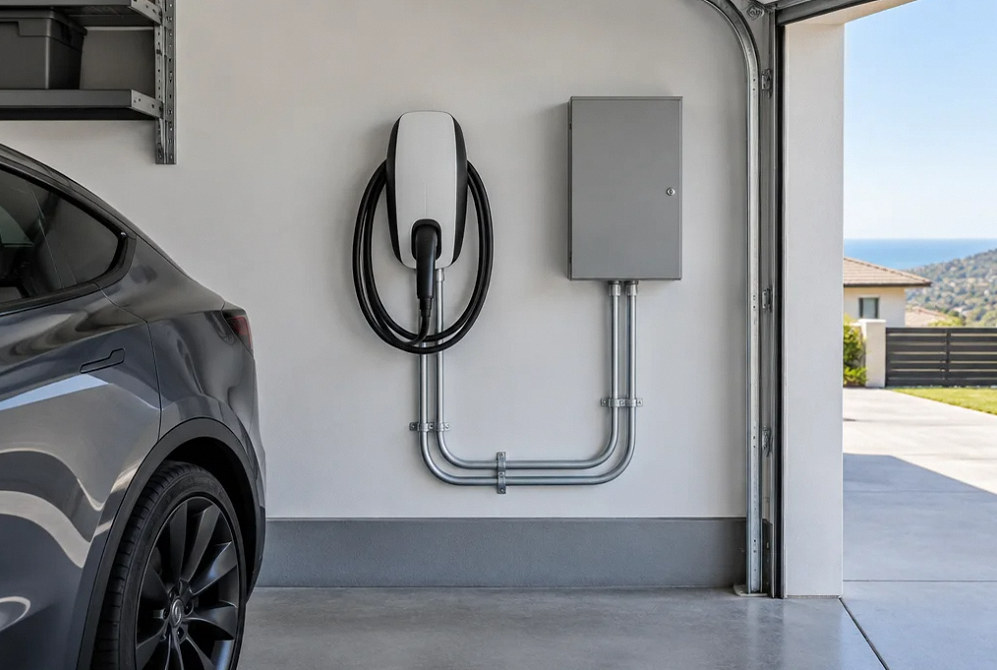
EVEMS & Load Management
Manage EV Charging Around the Home’s Available Capacity
An electric vehicle energy management system, or EVEMS, can control charging within a reviewed electrical arrangement. YKCA helps compare supported controls, the required monitoring and the charging behavior you can expect at home.
What & Why
Scheduled charging and electrical capacity management are different.
A time schedule tells the car when to charge. Capacity management responds to a defined electrical limit or to measured use of the supply. Charging overnight by itself does not verify that the installation can safely support the charger.
Supported systems may set a fixed limit, adjust one charger using supply measurements or share an allocation across multiple chargers. Tesla documents these as different features with their own compatibility limits. Specify the function you need and verify the actual equipment combination.
Useful details for the first assessment
Charger models
Exact models and number of vehicles
Charging needs
Daily mileage and typical parking periods
Monitored supply
Main service or the feeder the system must protect
Other loads
Appliances that may run while charging
Project Scope
A clear scope for this part of the charging project.
Agree on the equipment, electrical work and completion checks before authorizing installation or repair.
Capacity assessment
Identify the supply constraint and charging need. Confirm that a control-based approach addresses the actual problem.
Control approach
Select the supported fixed, dynamic or shared arrangement and document its electrical purpose.
Equipment compatibility
Verify charger, meter, sensors, controller and software requirements as one system.
Monitoring and installation
Plan sensor and equipment locations and the required wiring or communications route.
Commissioning checks
Verify the configured limits and supported behavior during changing load and relevant communication or equipment faults.
Owner instructions
Explain variable charge rates, priority settings and the conditions that require review before adding equipment or changing limits.
Project concepts
See the possibilities for your space
Drag the divider to compare before and after, or open a comparison for a closer look.
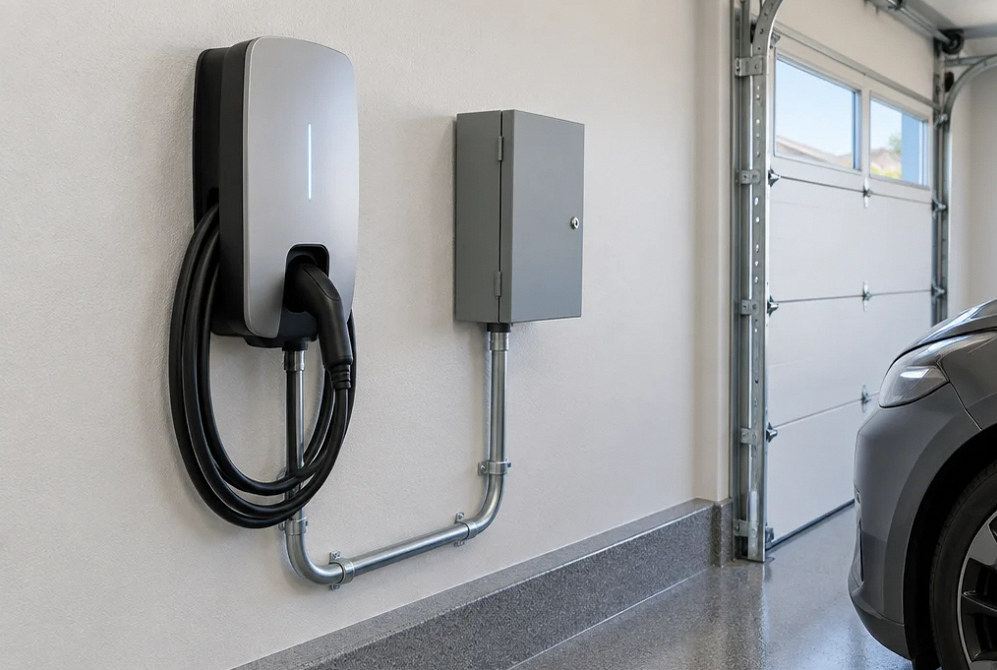
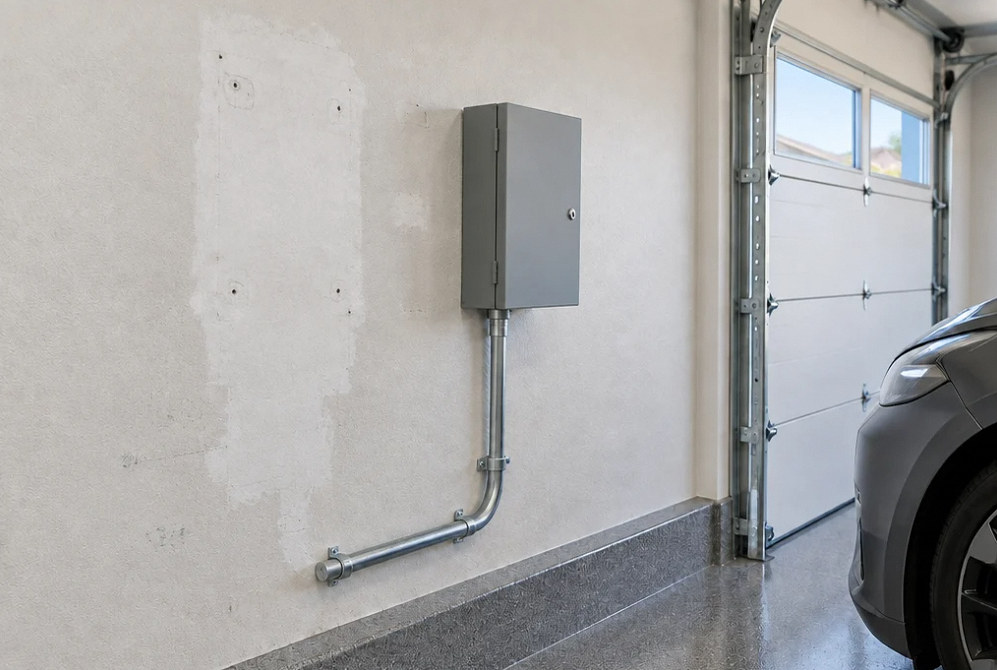
Drag to compare
Before You Choose
Choose the function, then verify the supported combination.
Compare the available choices against the vehicle, property and charging schedule.
| Question | What to establish |
|---|---|
| Fixed charging limit | A commissioned maximum supported by the electrical design. |
| Dynamic capacity management | Monitoring and control that respond to other use of the supply. |
| Shared charging allocation | A supported arrangement dividing available charging power between vehicles. |
| Time scheduling | Convenient charge times; not a substitute for an electrical capacity solution. |
Estimate Planning
What changes the electrical scope and cost?
Ask for the actual configuration, included work and any conditions that still need site confirmation.
- Existing supply arrangement and the required assessment
- Compatible metering, sensors and control hardware
- Wiring or communication routes and panel access
- Commissioning, documentation and any additional charger setup
FAQ
EVEMS & Load Management: questions before work begins.
Will my charger always run at its maximum setting?
No. Managed charging can slow or pause according to the system’s design and other electrical use. Discuss whether the available charging time still meets your daily needs.
Does setting an overnight schedule make load management unnecessary?
A schedule is not the same as a verified capacity-control arrangement. It does not account for every other load that could operate at the same time.
Can every smart charger do this?
No. Verify the exact model and supported feature. App access or Wi-Fi does not by itself establish supply monitoring or an approved control arrangement.
Can I mix different brands in a power-sharing group?
Only when the proposed system explicitly supports that combination. Ask for the manufacturer’s documentation for the complete arrangement rather than assuming all connected chargers communicate with each other.
What happens if a sensor or communication link fails?
The installer should verify and document the selected system’s supported failure behavior. A fault must not be treated as permission to exceed the reviewed electrical limit.
Related EV charging services
Technical references · reviewed October 3, 2026
Your Next Step
Discuss your evems & load management needs.
Share your charger model, parking location and the electrical question you need to resolve. We can identify the next assessment or installation step.
