
Site & evening-use brief
Identify dark areas, preferred views and spaces where light should be kept low. Discuss the locations visible from bedrooms and neighboring properties.
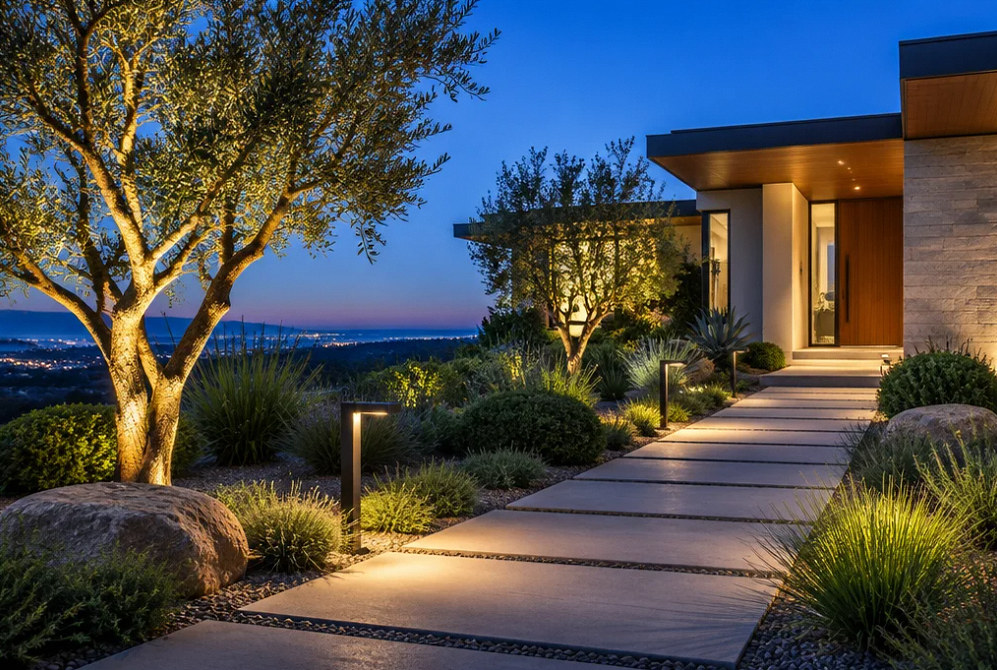
Landscape Lighting
Light the paths, steps and spaces that matter. Coordinate the fixtures, power and controls with the landscape around them.
What & Why
A useful landscape lighting plan starts with movement through the property: the front walk, changes in level, outdoor dining and the features you want to see. Fixture placement should also consider the view from inside the house and neighboring windows.
YKCA helps define the electrical installation for a new design or an existing system that needs attention. The scope includes the chosen fixtures, power arrangement, control expectations and the route through finished landscaping.
Locations
Paths, steps, planting and gathering areas
Appearance
Brightness, beam direction and glare
Power
Existing supply and proposed equipment
Controls
Schedules, zones and manual override
Project Scope
Select the visual effect and coordinate the electrical details that support it.
Identify dark areas, preferred views and spaces where light should be kept low. Discuss the locations visible from bedrooms and neighboring properties.
Coordinate fixture type and position with paths, planting growth, irrigation and landscape maintenance.
Assess the supply and the proposed transformer or line-voltage equipment. Match the equipment to the installation environment and selected fixtures.
Account for cable length, connected load and voltage drop in low-voltage design. Identify routes through planting, hardscape and existing sleeves.
Define which areas operate together and how schedules are adjusted. Confirm the desired control functions against the selected equipment.
Include final aiming, control setup and an explanation of system operation. Record the equipment and routes needed for future maintenance.
Decisions That Matter
A comfortable path and a broad security-lit area are different goals. Discuss brightness and glare where people actually walk or sit.
Select the arrangement for the site and fixtures. A low-voltage system still needs a suitable power source and correctly planned cable runs.
A dark section may involve a supply, connection, control or fixture issue. Diagnose the existing system before deciding what needs replacement.
Before Your Consultation
A simple annotated site plan is enough to explain the desired result.
Mark the front walk, steps, patio and planting or architectural features you want illuminated.
Share available fixture, transformer and controller information and note which areas are not working as expected.
Identify upcoming irrigation, paving or planting work that could change the best route or fixture positions.
FAQ
Manufacturer guidance explains lighting layouts and the effect of cable length, load and voltage drop. The final system follows the selected equipment’s requirements.
Your Next Step
Tell us which paths and spaces you want to use after dark, and what you would like to change in the existing lighting.
Frequently asked project questions
Explore the causes, choices and practical next steps behind common project questions.
Compare suitable shields or shrouds, lower-output fixtures, beam distribution, placement and supported dimming. Warm color temperature alone does not reduce brightness. Do not use tape or an out-of-range transformer tap as a dimmer. Check the path, steps and nearby viewpoints after dark before accepting the result.
Read the full guide: Your Path Lights Are Bright but the Path Is Hard to See: Fix the Distribution ↗Check the displayed time, AM/PM, date and daylight-saving setting. Mechanical clocks without backup can stop during an outage; astronomical timers also need the correct location, time zone and offsets. Identify any photocell, override or upstream control, then verify both scheduled transitions. Internal components may carry line voltage even when the fixtures are low voltage.
Read the full guide: Landscape Lights Turn On at the Wrong Time: Separate Clock, Sensor and Override ↗Stop using damaged equipment and document the affected zone and yard-work area. Have the cable, actual cover, connector suitability and route assessed. A point repair may leave the same conflict with edging or digging. Coordinate the applicable 811 process and private-line locating, then record the repaired route and verify fixture operation and aiming.
Read the full guide: Landscape Lights Failed After Yard Work: Protect the Repair and the Next Season ↗Contact Us
Local Services
Choose your city and tell us what you need. We'll plan the project around your location.
Choose your city to include it with your project details.
Or call us to discuss your project:
(650) 550-0819Thank you. Your request has been received.
Contact Us
For More Info!