
Materials and repairs · 5 min read
Water Under Vinyl, Tile, and Cabinets
A homeowner's guide to questions about concealed floor layers, cabinet areas, access, and the handoff from drying to repairs.
YKCA · References checked 2026-09-27
Start with the essentials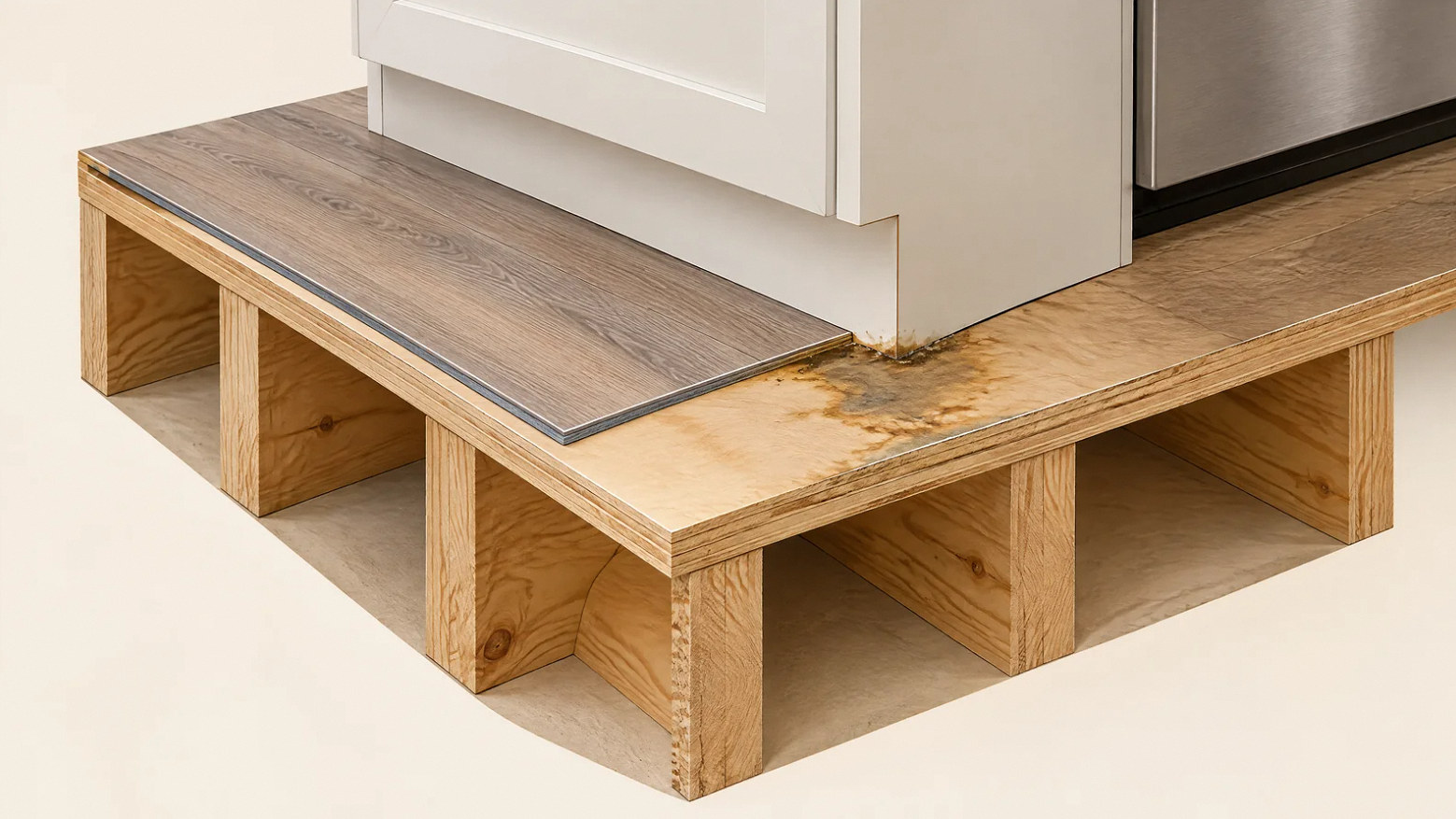
At a glance
Three things to keep in view.
Identify the layers
Find the flooring product and installation records when available. The covering, intermediate layers, and supporting floor need an assessment that identifies their differences.
Define access work
Distinguish material removed for access from material replaced because of damage. Include who restores panels, trim, and any affected appliance connections.
Prepare the installation
Share drying findings with the flooring installer before ordering materials. Clarify the intended product's preparation requirements and who decides readiness for installation.
The key point
When water may have traveled beneath a floor or cabinet, ask for an assessment of the affected assembly rather than relying on the visible surface. The useful plan identifies the layers, explains how they will be evaluated, and separates access for drying from the later decision to repair or replace finishes.
A small puddle beside a dishwasher can create a larger question: where else did the water go? You may notice a seam change, a swollen cabinet edge, or water appearing when someone steps on a plank. Record the observation and arrange an assessment rather than assuming the visible area defines the damage.
The first conversation should establish what is known about the floor and cabinetry. Product names, installation records, and source-repair details can help the responding team ask better questions.
The visible flooring and the assembly are different
A flooring product can resist water on its face while water from a leak reaches seams, edges, or an area underneath. The installed assembly includes the covering, any intermediate layers, and the supporting floor. At cabinets, water may also reach spaces below or behind the visible panels.
An intact covering can limit the exposed surface available for drying a layer beneath it. A dehumidifier changes the room air, but its presence alone does not establish a drying path through that assembly. This is why identifying the layers and assessing access matter.
EPA's clean-water table specifically includes checking and drying the supporting floor beneath carpet or other flooring. A product's water-resistance claim does not answer whether that underlying material is wet, sound, or accessible.
Sources for this section
Gather information without disturbing the installation
Look for spare flooring boxes, purchase receipts, installation photographs, or a manufacturer name on your paperwork. Share them with the team. If records are missing, say so; a guess about whether a floor is laminate or engineered wood can complicate the discussion.
Photograph visible changes from a safe place, including the same area from a wider view. Record when you noticed them and whether they changed after the source repair. Do not remove trim, drill cabinets, or pull flooring simply to improve the photographs.
The drying method must reach the wet material
If a proposal says the floor will be dried in place, ask what evidence will show the relevant layers are responding. If removal is proposed, ask what the opening is intended to establish and which materials would be retained.
A useful explanation connects the method with the particular assembly. Ask how equipment placement, access, and measurements relate to that location. Also ask what happens if the first approach does not resolve the uncertainty. The contingency should be a described decision, not an unexplained extension of equipment rental.
Separate cabinet access from cabinet replacement
Imagine a dishwasher supply leak beside a kitchen island. The visible floor has been wiped, but a lower cabinet panel has changed shape. Ask the team to document where water traveled and what access is needed. Then have them evaluate the changed panel separately: can it remain in service, or does its current condition call for repair or replacement?
Request a written repair option for anything removed to gain access. Who reinstalls the panel, finishes exposed edges, and handles appliance removal or reconnection? These organizational questions help you compare proposals without assuming that every access opening requires a completely new kitchen.
Plan the flooring handoff before ordering materials
Give the repair contractor the findings from the drying team. Ask the installer which product-specific conditions and tests must be satisfied before the proposed floor or adhesive is installed. Record who is responsible for that acceptance decision.
Keep cosmetic matching separate from moisture assessment. A discussion about matching a discontinued plank can affect repair choices, but it should not replace an explanation of the affected area. Ask for each option's boundaries, including transitions, baseboards, cabinets, and any work excluded from the price.
Common questions
Will a dehumidifier in the room prove the floor underneath is dry?
No. Ask for the material evidence for the relevant layers. EPA distinguishes instruments that measure room humidity from instruments used to evaluate materials. The equipment's presence does not describe what was checked or whether an inaccessible location remains unresolved.
Sources for this section
Mold Remediation in Schools and Commercial Buildings Guide: Chapter 3
How can I compare a partial-removal proposal with a full replacement?
Ask both contractors to use the same source-repair record, assessment findings, and floor identification. Have each separate necessary access, material condition, product matching, and finish work. You can then see whether the difference is technical scope, appearance, or an unanswered question.
Sources and further reading
References checked 2026-09-27. Guidance depends on the loss, affected materials, scope of work and property conditions.
Discuss the next step for your property.
Share what happened, which areas are affected and the decisions you need help with.
Discuss water damage restorationRelated decisions
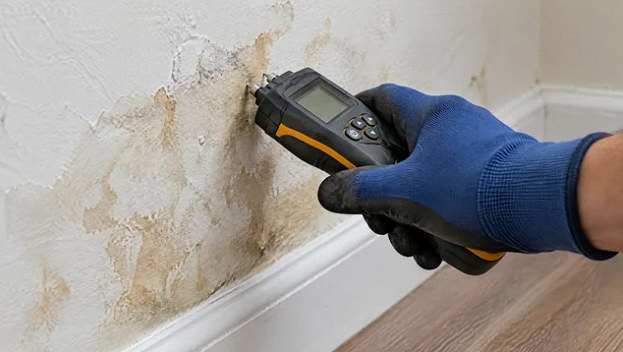
First decisions · 4 min read
Hidden Moisture: What Meters and Thermal Cameras Can Tell You
Learn how to read a moisture report, distinguish instrument scales, and ask useful questions about concealed walls, floors, and ceilings.
Read the guide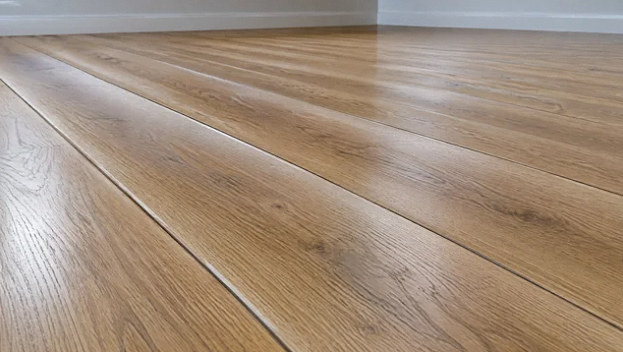
Materials and repairs · 5 min read
Hardwood Floor Cupping After Water Damage
What to ask before sanding or replacing a wet wood floor, including moisture through the boards, the subfloor, and repair options.
Read the guide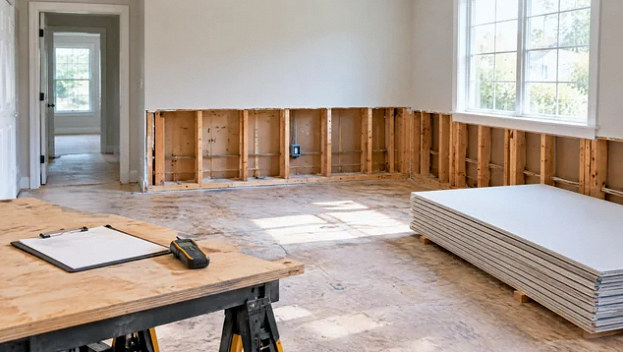
Materials and repairs · 5 min read
Before Rebuilding: How to Review the Drying Handoff
Ask for final material readings, remaining limitations, source-repair records, and a clear handoff before new finishes cover the work.
Read the guide