
Restoration / Water removal
The puddle is gone. The work may not be.
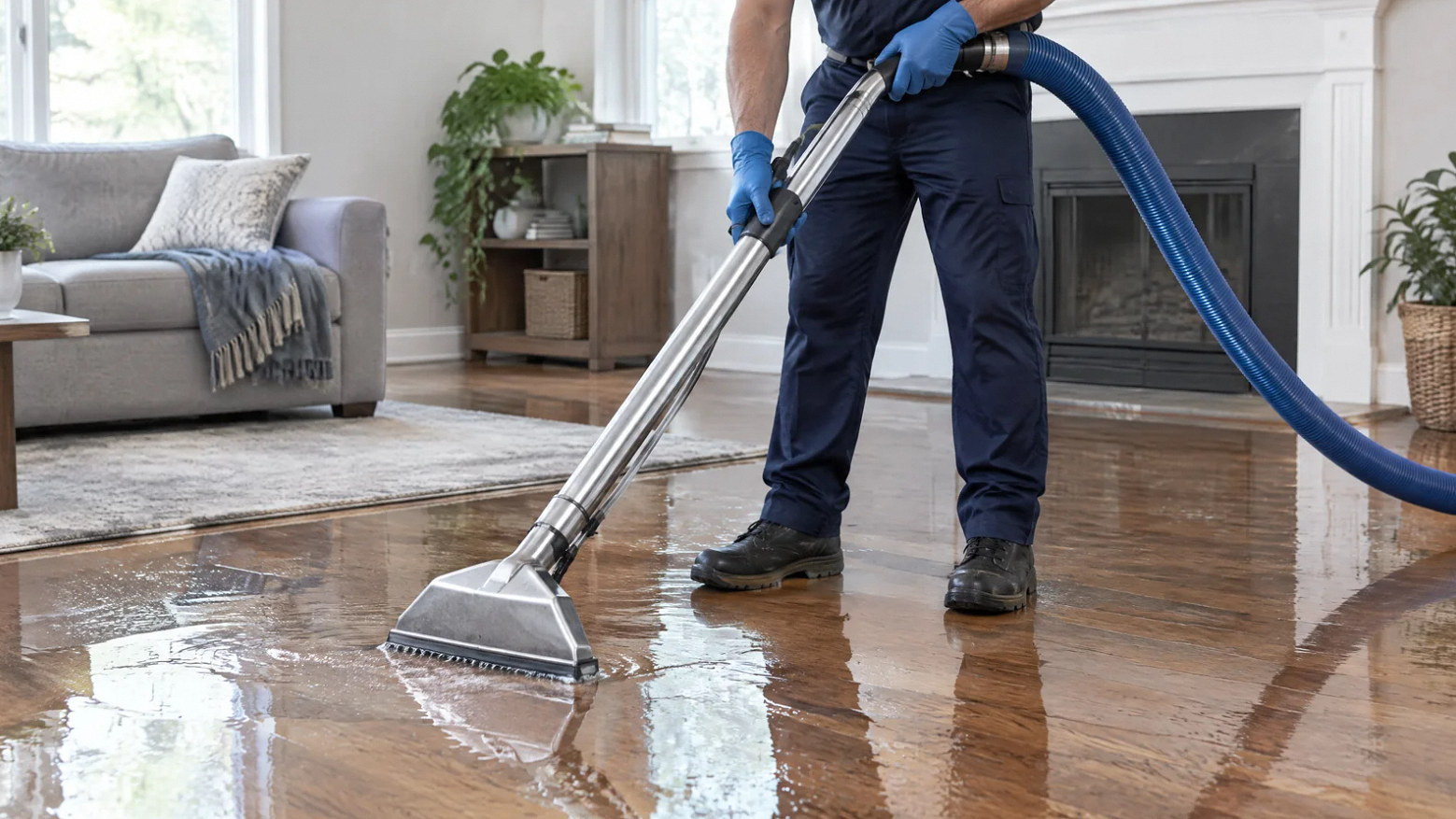
Water extraction removes liquid water that can be collected from affected areas. It is an early step in recovery, with its own access, contamination and equipment decisions. A floor that looks clear still needs a check for water beneath it.
Start here
Three decisions before equipment starts
Can the area be accessed?
Describe standing water, affected electrical outlets, stairs, restricted doors and anyone still inside. Access and electrical safety come before bringing equipment through the room.
Where did the water come from?
A supply leak, drain backup and outside flooding need different plans. Tell us what you observed; an unclear source should be recorded as unknown, not guessed from the color of the water.
Where can the water have traveled?
Name the floor covering, adjoining rooms and any lower level. These details help define which areas need inspection even when the visible puddle is small.
A familiar situation
The washer stopped. The hallway is still wet.
Illustrative scenario
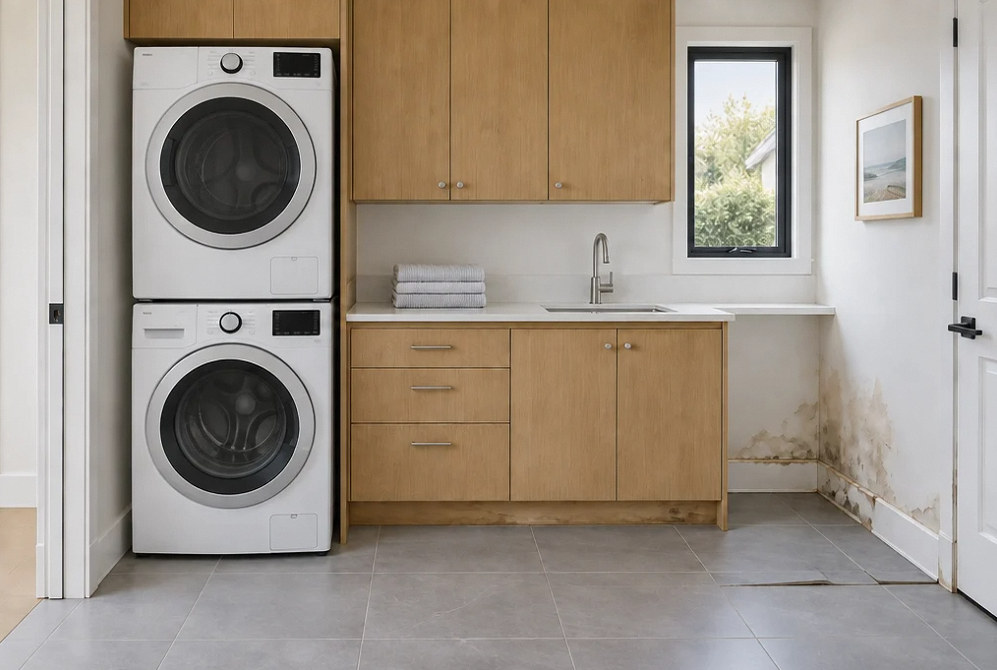
Imagine a supply hose has failed, leaving water on tile and along the carpet edge. Removing the visible water is one task. Checking the pad, baseboards and rooms below is another. The extraction visit should leave you with an account of both.
What belongs in the extraction scope
Ask for the affected areas, planned water-removal method, access arrangements and handling of contents to be listed. The scope should also identify source repair or specialty work that is being arranged separately. Equipment and the extent of work depend on the actual loss.
What should follow water removal
A recovery plan should distinguish what has been extracted from what remains wet. Ask how retained materials will be checked, what drying or cleaning is proposed and who will review progress. Extraction alone is not a statement that walls, floor layers or the building are ready for repair.
See how structural drying is evaluated →Restoration concepts
Rebuilding, room by room
Drag the divider to compare before and after, or open a comparison for a closer look.


Drag to compare

Drag to compare


Drag to compare
Questions before work begins
A clearer next step
Is water extraction the same as full water damage restoration?
No. Extraction addresses removable liquid water. A complete restoration scope may also include source repair, cleaning, material removal, controlled drying and reconstruction. Agree which of those stages is included in the work you authorize.
Will every wet floor need to be removed?
There is no answer that fits every floor. The material, layers beneath it, contamination and condition need assessment. Request the reason for retaining or removing each affected assembly instead of treating the visible surface as the entire floor.
Can you promise when a crew will arrive?
Call with your address, access conditions and the current situation. Availability and the proposed next step need confirmation for your property; this page does not establish a dispatch or arrival time.
