
Restoration / First contact
Start with people. Then plan the property.
A late-night leak, a sewer backup and a fire loss do not start with the same crew or equipment. The first conversation should establish immediate hazards, the current condition and who can authorize access, then confirm the next practical step.
Start here
Which call comes first?
Immediate danger
Fire, an injury, a suspected gas leak or an unstable building needs emergency responders. Move to safety; the restoration conversation can follow.
An active property problem
If everyone is safe, report whether water is still entering and whether the source is known. State access restrictions and utility concerns so the next step can be planned.
Damage after the event
If the source has stopped, describe affected rooms and materials, any specialist assessments already completed, and what remains uncertain. Photos can help when they can be obtained safely.
A familiar situation
A tenant calls. You are across town.
Illustrative scenario
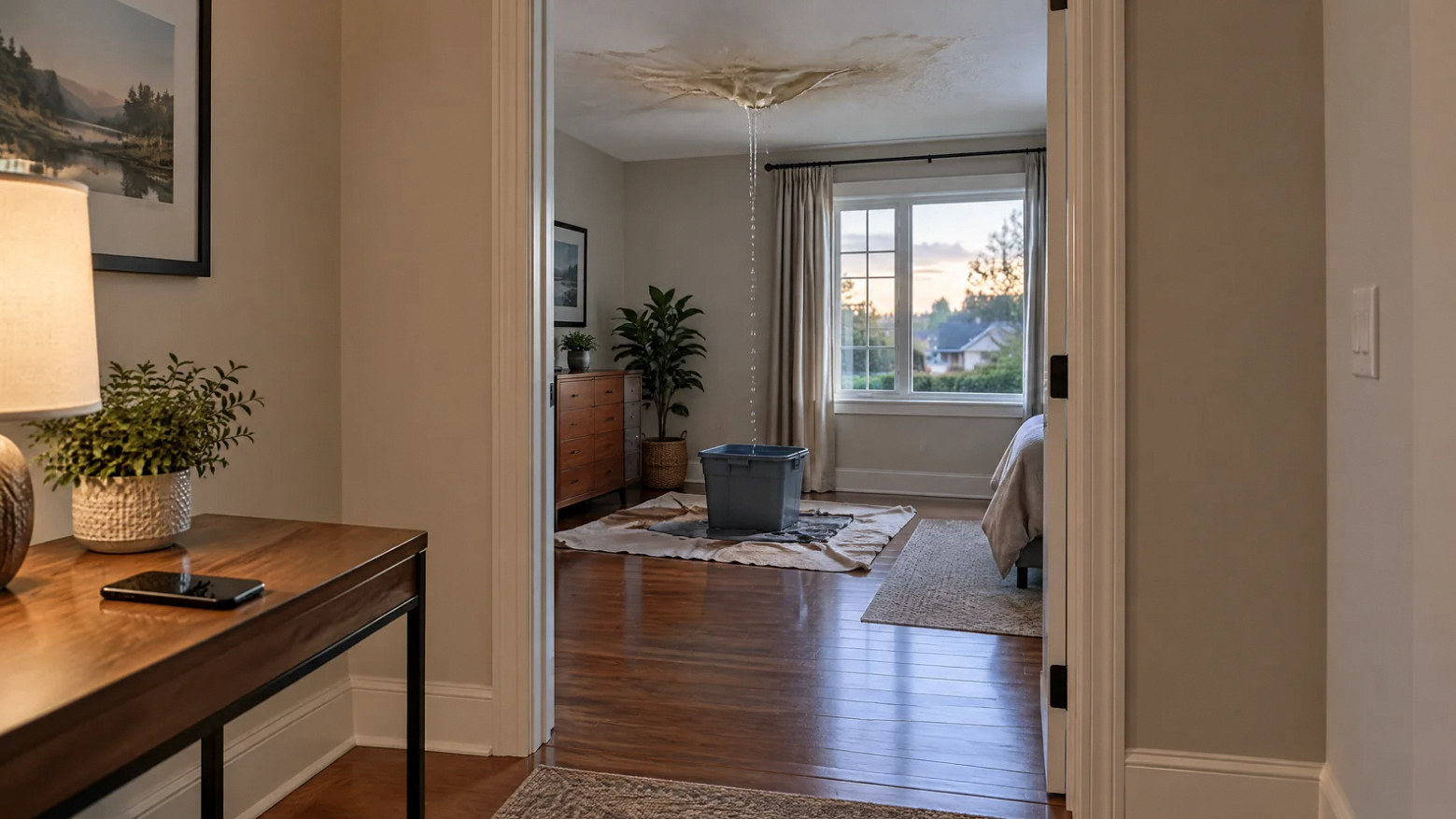
Imagine a tenant reports water spreading from the utility room. You do not yet know the source or whether the area is safe. Start with where the occupants are, what they can observe without entering and who can meet the responding team. Do not ask them to investigate through standing water.
What to have ready when you call
Give the property address, a callback number and your role as owner, tenant or manager. Explain what happened, when it was first noticed and whether someone can provide access. If you do not know the source or extent, say so. A clear unknown is more useful than a confident guess.
What the next step should confirm
Before treating the call as a scheduled visit, confirm availability, the contact person, access arrangements and any proposed assessment or work. Ask what needs separate authorization and how charges will be explained. Call intake does not establish an arrival time or authorize every stage of recovery.
Follow the response with a written scope
Once conditions can be assessed, define the initial stabilization work and the later decisions about drying, contents and reconstruction. Keep the job contact, records and agreed next review together so the handoff is clear even when the owner or manager cannot be on site.
Questions before work begins
A clearer next step
How is this different from emergency water extraction?
Emergency response starts with intake, safety and coordination. Extraction is the specific removal of liquid water after the loss and access conditions have been assessed. A fire or contaminated-water event may need a different first scope.
Does “24/7 Emergency” mean a guaranteed arrival time?
It describes intake of calls and inquiries. Crew availability, access and the proposed response must be confirmed for your location and situation. No fixed arrival time is promised here.
Should I use the online form for immediate danger?
No. Move to safety and contact emergency services. For property restoration, call to discuss the situation. The form below is a local preview and does not send a request.
