
EV Charging — Multi-Family & HOA
EV Charging for Condos, Apartments & HOA Communities
Whether you manage a 40-unit condo complex or own a single deeded stall in a shared garage, our licensed C-10 electricians build the right charging solution — shared infrastructure, individual stall circuits, sub-metering, and load management.
The Shared-Parking Problem
Condos and apartments have the most complex EV installs — and the most residents who need them.
Single-family homeowners plug in the garage. Multi-family residents share panels, shared parking structures, and HOA rules. The electricity has to get from a utility meter to dozens of individual stalls without overloading the building's existing service — and without creating a billing nightmare between neighbors.
We work with both sides of this problem: HOA boards and property managers building out shared infrastructure, and individual unit owners who want a charger in their own assigned stall. Both paths are real, both are buildable — they just require different electrical scopes and different conversations with the HOA.
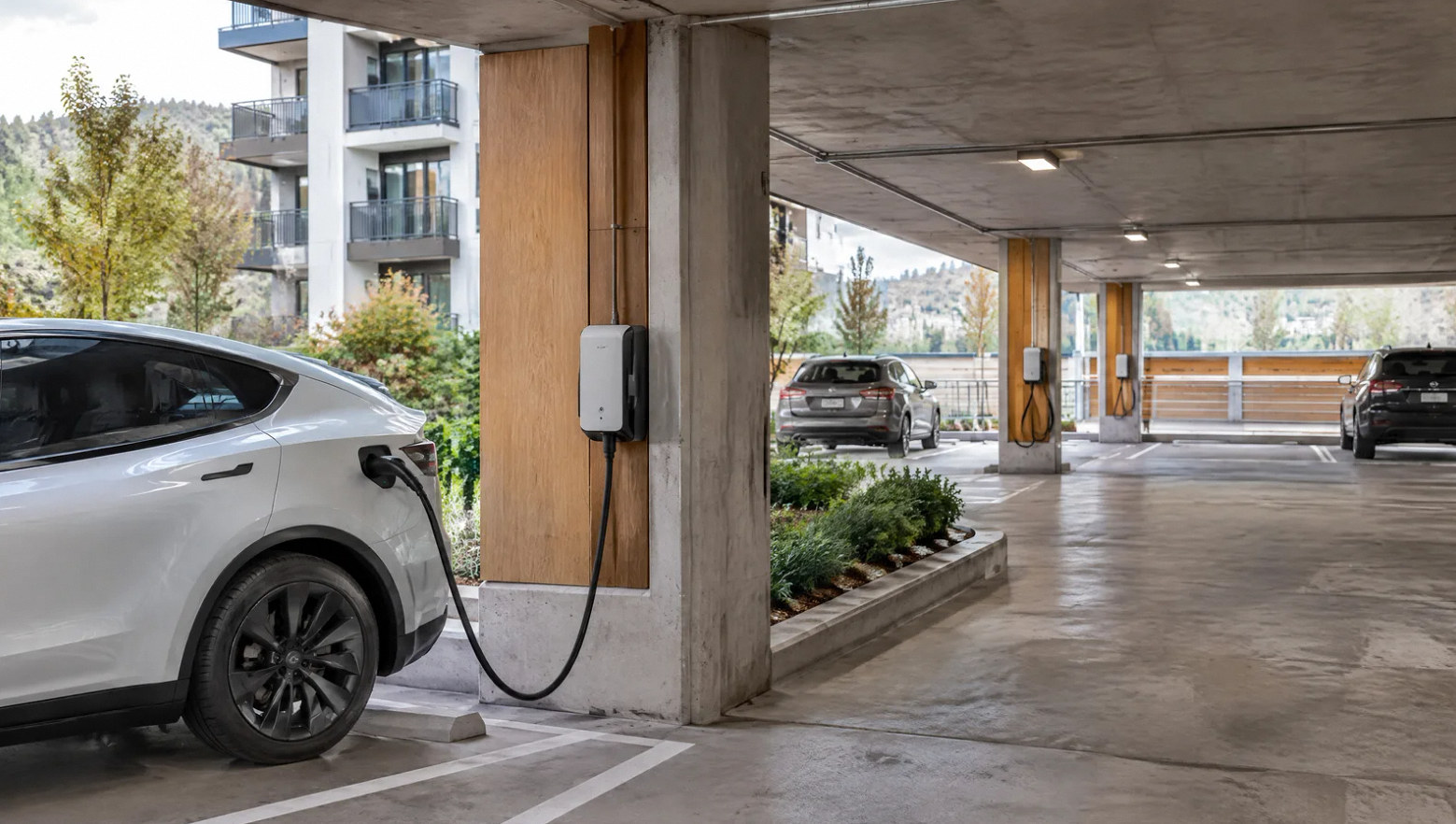
Shared EV infrastructure — multi-unit residential.
Two Different Scopes
Which path fits your situation?
Both are common. Many buildings end up doing both.
Path A — Shared Common-Area Infrastructure
The HOA or property owner installs Level 2 stations in common parking. Residents reserve or queue under the association’s terms of use. Where the selected platform supports it, networked software can record sessions and collect user fees. Identify the account responsible for the utility bill and how user payments are reconciled with it.
- Best for buildings without assigned stalls
- Session reporting and user fees where the selected platform supports them
- Plan charging power within assessed electrical capacity
- HOA controls access and pricing
Path B — Dedicated Circuit in an Assigned Stall
A dedicated connection serves an owner’s deeded or assigned parking stall. Electricity may be billed through the resident’s existing utility account, a separate utility EV meter, or a common account with an agreed measurement and reimbursement method. Confirm the route, account and written responsibilities before selecting equipment.
- Best for owners with exclusive-use stall
- California right-to-charge rules support this path
- Confirm the supplying account and agreed measurement method
- Permit pulled under C-10 license, HOA-ready docs
Billing & Load Management
Who pays for the electricity — and how does the panel handle it?
Start by identifying the meter and account that supply each charger. Where the selected platform supports it, networked chargers can record sessions and collect user fees. Assign responsibility for the utility bill, reconciliation with charging reports, discrepancies, move-outs and network-contract changes.
Load management can share an approved charging-power budget among more connections. The number of stalls depends on the measured electrical constraint and residents’ energy needs during their parking windows. Assess the unit, feeder, building and utility limits; there is no universal stall multiplier.
We assess the existing parking panel, run the load math, and recommend the minimum infrastructure investment to support the number of stalls the building actually needs — not the maximum the panel could theoretically carry.
What We Scope For You
- Panel assessment — existing capacity, available breaker slots, conduit routes to stalls
- Load management sizing — how many stalls from how much panel
- Metering and billing design — identify the utility account and any needed measurement or reimbursement process
- Networked charger selection — session reporting and user billing where the selected platform supports them
- Permit + inspection — pulled under C-10 license, city sign-off included
- Rebate research — PG&E and SVP multi-unit programs verified against your project
For Individual Unit Owners
California makes it harder for HOAs to say no.
California Civil Code §4745 protects qualifying EV charger installations while preserving applicable safety requirements and reasonable restrictions. Covered installations in common area or exclusive-use common area require association approval and written owner commitments. Prepare the proposed route, equipment, permits, contractor information and applicable insurance documentation. Keep dated application records and address reasonable requests for additional information; association approval does not replace permits or electrical design.
Owned your stall for years and never had a charger? That changes with the right install documentation.
FAQ
Multi-family EV charging questions, straight answers.
Ready to Move Forward?
Talk to a licensed C-10 electrician about your building.
We scope multi-unit EV projects from site assessment through permit and inspection. HOA board, property manager, or individual unit owner — we work with all three.
Frequently asked project questions
Work through the difficult decisions.
Explore the causes, choices and practical next steps behind common project questions.
How can an HOA plan charging fairly for owners who join later?
Separate common infrastructure from individual connection and equipment costs, and document an approved enrollment policy. Include future capacity, maintenance, unit sales, and any reimbursement arrangement. The electrical plan should show expansion limits; the board’s legal and financial advisors should review how costs are allocated.
Read the full guide: Who pays for the first HOA chargers without blocking future owners? ↗- Condo charging: individual meters or the common-area account?
- Who pays for the first HOA chargers without blocking future owners?
- Your condo has a spare breaker: why the building may still need load management
- An HOA charger request that the board can actually evaluate
- Can residents use shared condo chargers without moving cars after midnight?
Contact Us
Request A Consultation
Local Services
We're in your city.
Choose your city and tell us what you need. We'll plan the project around your location.
Choose your city to include it with your project details.
Or call us to discuss your project:
(650) 550-0819Request received
Thank you. Your request has been received.
