
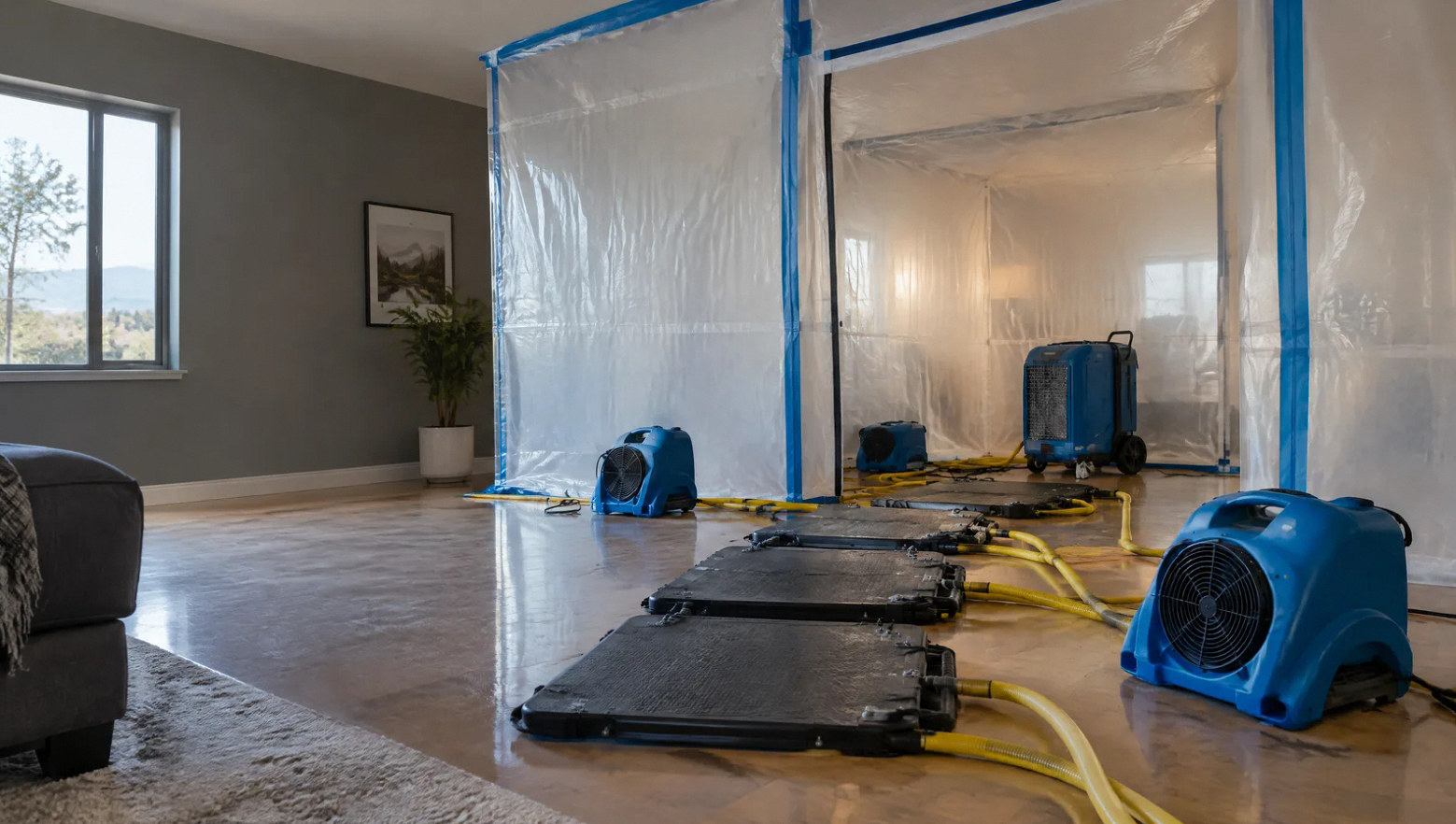
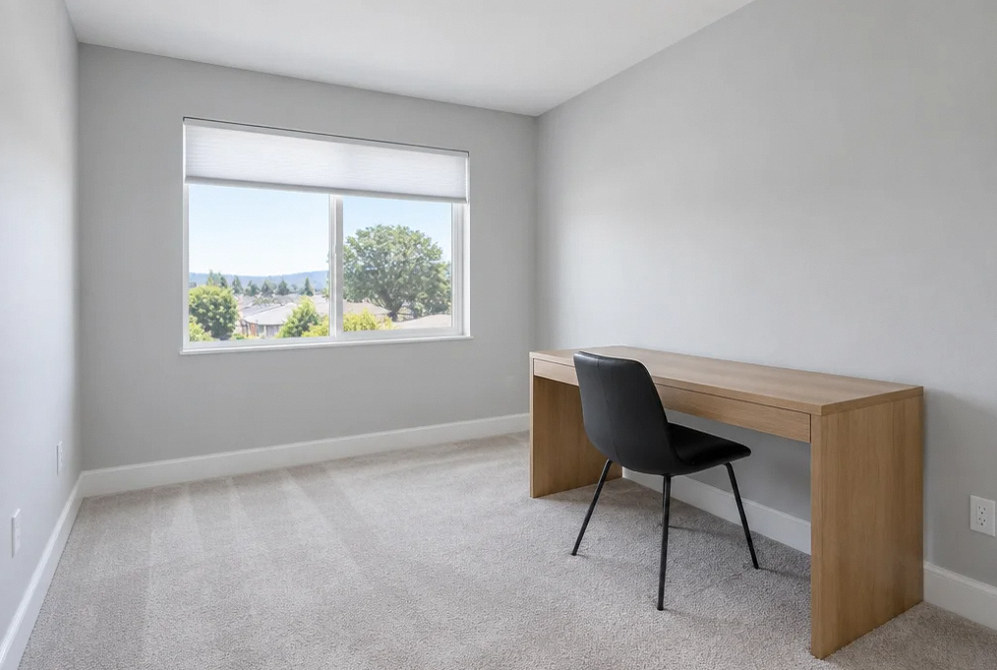
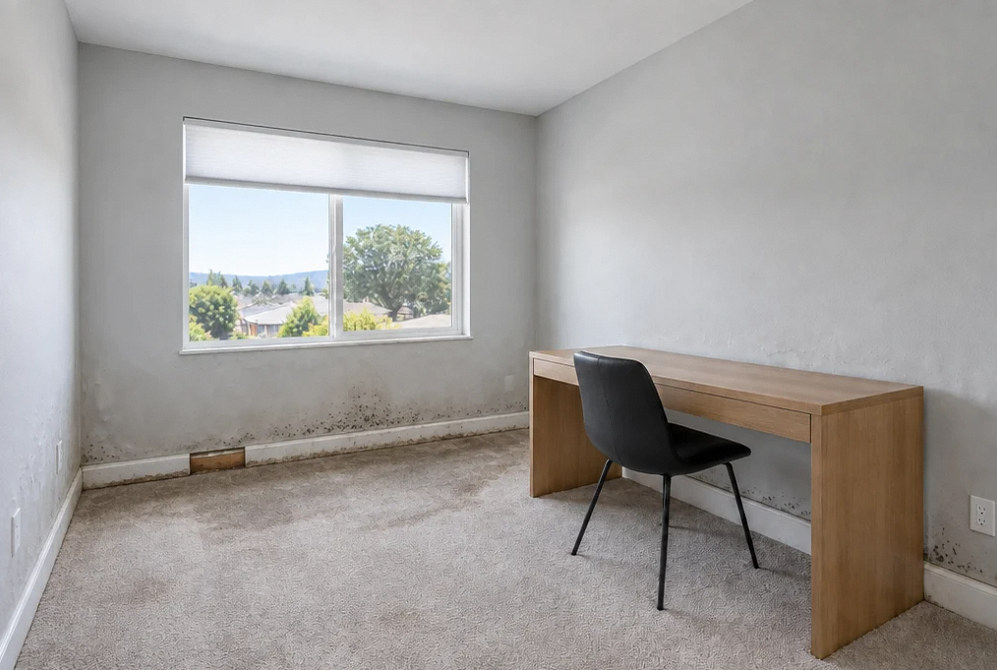
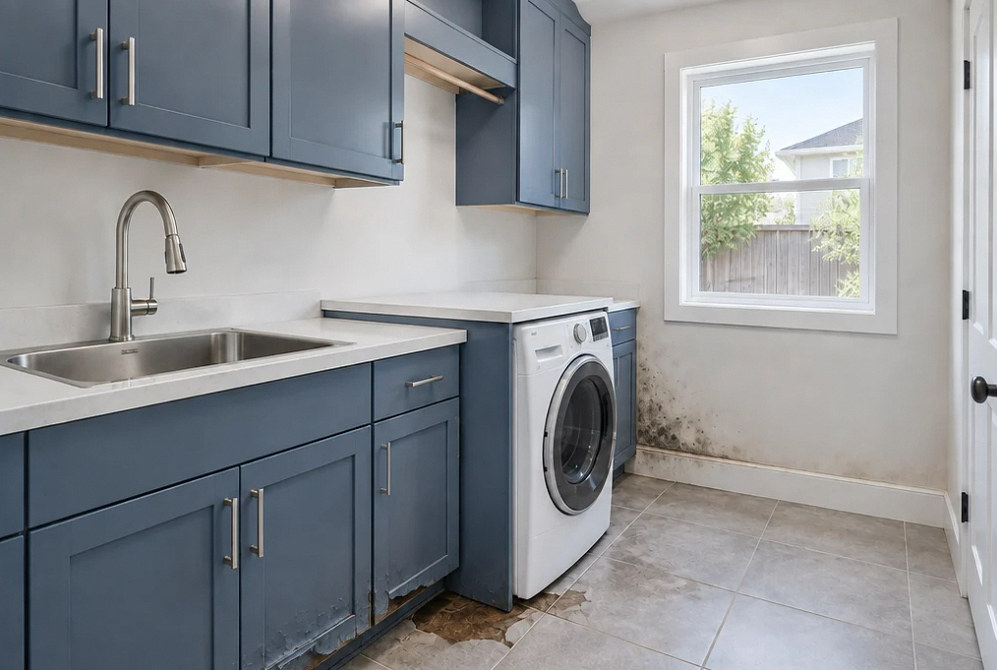
Injection drying panels and air movers running inside containment — illustrative service image

Structural Drying

Nine Loud Machines In Your House. Here Is What Each One Does.

Drying is the part of a water loss you have to live with, so it is worth understanding. What the equipment is, how long it stays, whether you can sleep here, and who decides it is finished.

Free inspection on restoration work · Licensed C-10 & General B · Answered 24/7

What all of that equipment is.

Every piece is placed for a reason, and moving one changes the result. If something is genuinely in your way, tell the crew and it gets resolved properly.

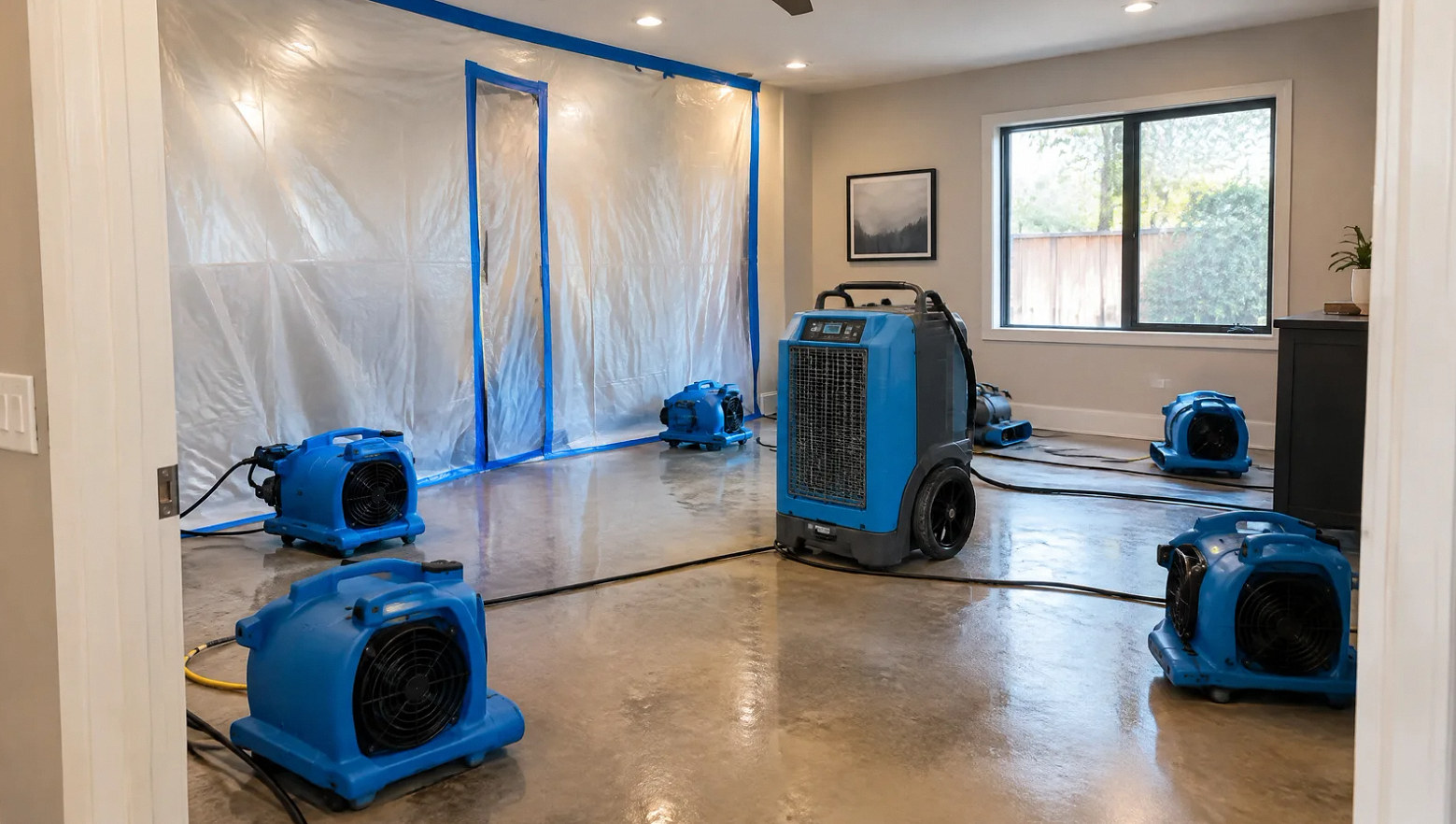
Air movers

The low flat ones aimed along the wall at a shallow angle. They are not there to cool the room. Moving air strips the saturated boundary layer off a wet surface so evaporation can keep going, which is why the angle matters and why moving one to point at yourself sets that wall back.

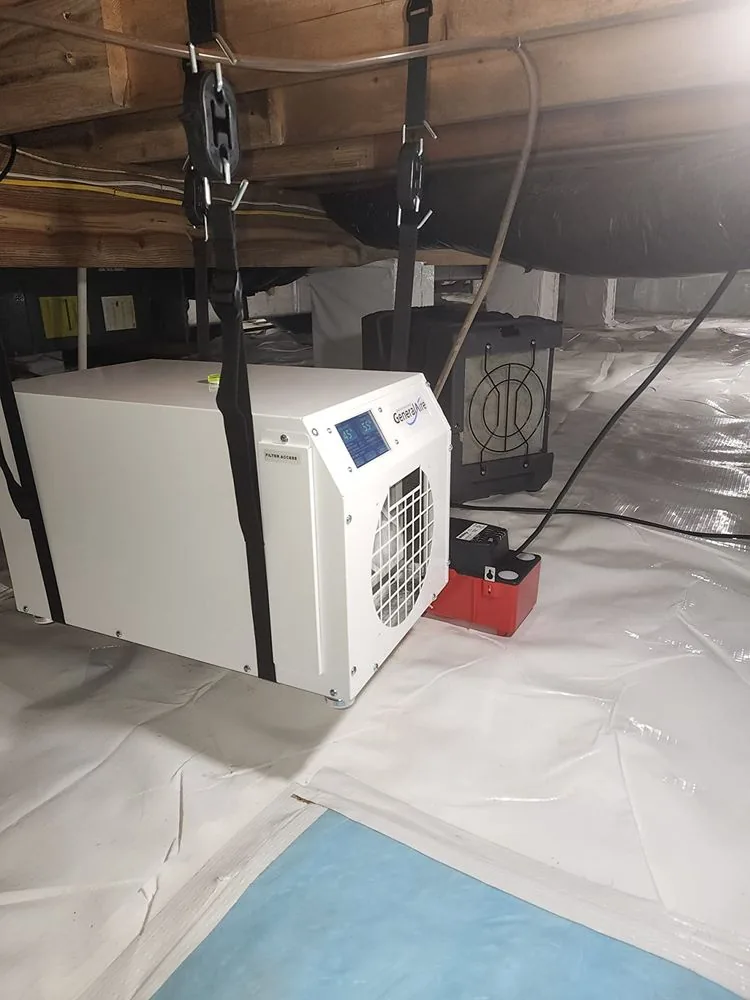
LGR dehumidifier

A low-grain refrigerant dehumidifier removes moisture from air and collects or drains the condensate. Its performance depends on room conditions, equipment capacity and the manufacturer’s operating limits. The crew should explain why the selected unit fits the drying plan.

Heat, on purpose

Temperature and humidity should be monitored as part of the drying plan. Equipment must operate within its manufacturer’s instructions and the site’s electrical and occupancy limits. A warm room alone does not prove effective drying; report excessive heat, alarms or other unsafe conditions promptly.

Injection and mat systems

Ask which wet layers the proposed system can reach and how progress in those layers will be measured. The plan depends on the assembly and contamination. Equipment on site does not by itself establish that an enclosed assembly can be saved.

Containment sheeting

Sheeting and controlled entry can separate the work area and help define a drying zone. When containment requires negative pressure, a properly configured exhaust system and checks of airflow are needed. Sheeting by itself does not create negative pressure or guarantee that contamination cannot escape.

The meter and the camera

A pin or pinless moisture meter for the numbers, a thermal camera for finding water that has travelled. The camera does not see moisture, it sees the temperature difference evaporation creates, which is why it points us where to measure rather than replacing the measurement.

How air movement fits the drying plan.

Air movement supports evaporation from wet materials. The drying plan also needs a way to manage the released moisture, using suitable ventilation or dehumidification for the site conditions. Equipment selection should follow the affected materials, access and contamination assessment.

Humidity can remain high when moisture removal does not keep pace with evaporation. Monitor room conditions and material readings so the team can identify stalled progress or condensation risk and adjust the plan.

When dehumidification is needed, capacity and placement depend on the moisture load, affected area, materials and operating conditions. The equipment count should have a documented basis and be reviewed as drying progresses.

Air movers and dehumidifier running in a contained room — illustrative service image

Air movement and moisture control follow the assessed drying plan.

What the days look like.

These are stages of the work, not a promised calendar. The initial estimate changes with the material readings, access to wet layers and any contamination or damage found during assessment.

  1. Stage 1

    Baseline and setup

    Affected and unaffected readings taken and recorded, extraction finished, equipment placed and counted. You get the first photo set and moisture map the same day.

  2. Stage 2

    First honest check

    Repeat readings at the same documented locations and depths. If progress stalls, review the water source, equipment performance, room conditions and access to wet layers before deciding whether the plan or access needs to change.

  3. Stage 3

    Convergence

    Compare each affected material with its documented drying goal using the appropriate instrument and scale. Equipment changes should follow the remaining work and measured progress. One dry surface does not establish that the layers beneath it are ready.

  4. Stage 4

    Final readings and out

    Review final readings, the measured locations and any inaccessible layers. Record the basis for ending drying and the remaining repairs or specialist checks. A log supports what was measured; it does not prove an unmeasured cavity was dry.

Mitigation is billed the way carriers expect, which includes equipment per unit per day. That is precisely why units come out as they finish rather than all at the end: the log has to show the equipment was necessary for exactly as long as it was there.

Living with the drying

Staying may be possible only if a safe living area can be maintained. Review contamination, electrical and structural hazards, access to essential rooms, noise and the needs of vulnerable occupants. Confirm the arrangement with the project team; a separated work area alone does not establish that the home is suitable to occupy.

Agree on an operating plan for the actual equipment, including nighttime use, monitoring and safe response to faults. Unplanned interruptions can affect progress. If noise prevents sleep, contact the crew about the plan or living arrangements. Do not keep unsafe equipment running, and do not assume every model may be left unattended.

The cost depends on the actual equipment, operating hours and your electricity rate. Ask for an estimate based on those inputs and keep equipment records and utility bills. If you have a claim, ask your insurer whether added electricity costs are eligible and what documentation is required.

Because the equipment is sized to the volume of affected air and the surface area of wet material, not to the room count. A bathroom whose water went under the wall into two adjacent closets and a hallway is four spaces to dry, and the dehumidifier has to be matched to all of it or the air movers are just circulating humid air.

A drying goal should be documented for each affected material using an appropriate instrument and scale. Comparable unaffected material can help establish context. The completion assessment should review measured locations, concealed layers, remaining damage and any further specialist checks; a single reading does not establish that the entire assembly is ready.

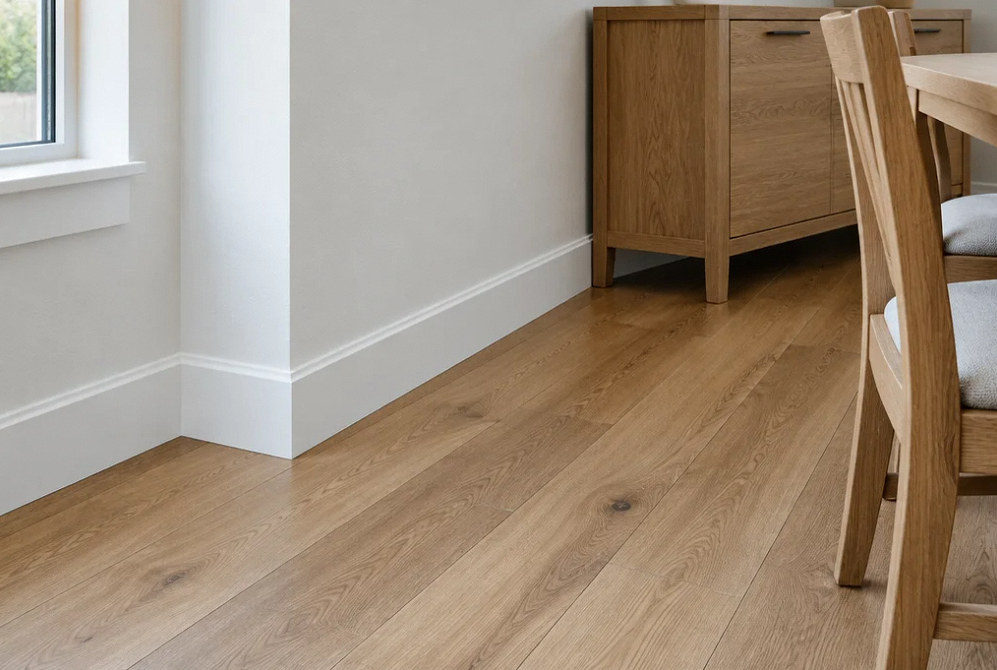
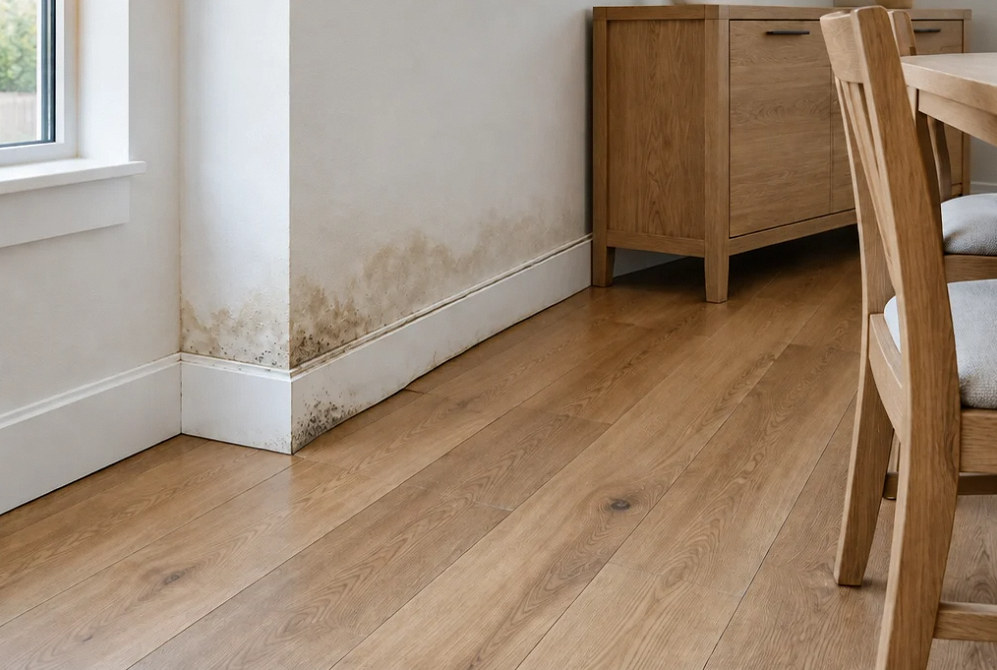
A flooring specialist should assess the boards, subfloor, contamination and moisture through the assembly. Cupping does not automatically establish whether a floor can be saved. Allow moisture conditions to stabilize before deciding on sanding; sanding a cupped floor too early can leave it crowned as it continues to dry. Some damaged assemblies require replacement.

Next on the same job.

24/7 Emergency Response

A wall closed over a reading nobody took is a mold job with a delay built in.

Licensed C-10 & General B · CSLB #1158693 · General Liability Insured

Restoration work

A closer look at the work

A dehumidifier positioned beneath a floor.

Structural drying · Detailed answers

Questions worth resolving before work begins.

How can I estimate the electricity used by drying equipment?

List each device's measured or estimated watts and operating hours. Watts multiplied by hours, divided by 1,000, gives kilowatt-hours; apply the relevant rate from your bill. Keep an equipment log and ask your insurer which records it needs.

Read the full guide: Drying Equipment and Your Electric Bill: Calculate the Added Use
What if drying equipment makes it impossible to sleep at home?

Tell the team before changing the setup. Review a safe sleeping area, clear exits, equipment placement and a documented operating plan; discuss temporary accommodation and payment separately with management or your insurer. Electrical warning signs require prompt professional attention.

Read the full guide: Drying Fans Too Loud to Sleep: Make an Overnight Plan
Does a very high moisture-meter reading mean a wall or tile must be removed?

A reading needs context: instrument, mode, scale, material, location and comparison area. Some instruments can be influenced by hidden metal. Ask how moisture was confirmed and what condition makes removal necessary rather than relying on one unexplained number.

Read the full guide: A Moisture Meter Says 100%: Does That Justify Demolition?
How do I check whether extra drying-equipment days are justified?

Compare the equipment log with dated material readings and the agreed drying target. Ask what remains wet, when it was checked and what changed in the plan. Keep technical need, monitoring charges and rental or pickup terms separate in the review.

Read the full guide: Why Are the Drying Machines Still Here? Review Equipment Days
When can a cupped hardwood floor be sanded after a leak?

Have the flooring professional verify moisture conditions and stability in the boards and relevant underlying layers before refinishing. Sanding raised edges while a moisture imbalance remains can leave crowning later. Appearance or a fixed number of days is not enough.

Read the full guide: Cupped Hardwood After a Leak: When Is It Ready to Sand?

All structural drying guides

Water damage • Homeowner resources

Practical help for the decisions ahead.

01 / KEEP IN MIND

Ask what was checked beneath the surface

When a floor looks dry, ask which layers were evaluated beneath it. Record whether the assessment included the subfloor, adjacent wall bases, or cabinet areas affected by the water. Leave lifting, drilling, and removal to the responsible professionals; a visible finish alone cannot answer every question about the assembly.

Read the explanation

02 / KEEP IN MIND

Get clear instructions for windows and temperature

Ask the team to write down the intended window, door, HVAC, and thermostat settings for your current drying plan. Tell them if those conditions make the home difficult to use. Agree on an adjustment and record it, so the next monitoring visit can account for what actually happened.

Read the explanation
03 / KEEP IN MIND

Record an interruption instead of guessing its effect

If a machine stops, alarms, or leaks, follow the response instructions provided for that equipment and contact the team. Record the approximate time and unit location. Do not reset electrical protection or rearrange machines to troubleshoot. The technician needs the interruption history when interpreting the next set of readings.

Read the explanation

Contact Us

Request A Consultation

Local Services

We're in your city.

Choose your city and tell us what you need. We'll plan the project around your location.

Choose your city to include it with your project details.

Or call us to discuss your project:

(650) 550-0819

Send your project details to YKCA.

Project: Nine Loud Machines In Your House. Here Is What Each One Does.

Request received

Thank you. Your request has been received.

×

Contact Us

For More Info!