
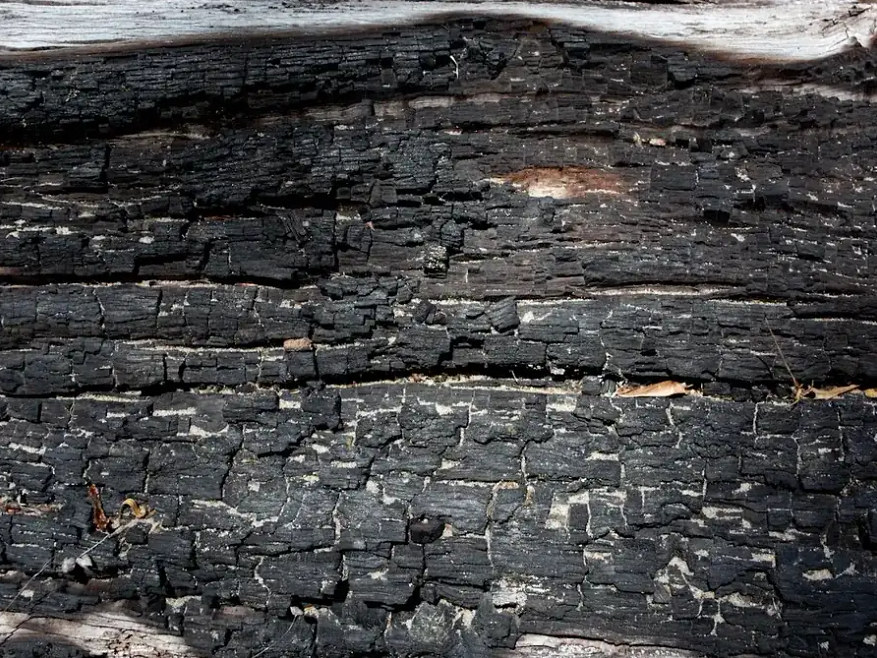
Fire & Smoke
The Fire Department Left. Nobody Told You What Happens Now.
The first night decides more than most people realize: what gets secured, what gets documented, and what gets ruined by somebody trying to help. Here is the order it goes in.
Free inspection on restoration work · Licensed C-10 & General B · Answered 24/7
The first twenty-four hours.
In order. Most of it is about protecting the claim and the building, because both are easier to lose in the first day than at any point afterwards.
- 01
Do not re-enter to retrieve things
Structure, electrical, and air quality are all unknown until somebody assesses them. If there is something you genuinely need, tell us and we retrieve it under proper conditions.
- 02
Open the claim tonight
Notify your insurer promptly and ask about loss-of-use coverage, temporary housing authorization, limits and required receipts. Opening a claim does not by itself establish eligibility or when payments will begin.
- 03
Get it secured and boarded
Openings covered, the structure locked, tarps over the roof if it was opened for ventilation. Policies expect you to prevent further loss, and an unsecured building invites both weather and theft.
- 04
Kill the utilities that need killing
Keep clear of affected electrical and gas equipment. Utility isolation and assessment should be handled by the utility or appropriately qualified professionals. Confirm who is responsible for each system before work begins.
- 05
Photograph before anybody touches anything
Every room, every angle, the burned area and the smoke-affected areas that look fine. This set can never be recreated once cleanup starts.
- 06
Start keeping receipts
Hotel, meals, clothing, pet boarding, the drive. All of it is potentially ALE and all of it needs documentation you will not remember to reconstruct later.
Restoration concepts
Rebuilding, room by room
Drag the divider to compare before and after, or open a comparison for a closer look.

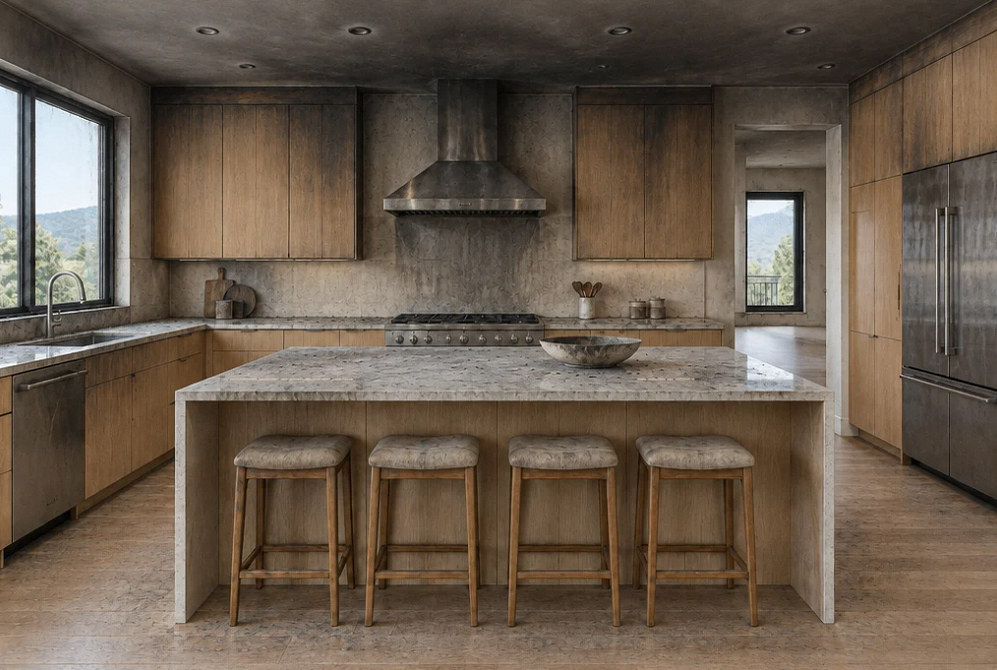
Drag to compare


Drag to compare
Soot is not one substance, and the wrong cloth makes it permanent.
What burned decides the residue, and the residue decides the method. This is the single most common way a cleanable surface becomes a replacement line item.
Dry smoke, fast and hot
Powdery, sits on the surface, and comes off cleanly with the right dry method. It also travels furthest into cavities and cracks, so the room that looks untouched often is not.
Wet smoke, slow and smoldering
Sticky, dense, and strongly odorous. Smears badly if handled wrong, and it is the residue most likely to permanently stain if somebody wipes it first.
Protein residue, kitchen fires
Nearly invisible, discolours paint and varnish, and carries an odor that outlasts every attempt to cover it. Frequently missed entirely by cleaners looking for black marks.
Extinguisher and suppression residue
Dry chemical powder is mildly corrosive and needs removing promptly from electronics and metal. Sprinkler and fire department water is a full water loss layered on top of the fire.
Restoration concepts
A closer look at the finishes
Drag the divider to compare before and after, or open a comparison for a closer look.
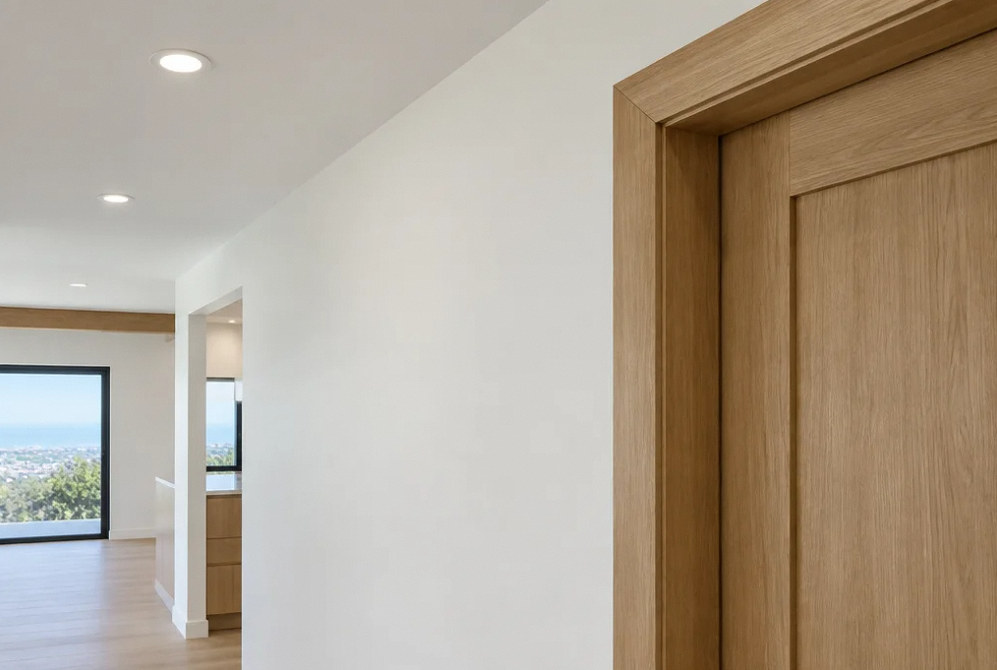
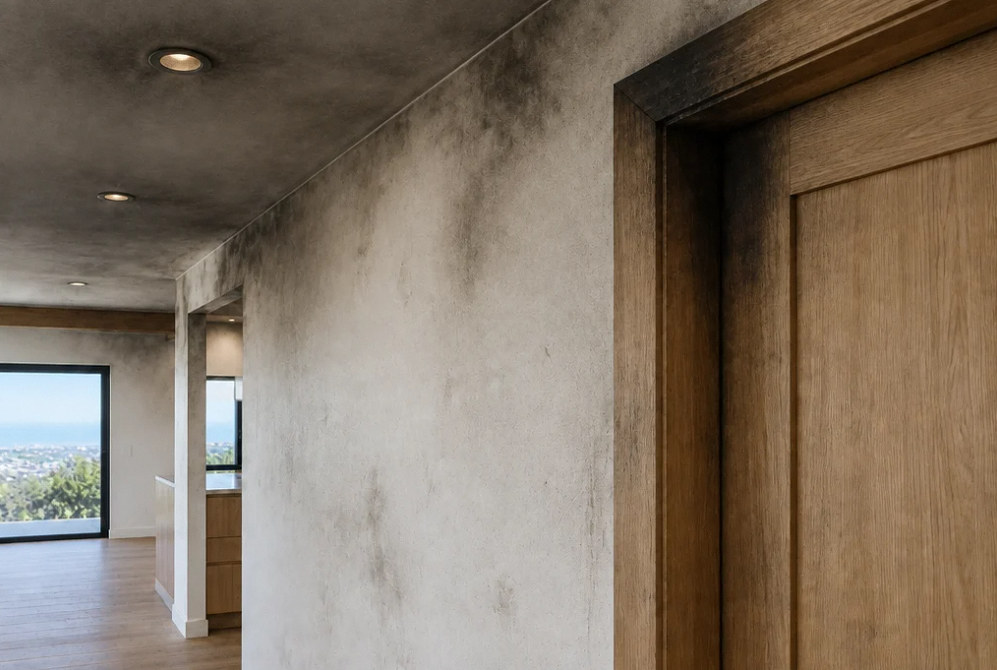
Drag to compare


Drag to compare
Check for firefighting-water damage.
Firefighting water can wet finishes, cavities and subfloors beyond the visibly burned area. Assess those materials alongside the fire and smoke damage. Prompt cleanup and appropriate drying reduce the risk of further damage and mold; elapsed time alone does not diagnose contamination or decide which materials must be removed.
Coordinate water removal and drying with fire cleanup according to safe access, contamination and material condition. Record affected locations, moisture measurements and inaccessible layers so the work plan addresses both visible damage and areas that need further assessment.
Have a qualified electrician assess electrical equipment and wiring exposed to fire, heat or suppression water before reuse. Record the findings, required repairs or replacement and any inspections needed before power is restored.
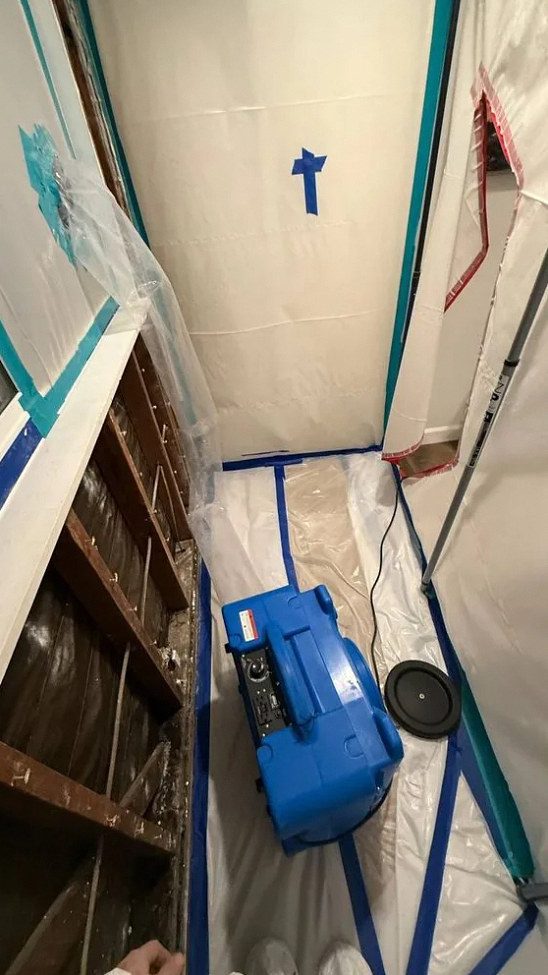
Assess both fire damage and wet materials, then coordinate the work.
Fire and smoke questions
Next on the same job.
24/7 Emergency Response
Keep every receipt from tonight. That is the part nobody tells you, and it is worth real money.
Licensed C-10 & General B · CSLB #1158693 · General Liability Insured
Fire, smoke & soot damage · Detailed answers
Questions worth resolving before work begins.
Can I wipe soot off the wall while waiting?
Wait for safe access and a surface-specific assessment. Preserve photographs first and ask for a limited cleaning trial. The right method depends on the residue and finish; a phone photo cannot establish a suitable chemical or technique.
Read the full guide: A Small Fire Left Soot Everywhere: Before the First Cleaning Pass →Should painting start while the house still smells of smoke?
Resolve the unexplained odor and agree on the role of any coating before covering surfaces. Ask what remains, what the next treatment changes and how its result will be checked. Painting alone is not evidence that the source was addressed.
Read the full guide: Smoke Still Smells After Cleaning: What to Resolve Before Painting →Must all belongings be discarded after heavy smoke exposure?
That cannot be decided from a general description. Request item-specific evaluation based on exposure, material and intended use. Some items need specialty treatment or replacement; retain documentation and agree on disposal before it occurs.
Read the full guide: Smoke-Damaged Belongings: How to Make Item-by-Item Salvage Decisions →Does smoke from another condo require a full pack-out?
Not automatically. Ask the assessor to identify affected rooms and items, explain why they must move and show how packing, cleaning and storage support the scope. Shared-building conditions may also affect timing.
Read the full guide: Smoke From a Neighbor’s Fire: Defining Your Condo Cleanup Scope →Do I have to wait for the adjuster before any protective work?
Obtain claim-specific instructions promptly, but do not assume all necessary protection must wait. Establish safe access, document conditions where feasible and use a defined protective scope. Keep the reason, photographs and invoices for work performed before inspection.
Read the full guide: Before the Adjuster Arrives After a Fire: Document, Protect, Then Authorize →Contact Us
Request A Consultation
Local Services
We're in your city.
Choose your city and tell us what you need. We'll plan the project around your location.
Choose your city to include it with your project details.
Or call us to discuss your project:
(650) 550-0819Request received
Thank you. Your request has been received.
