



Whole-Home Audio
One song everywhere, or different songs per room.
Sonos, Bluesound, in-ceiling speakers driven by distributed amplifiers, AV-receiver theater rooms. Wired backbone for music quality; wireless where pulling cable is impractical. C-10 / C-7 crew handles the speaker pulls, terminations, and ecosystem setup as one bid.

What This Is
Music in every room that actually sounds good.
Bluetooth + a portable speaker is not whole-home audio — it is one room at a time, with compressed audio, dropouts when the phone moves, and no real bass. Whole-home audio means dedicated speakers per room (wireless or in-ceiling), fed by a streaming platform (Sonos, Bluesound, AirPlay 2), with independent volume per zone and one library across the house.
We do the speaker pulls (CL2 / CL3-rated 14/2 in-wall), the terminations (banana-jack wall plates, never bare wire under screw), the amplification (Sonos Amp per zone, or multi-zone Russound / AudioControl for larger systems), the room tuning (Sonos Trueplay, manual sub crossover), and the ecosystem pairing.
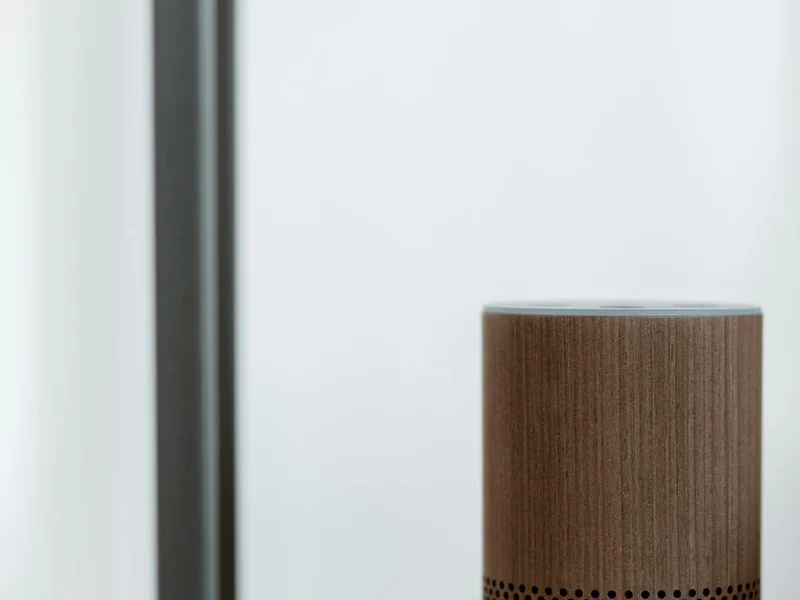
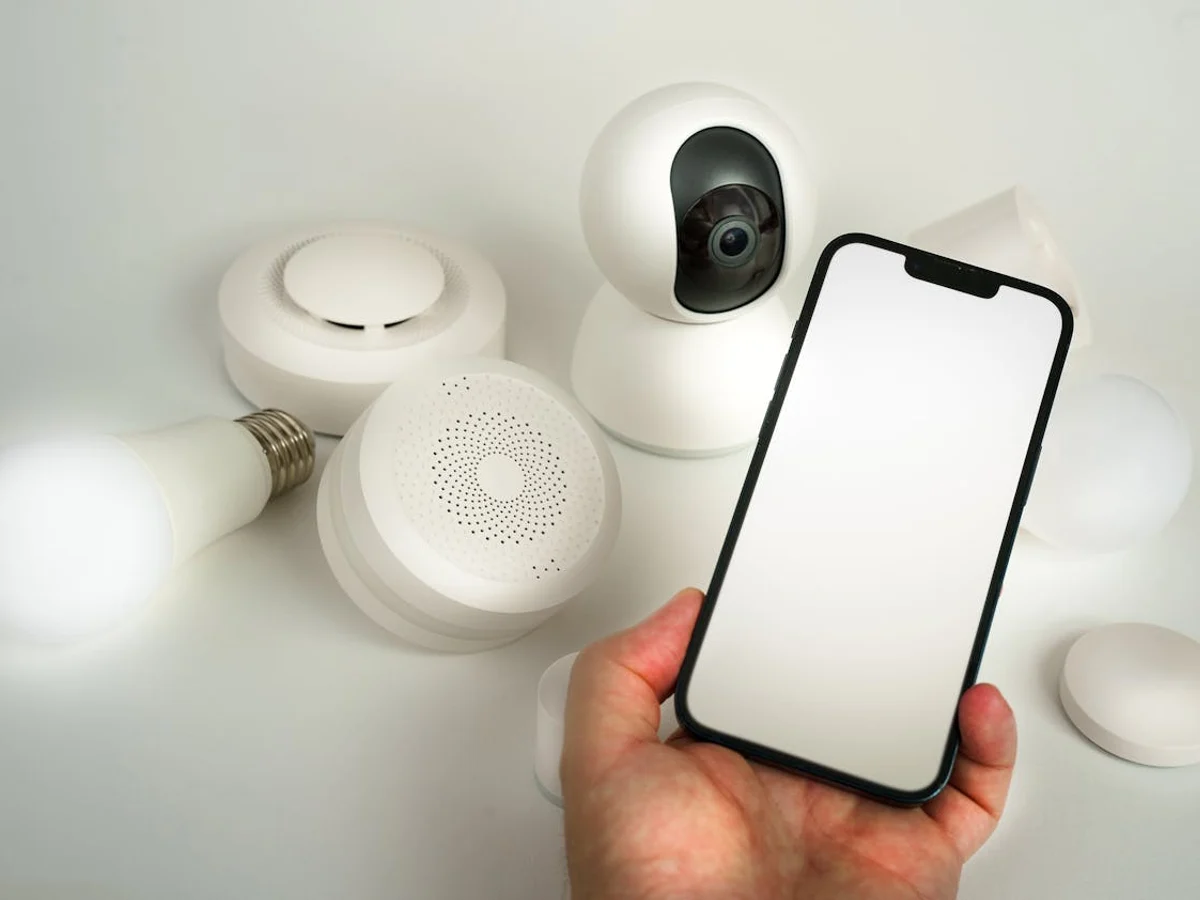
Voice + audio on the same shelf — multi-purpose hub.
Scope
What is included in a whole-home audio install.
Hardware, in-wall cabling, amplifier sizing, zone naming and tuning — single bid.
Sonos Ecosystem Install
Era 100 / Era 300 / Arc / Beam / Move / Roam, plus Sonos Amp for in-ceiling. Trueplay tuning to room acoustics, zone naming, family-account sharing.
In-Ceiling Speaker Pulls
CL2 / CL3-rated speaker wire (14/2 or 14/4 stranded) pulled through wall and ceiling cavities. Speaker positions per coverage map. Wall-plate banana terminations.
Bluesound / Audiophile Path
Bluesound Pulse Node / Powernode / Vault for hi-res streaming, MQA support, and integration with separate amplifiers and DACs.
Distributed Amplification
Sonos Amp per zone for budget systems, or multi-zone amplifier (Russound, AudioControl, Marantz Model 30) for higher-end installs.
TV / Theater Integration
Arc / Beam / Pulse Soundbar handle TV audio via HDMI eARC. Dedicated AV-receiver theater path for 5.1 / 7.1 / Atmos rooms.
Outdoor Zones
Weatherized in-ceiling or rock speakers, sealed wall-plate termination, dedicated outdoor zone on the amp. UV-rated cable in conduit.
Equipment We Install
Sonos, Bluesound and amplifiers worth the wire.
No vendor lock-in. We install whichever platform fits your priorities — ease (Sonos), audiophile resolution (Bluesound), or open-standard with separate amplifier (Pulse Node + integrated amp).
Sonos Era 100 / Era 300
Current-gen wireless speakers
Sonos Arc / Beam (Gen 2)
Soundbars, HDMI eARC, Atmos on Arc
Sonos Amp
125W per channel, drives passive in-ceiling pairs
Bluesound Pulse Node
Hi-res streamer for separate amplifier
Bluesound Pulse Soundbar / Pulse Mini
Hi-res audiophile alternative to Sonos
Russound / AudioControl
Multi-zone amplifiers for 6 / 8 / 12-zone installs
FAQ
Audio questions, straight answers.
Ready to plan zones?
Walk us through the rooms.
$200 on-site walk-through. Zone map, speaker positions, amplifier sizing, fixed quote within 5 business days — applied to project total if you proceed.