
Materials and repairs · 5 min read
Wet Drywall and Ceilings: Dry, Open, or Replace?
Questions that help explain a drywall decision after a leak, including condition, concealed layers, access, and readiness for repairs.
YKCA · References checked 2026-09-27
Start with the essentials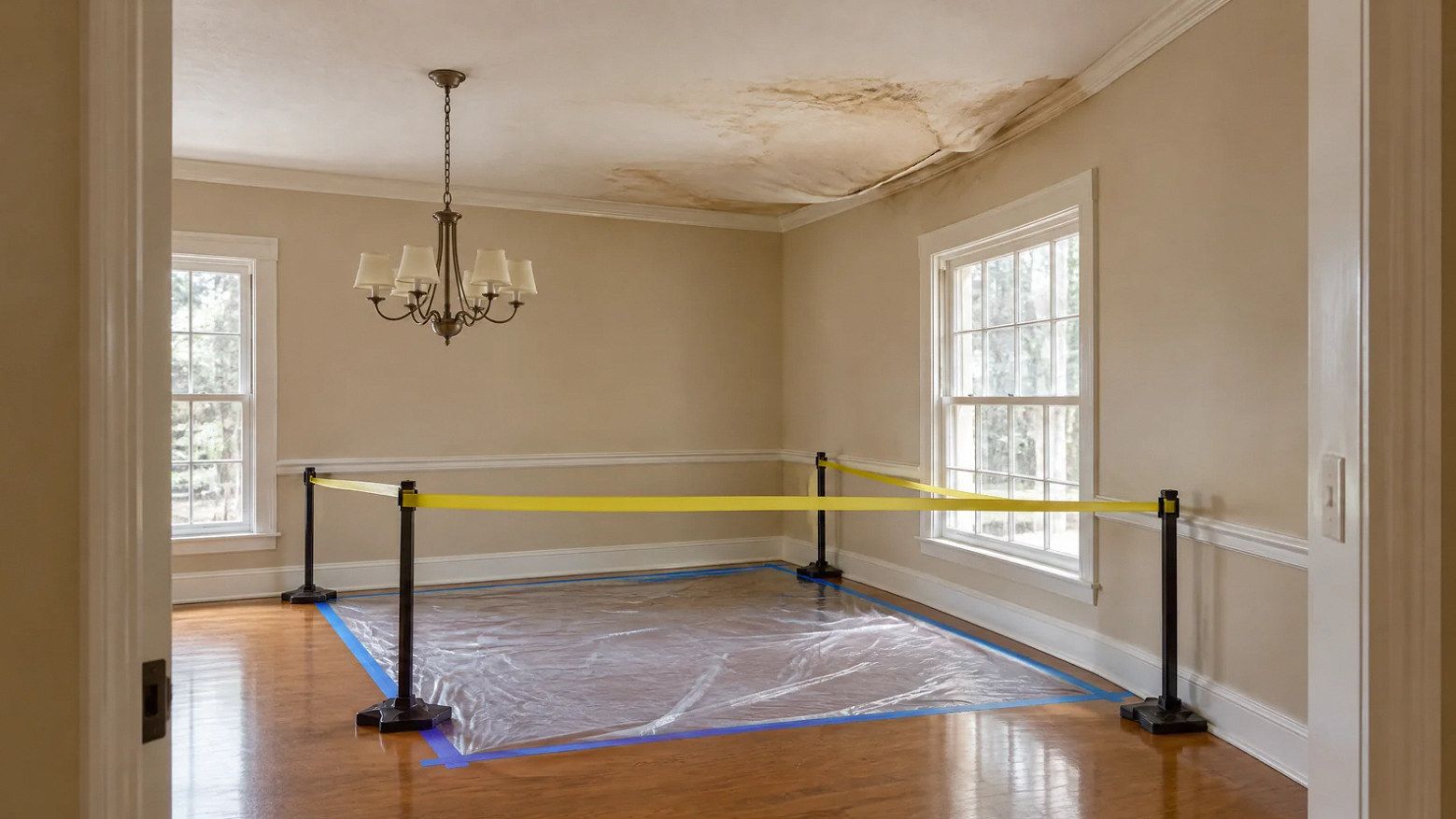
At a glance
Three things to keep in view.
Look beyond the stain
Base the discussion on water source, board condition, and concealed layers. The outline of a stain does not define the complete scope.
Clarify the opening
A proposed opening should have an explained assessment or drying purpose. Include the materials behind the board and the subsequent repair work.
Plan the finish
Schedule painting after the assessment and required work are resolved. Keep any inaccessible area or remaining repair visible in the handoff.
The key point
A drywall decision should account for the water source, the condition of the board, and the materials behind it. Ask what can be evaluated and dried in place, what needs access or removal, and how the result will be checked. A stain alone cannot provide the entire repair scope.
One contractor may propose drying a wall in place while another recommends opening it. To compare those approaches, ask each person to explain the finding that drives the recommendation. “It got wet” is a starting point for the conversation, not a complete description of the assembly.
For a ceiling, keep the immediate access question separate from the repair choice. Stay clear of sagging or unstable material and let the responding professional establish a safe working area.
Condition and contamination guide the decision
EPA's clean-water guidance allows some drywall to be dried in place when it has not swollen and its seams remain sound. That guidance does not apply unchanged to sewage or contaminated floodwater. Have the assessment identify which situation is being considered.
Ask the contractor to describe observable damage: loss of firmness, damaged seams, swelling, or other changes. Request photographs when the findings are not visible from a safe position. You are asking for the reason behind the scope, not trying to make a removal decision from a checklist alone.
The face of the wall is only one layer
A wall includes more than its visible face. Water can affect the back of the board, insulation, framing, or another material within the assembly. Drying the exposed face does not establish the condition of those concealed parts. Insulation and drywall also need separate retention decisions; keeping the board does not automatically mean everything behind it can stay.
The purpose of access is to assess and address the affected material. A proposal should explain what is already known, what remains concealed, and how retained materials will be checked. A fixed opening height does not supply that explanation.
Do not make exploratory cuts or drill drying holes yourself. Ask who will plan safe access, evaluate relevant material hazards, and restore the opening. Existing access and observations from adjacent rooms may inform the assessment, but the contractor should explain the chosen method for this location.
Sources for this section
Compare complete options, including the repair afterward
Ask what each option includes before comparing prices. A proposal for drying in place and a proposal for opening a wall may address different uncertainties. Request the conditions under which the first option would change to the second.
- What finding supports retaining or removing this material?
- Which hidden areas have been evaluated, and which remain unknown?
- How will progress be checked if the board stays?
- What would trigger additional access or removal?
- Does the scope include insulation, patching, texture, trim, and painting?
- Who will handle any necessary permit or inspection questions?
Use the same facts when requesting another opinion
Suppose a bathroom leak left a stain on the ceiling below. Share the source-repair record, dated photographs, and any moisture report with both contractors. Ask each to identify what still needs examination and how they would determine readiness for the finish repair.
This makes the proposals easier to compare than two verbal statements about whether the stain looks serious. If the recommendations still differ, ask for the point of disagreement in writing. It may concern access, the board's condition, or the boundary between drying and repair.
Do not make paint the proof that the problem is resolved
EPA advises correcting moisture problems and cleaning and drying affected surfaces before repainting mold-affected areas. A new finish should follow an explained assessment and the appropriate work, rather than stand in for it.
Before scheduling the painter or drywall finisher, get the remaining-work list. Ask whether the retained materials have met the agreed criteria, whether an inaccessible area remains unresolved, and whether the repair contractor has the information needed to proceed. Keep the records even after the stain disappears.
Sources for this section
Common questions
Does every wet wall need to be cut at the same height?
A standard-looking line on a proposal does not explain your wall. Ask how the proposed opening relates to observed damage, concealed materials, contamination, and access. Have the contractor describe the basis and the resulting repair scope rather than choosing a height yourself.
If the wall is dry now, can an old stain simply be painted?
Ask whether the source is resolved and whether the stain has been evaluated as part of the affected assembly. Painting may be a finish step, but it cannot answer an unresolved moisture or cleanup question. Obtain the assessment before approving cosmetic work.
Sources for this section
Sources and further reading
References checked 2026-09-27. Guidance depends on the loss, affected materials, scope of work and property conditions.
Discuss the next step for your property.
Share what happened, which areas are affected and the decisions you need help with.
Discuss water damage restorationRelated decisions
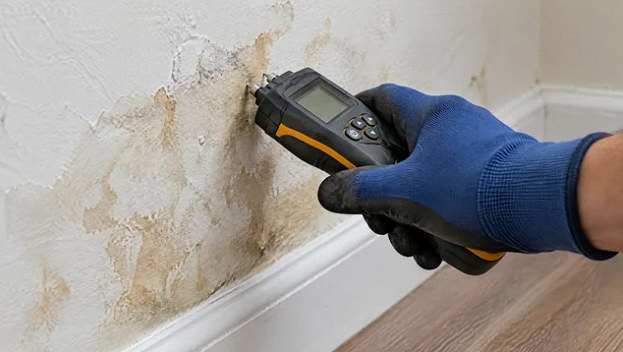
First decisions · 4 min read
Hidden Moisture: What Meters and Thermal Cameras Can Tell You
Learn how to read a moisture report, distinguish instrument scales, and ask useful questions about concealed walls, floors, and ceilings.
Read the guide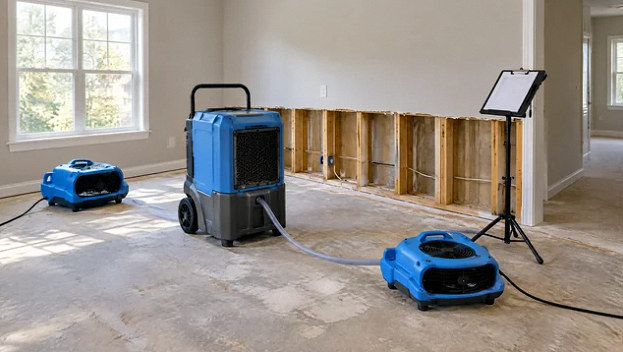
Drying and equipment · 5 min read
How Long Does Water Damage Drying Take?
Understand what controls drying time, what a useful progress report includes, and which questions to ask before equipment is removed.
Read the guide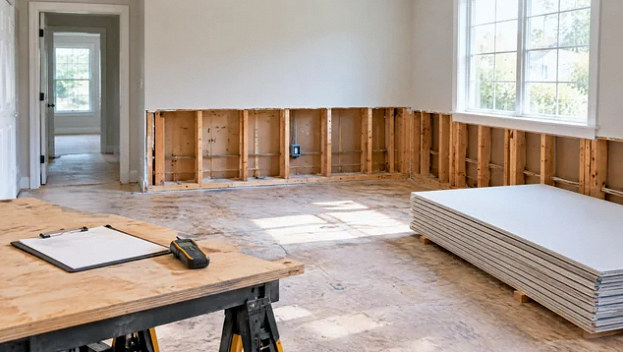
Materials and repairs · 5 min read
Before Rebuilding: How to Review the Drying Handoff
Ask for final material readings, remaining limitations, source-repair records, and a clear handoff before new finishes cover the work.
Read the guide