
Capacity & expansion brief
Establish the intended station types and the initial and future demand to evaluate. Confirm which assumptions remain dependent on utility review.
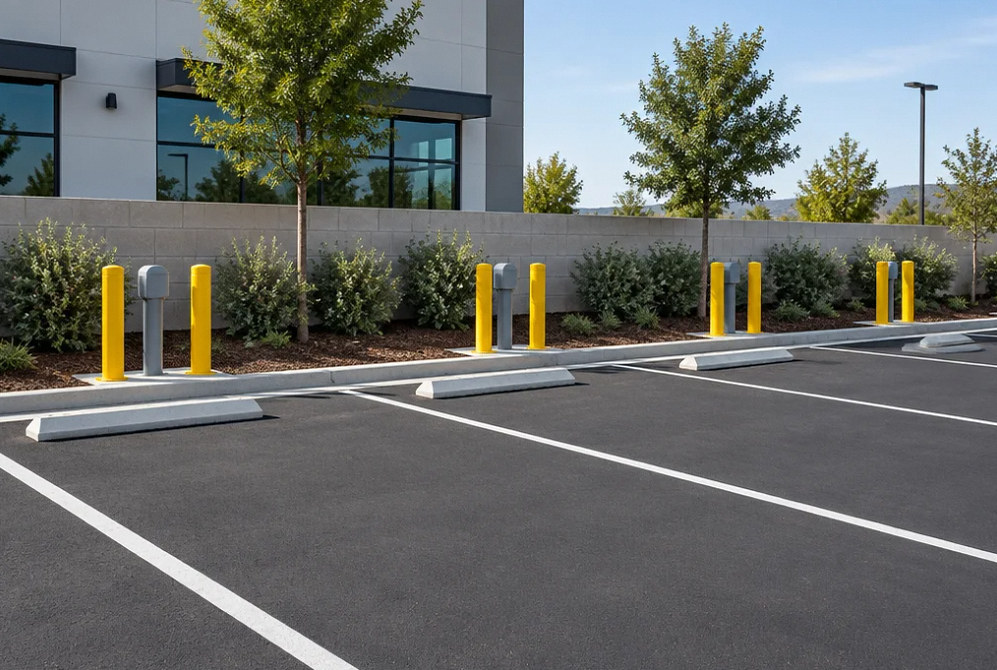
EV Make-Ready Infrastructure
Define what gets built now, what remains for later and where the responsibility changes between utility, contractor and charger provider.
What & Why
A parking space with an empty raceway, a space with an installed electrical circuit and a space with an operational charger are different project outcomes. The words used in a code, utility program or development plan may define specific requirements.
YKCA helps turn the intended outcome into a clear construction scope. Identify the initial and future stations, the power assumptions and the exact handoff point before infrastructure is described as complete.
Initial phase
What will be installed and usable now
Future phase
The station count and power assumptions
Utility interface
Service requirements and ownership
Handoff
Raceway, circuit or commissioned charger
Project Scope
Each scope item should say who supplies it, who installs it and how completion is verified.
Establish the intended station types and the initial and future demand to evaluate. Confirm which assumptions remain dependent on utility review.
Identify the interface between utility-owned and customer-owned work. Coordinate the service application and equipment requirements where needed.
Review switchgear, panels and feeder routes against the project brief. Record any later equipment or service changes needed to support expansion.
Coordinate conduits, pull points, foundations and crossing routes with the civil work. Protect access to equipment and future station locations.
Define where the present contract ends and the later charger installation begins. Coordinate the agreed pathway and electrical provisions with the intended equipment.
Agree on inspection stages and the records needed to identify concealed routes, endpoints and reserved provisions after construction.
Decisions That Matter
Room for later equipment is useful, but it does not establish that the utility or site distribution can supply it.
Document the design assumptions and unresolved items. A future station with different requirements may need additional work.
Utility or funding programs may define make-ready responsibilities differently. Confirm the actual program and its current terms before relying on it.
Before Your Consultation
The future installation needs enough definition to inform today’s construction.
Describe who will charge, the desired station locations and the planned sequence of expansion.
Share the site plan and any planning conditions, utility correspondence or program documents already issued.
Identify whether the current contract should stop at conduit, installed circuits, mounted equipment or operational charging.
FAQ
DOE recommends early utility involvement and planning for charging demand and expansion. Local code and program definitions must be checked for the particular development.
Your Next Step
Share your site plan and the intended future chargers. We’ll help establish the infrastructure scope and its handoff point.
Frequently asked project questions
Explore the causes, choices and practical next steps behind common project questions.
No. Bidirectional backup depends on the actual vehicle, charger, transfer equipment, controls, and approved operating mode. Accessible pathways and equipment space can preserve options, but final compatibility and electrical requirements must be verified when the complete system is selected.
Read the full guide: Can today's EV wiring be ready for future vehicle-to-home backup? ↗Include a communications survey in the make-ready plan. Verify the selected station’s supported connection, measure at its actual location or gateway, and define any antenna, network and maintenance scope. A phone working at the garage entrance does not establish that the station or drivers can connect at the charging stalls.
Read the full guide: Before pouring charger pads, verify the communications route ↗Contact Us
Local Services
Choose your city and tell us what you need. We'll plan the project around your location.
Choose your city to include it with your project details.
Or call us to discuss your project:
(650) 550-0819Thank you. Your request has been received.
Contact Us
For More Info!