
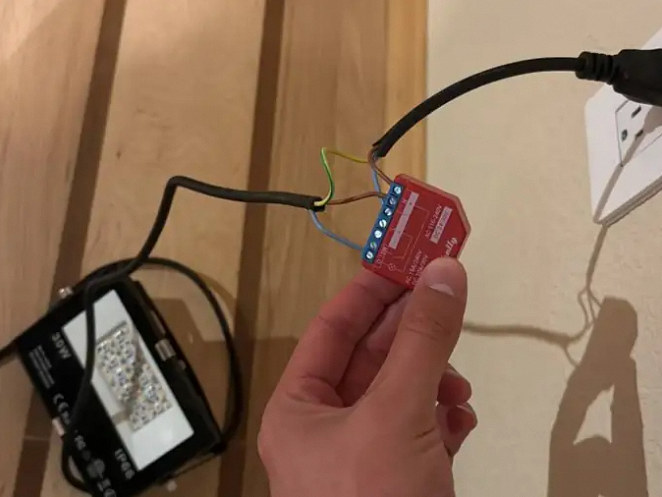
Troubleshooting
Trace It to the Root. Fix It Once.
Tripping breakers, dead outlets, flickering lights, buzzing panels — diagnosed with the right meter, fixed at the source, not the symptom.
What & Why
Most electrical problems have one root cause upstream.
A dead outlet usually is not a dead outlet — it is a loose backstab somewhere upstream, or a tripped GFCI you cannot find, or a breaker that thinks it is still on but is mechanically failed. Swapping parts at the symptom moves the problem; tracing to the root fixes it.
We bring the meters and the experience to find the actual fault, then either fix it on the spot or quote the bigger work for your approval before we touch anything.
Typical Diagnostic Snapshot
Common ranges for Bay Area diagnostics. Repair work is quoted separately.
On-Site Time
1–2 hours typical
Same-Day Available
For safety emergencies
Common Calls
Tripping breakers, dead outlets, flickering, buzzing panels, burning smells
What's Included
Six steps, every diagnostic.
Same workflow whether it is a single dead outlet or a whole-panel buzz.
Symptom Walk-Through
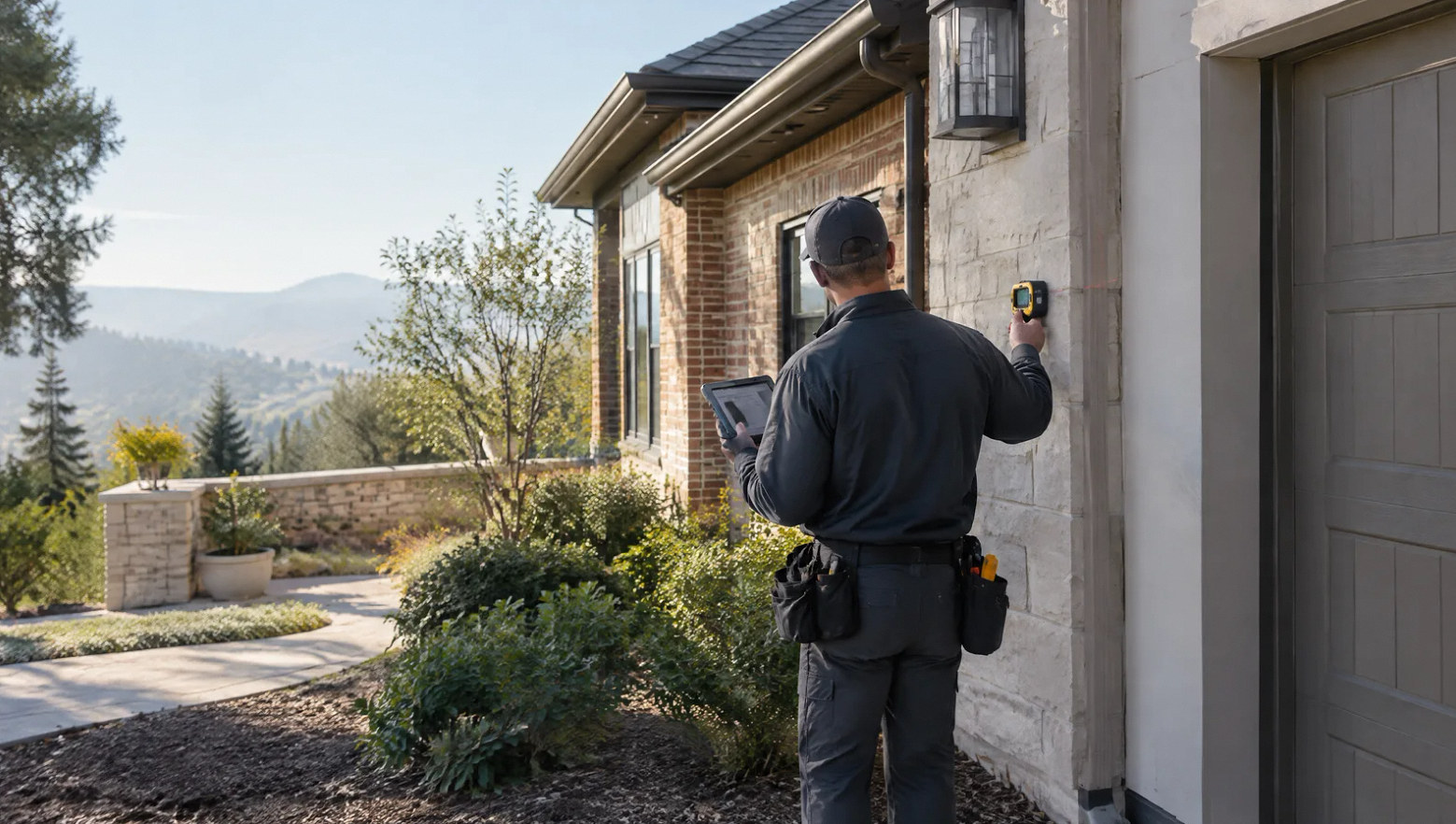
You walk us through what is happening, when it started, and what you have already tried. We rule out obvious causes (tripped GFCI, switched receptacle).

Panel & Circuit Map
Affected circuits identified with a circuit-tracer. Breaker condition, panel temperature, double-tap, and loose lugs checked.
Live Diagnostics
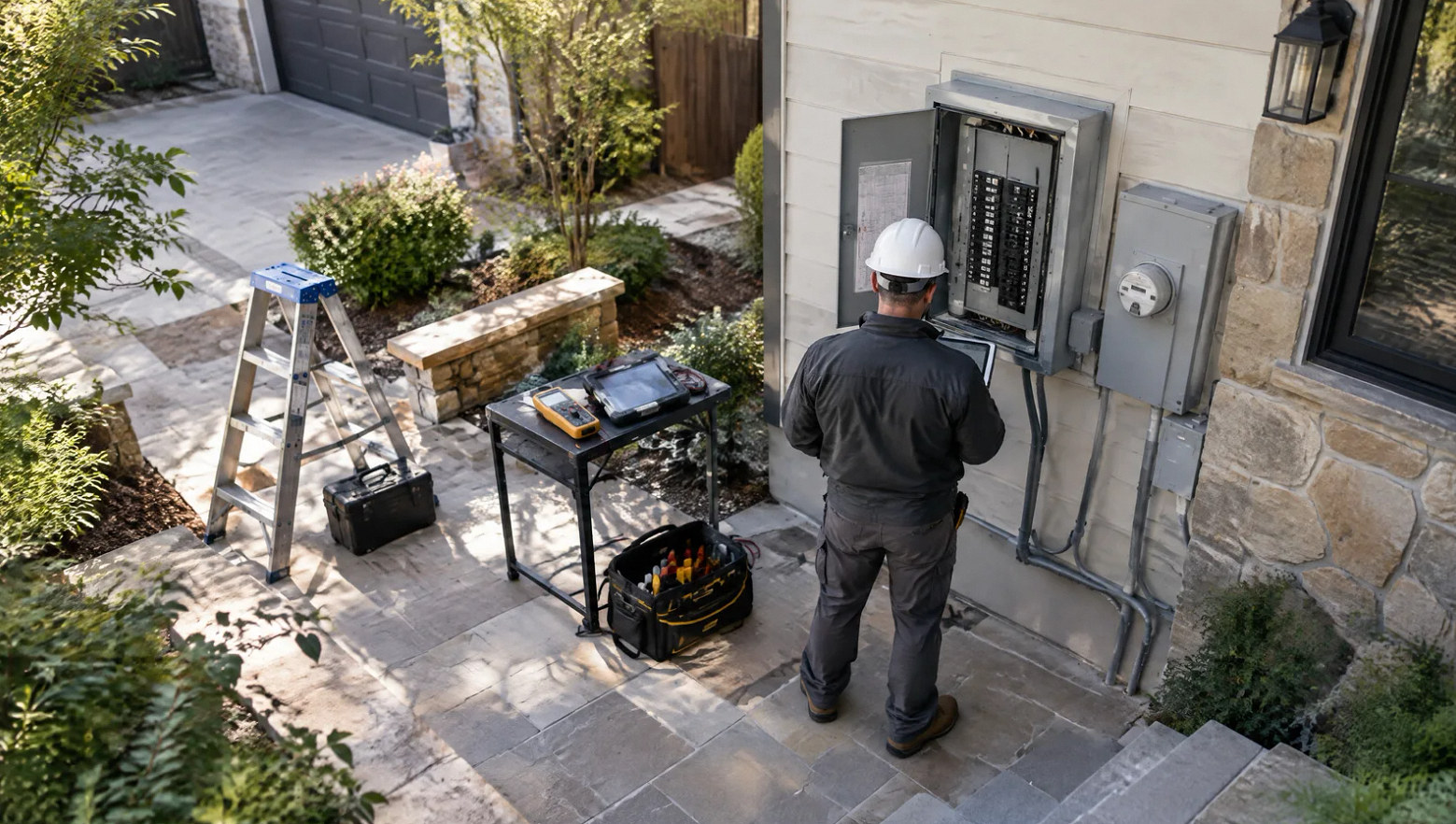
Clamp meter on the affected circuit under load, voltage and continuity readings, GFCI/AFCI trip behavior reproduced.
Root-Cause Trace
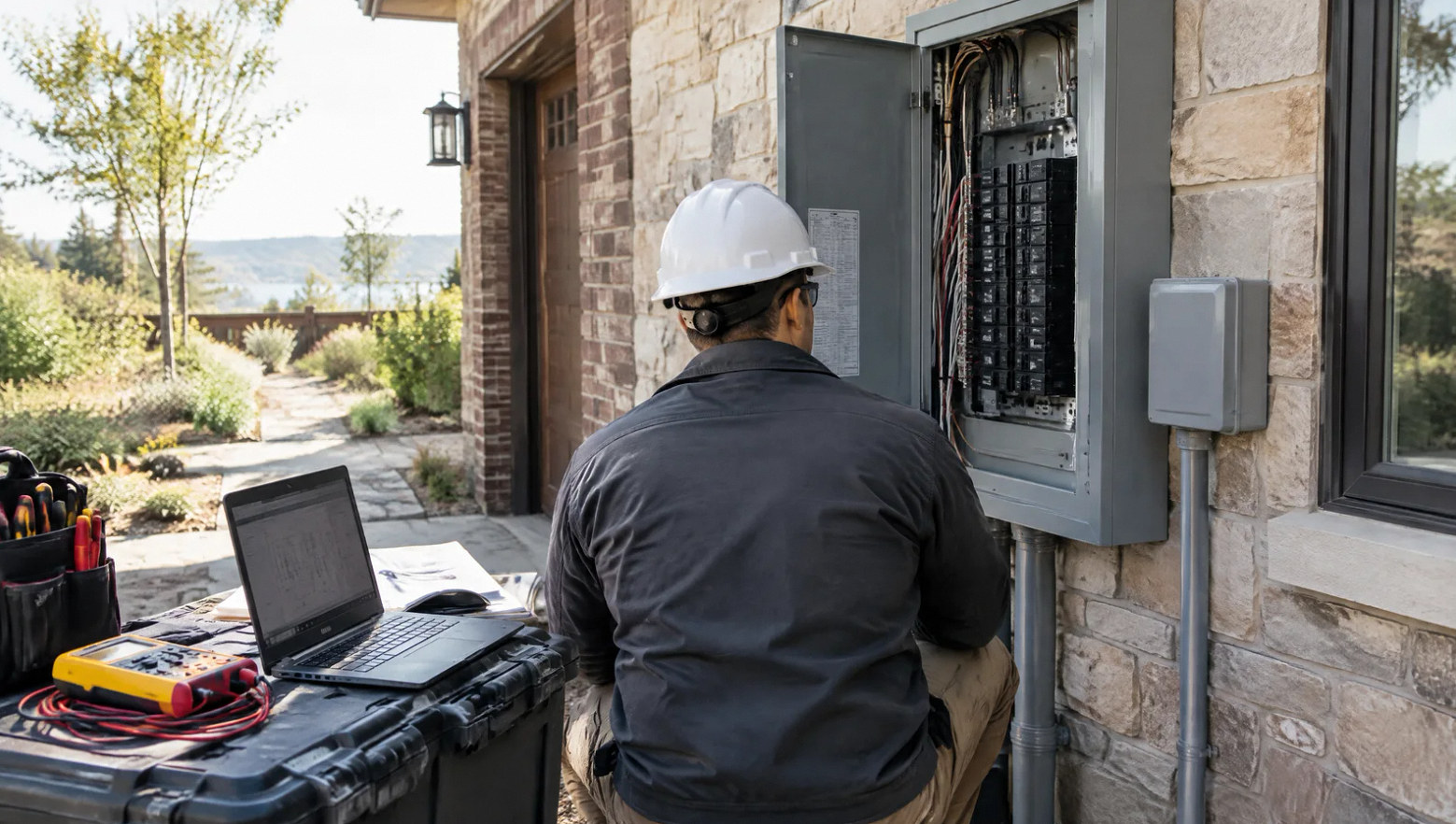
We trace upstream from the symptom to the actual fault — loose backstab, melted insulation, failed device, panel issue. Not just swapping parts.
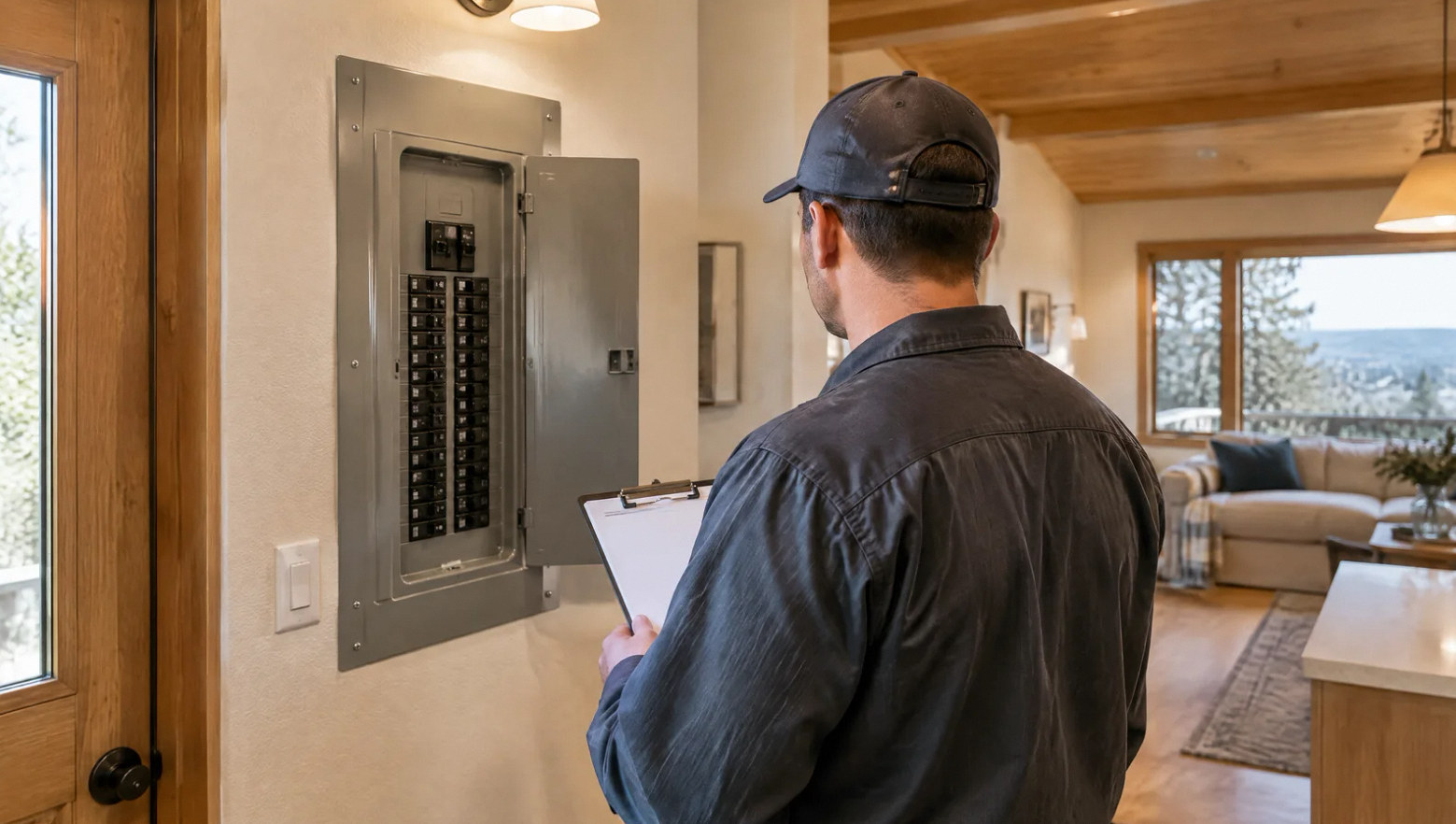
Fix or Quote
Quick fixes done on the spot if scope and parts allow. Larger work gets a written fixed-fee quote for your approval before we proceed.
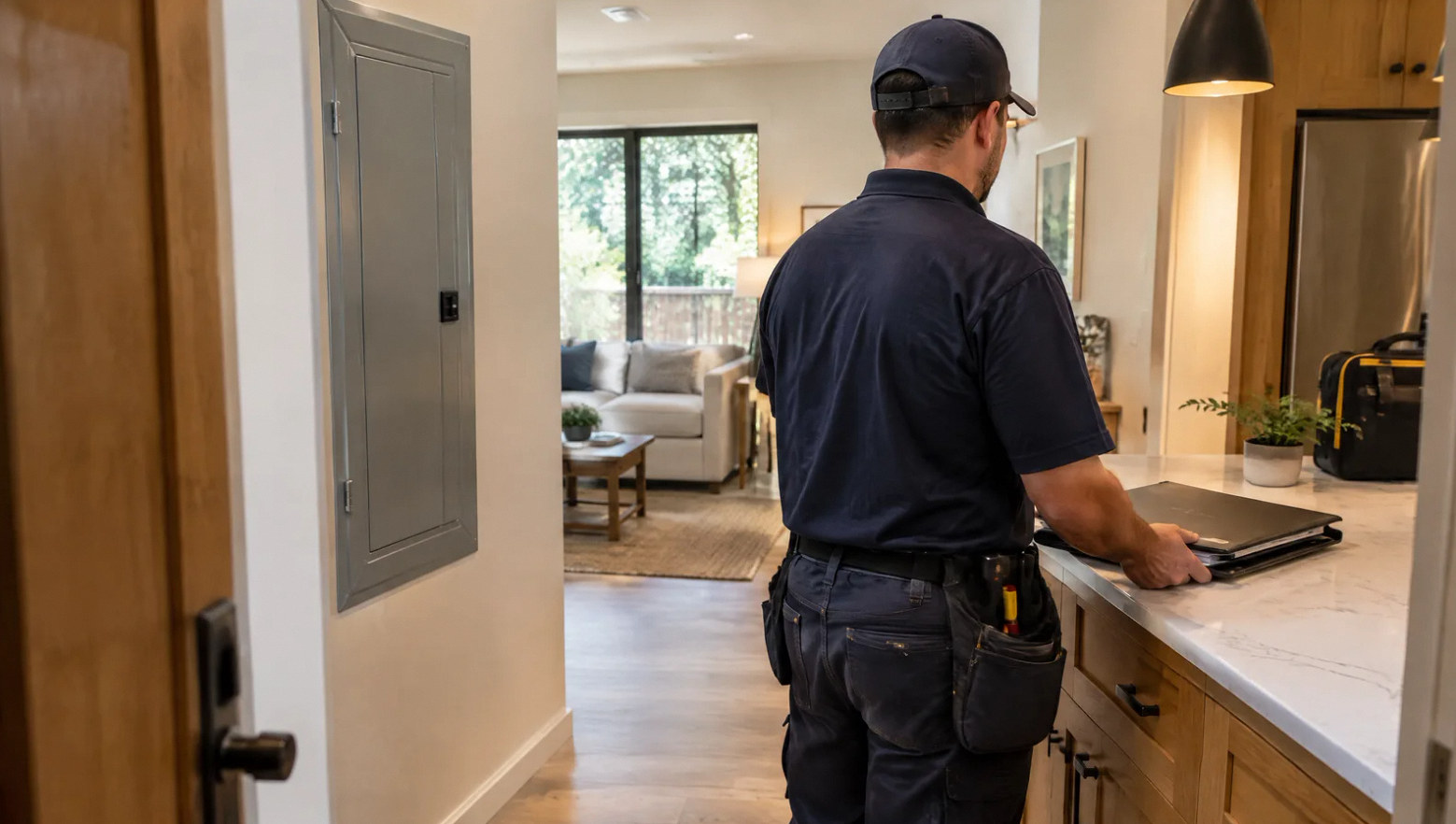
Test & Walkthrough
Affected circuits load-tested, GFCI/AFCI re-armed and trip-tested, and we walk you through what we found and what to watch for.
When To Call
Six signals not to wait on.
Breaker Trips Repeatedly
Not "trips once when you run the microwave + toaster" — trips on the same circuit doing the same thing every time.
Dead Outlets in One Room
GFCI upstream is the most common cause. Loose backstab is second. We find which one.
Flickering Lights
Persistent flicker, especially across circuits, can mean a loose neutral — a fire risk that needs urgent attention.
Burning Smell or Warm Switch
Stop using the affected outlet/switch. Call us. This is not a wait-and-see situation.
Buzzing Panel
A breaker or panel busbar buzzing under load points at a loose lug or failing breaker. Schedule before it gets worse.
Whole-Home Power Half-Out
Half the panel dark = lost service leg (one of the two 120V legs from utility). Call PG&E first; we follow up after they restore.
FAQ
Troubleshooting questions, straight answers.
Something Off?
Get it diagnosed today.
Same-day dispatch available for safety emergencies.
Questions worth a closer look
From a short answer to a practical plan.
Explore the causes, tradeoffs and records behind these common project questions.
What should a recurring-breaker-trip diagnosis explain?
It should identify the installed protection device, evaluated circuit and equipment, findings, completed repair or isolation, and any remaining uncertainty. Another replacement without a supported cause is not a complete explanation.
Read the full guide: A breaker keeps tripping: ask for diagnosis before another replacement ↗What should I report when flickering progresses to partial power?
Report the affected rooms and equipment, timing, brightness changes, partial outage, and any warning signs. Widespread symptoms may require both utility reporting and qualified electrical evaluation; do not open or manipulate equipment.
Read the full guide: Flickering lights and partial power: describe the extent before assuming it is a bulb ↗Does a nonresetting GFCI prove that the outlet has failed?
No. Missing incoming power, a continuing fault, incorrect connections, or device failure can prevent reset. The actual device instructions and qualified diagnosis determine the cause; do not bypass protection.
Read the full guide: Several outlets are dead and the GFCI will not reset: what the symptom can mean ↗Why can mast repair and power restoration happen at different times?
Customer repair, building readiness, inspection release, and utility reconnection can be separate milestones. Ask who controls the next step and confirm actual reconnection rather than assuming a new mast means service is restored.
Read the full guide: Storm damage to a service mast: coordinate safety, repair, inspection, and reconnection ↗Contact Us
Request A Consultation
Local Services
We're in your city.
Choose your city and tell us what you need. We'll plan the project around your location.
Choose your city to include it with your project details.
Or call us to discuss your project:
(650) 550-0819Request received
Thank you. Your request has been received.
