
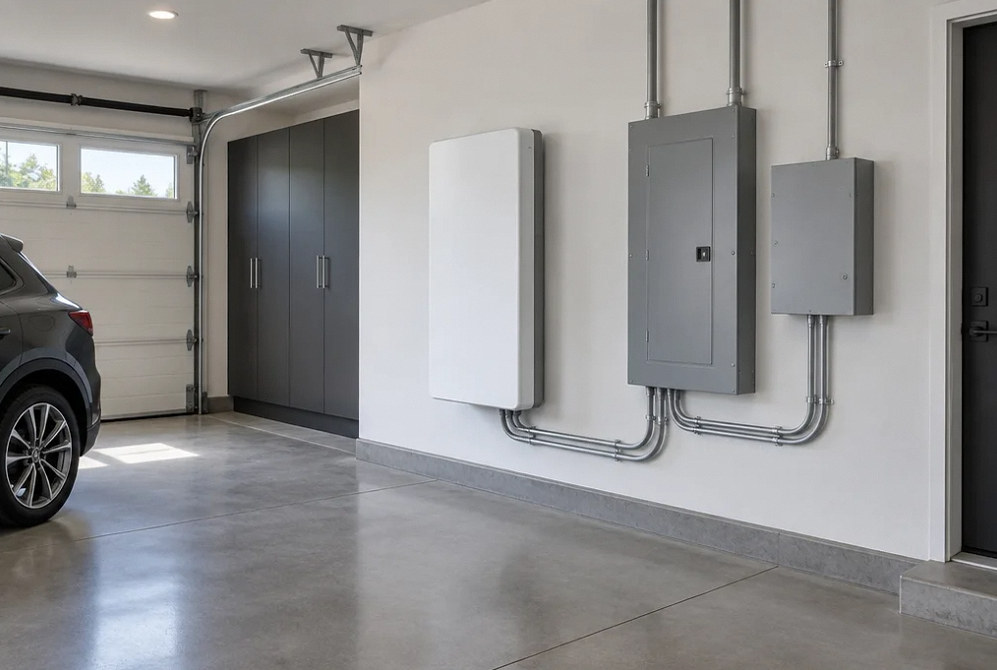
Battery Backup & Powerwall
Home Battery Backup Built Around What You Need to Keep Running
Start with the refrigerator, lights, internet and any larger equipment you need during an outage. YKCA can help define the electrical work for home battery backup, including Powerwall projects, before a battery count or installation location is chosen.
What & Why
Choose the backup plan before the battery count.
A household that needs a refrigerator and work desk through an evening outage has a different project from one that expects air conditioning, cooking and vehicle charging. List the priorities and the loads you are willing to pause.
Battery energy capacity describes stored energy; output power describes what the system can supply at a particular moment. Review both alongside the home's equipment. A whole-home label does not mean unlimited runtime or that every appliance can run together.
Bring these details to the assessment
Backup priorities
Essential rooms, appliances and any larger starting loads
Existing equipment
Panel, solar inverter and battery model information
Outage expectations
An overnight scenario and a longer outage scenario
Possible locations
Garage, exterior wall and access constraints
Project Scope
Define the complete battery installation scope.
The proposal should connect the equipment selection to a usable backup plan and identify any work being completed by another provider.
Household priorities
Record essential circuits and equipment that can wait. Include plans for a second EV, heat pump or other new load without assuming those additions are definite.
Electrical assessment
Review the service, panel arrangement, available spaces and the loads expected during backup. Identify needed circuit separation or load management.
System compatibility
Check the exact battery, inverter and control equipment together. Existing solar or another battery brand needs an explicit compatibility review.
Equipment location
Evaluate the proposed wall or floor area, access, clearances and installation requirements. Keep storage, parking and maintenance access in the discussion.
Permits and utility review
Identify the applicable building, fire and utility reviews, who prepares the documents and which approvals are required for the proposed operating mode.
Commissioning and handoff
Document the backed-up circuits, operating settings, monitoring access and shutdown guidance. Review what the household should do during a prolonged outage.
Project concepts
See the possibilities for your space
Drag the divider to compare before and after, or open a comparison for a closer look.
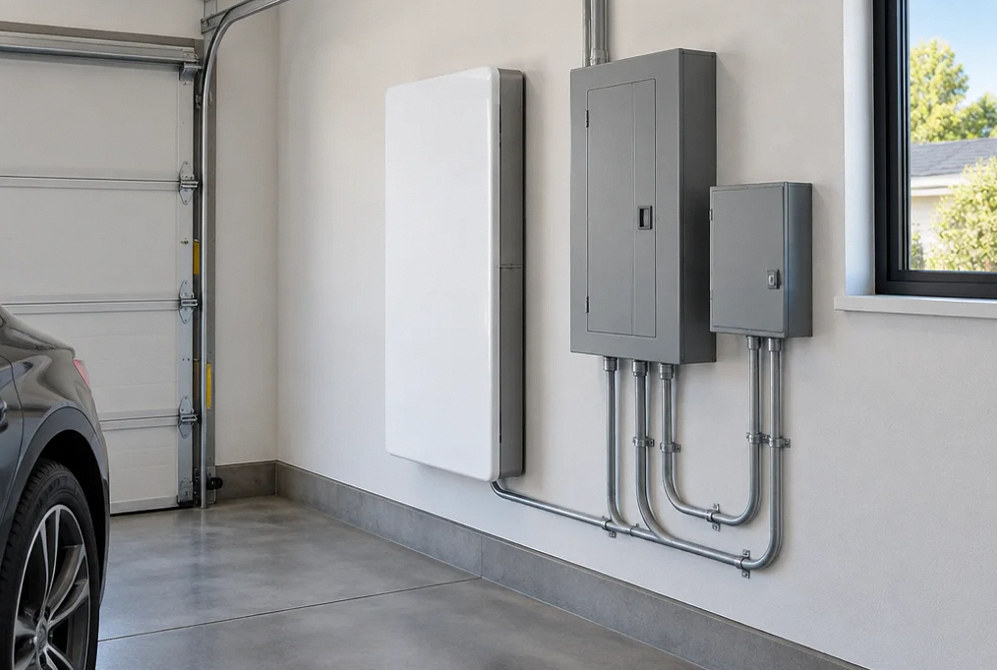
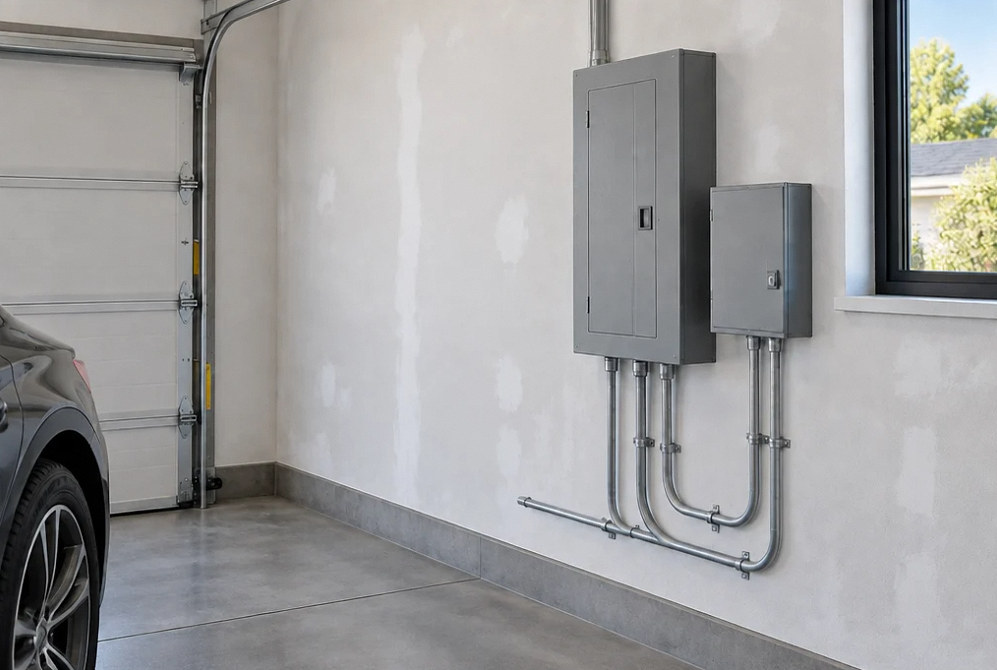
Drag to compare
Before You Choose
Three decisions that change the design
Write the operating assumptions into the proposal so a battery estimate can be compared with another on the same basis.
| Decision | What to define |
|---|---|
| Essential circuits or broader backup | Name the circuits that remain available and any large loads that are excluded or controlled. |
| With solar or without solar | State the charging arrangement and whether the existing solar equipment will participate during an outage. |
| Reserve and expected duration | Specify the assumed starting charge, usage pattern and any expected solar replenishment. |
Estimate Planning
What changes a home battery backup estimate?
Separate the selected battery equipment from the supporting electrical work. A lower equipment price can still require more changes to the existing installation.
- Battery quantity, controls and supported backup configuration
- Panel changes, circuit relocation and cable routes
- Mounting, access and any protective construction
- Design, permit review, utility requirements and commissioning
FAQ
Battery backup questions, straight answers.
Can I install Powerwall without solar?
Tesla supports grid-charged Powerwall backup configurations without solar. Confirm the proposed equipment, charging settings and utility requirements, and document how the owner verifies recharge after an outage. Without a supported local charging source, the battery cannot replenish from an unavailable utility grid; future solar requires a separate compatibility review.
Will one battery run the whole house?
The answer depends on the model, available output and the home's loads. Ask for a circuit list and an explanation of which appliances can run together. Battery count alone is not a complete backup design.
How long will the backup last?
Estimate duration from energy available at the outage start and the loads expected to run, with explicit assumptions for reserve, losses, and any solar replenishment. Compare an overnight no-solar case with a longer event. Whole-home connection and battery count alone do not establish runtime.
Can a battery be added to my existing solar?
A battery can be added when the existing inverter, battery, controls and connection arrangement form a supported system. Provide the equipment model numbers and diagrams before ordering. Confirm grid-connected compatibility and, separately, whether solar will remain active during a utility outage.
Does the garage need to be cleared before planning?
Begin with photos taken from accessible areas and a description of parking and storage needs. The assessment determines whether the proposed location works and what must be moved or changed; do not remove covers or access energized equipment.
What should a Powerwall installation quote identify?
The specific equipment, backed-up circuits, electrical modifications, review responsibilities and commissioning work. Ask who supplies and commissions the battery, what is excluded and which product warranties apply. Manufacturer certification should be verified for the selected provider.
Related electrical services
Technical references · reviewed October 3, 2026
Your Next Step
Plan the circuits you want to keep running.
Share your backup priorities, current solar equipment and proposed battery location. Start with a defined electrical scope.
