
Residential construction / Accessory dwelling units
ADU Construction
Your backyard can pay rent or house your family.
We build detached backyard units, garage conversions and junior ADUs across the Bay Area, fully permitted and ready to move into. One licensed contractor handles permits, every trade and the final inspection.
ADU TYPES
Three ways to add a unit.
California law allows at least one ADU and one junior ADU on almost every single-family lot, and cities must act on a complete ADU application within 60 days. Which type fits depends on your lot, any existing garage and how you plan to use the space. We start with a free lot review, so you know the options before paying for design.
Detached ADU
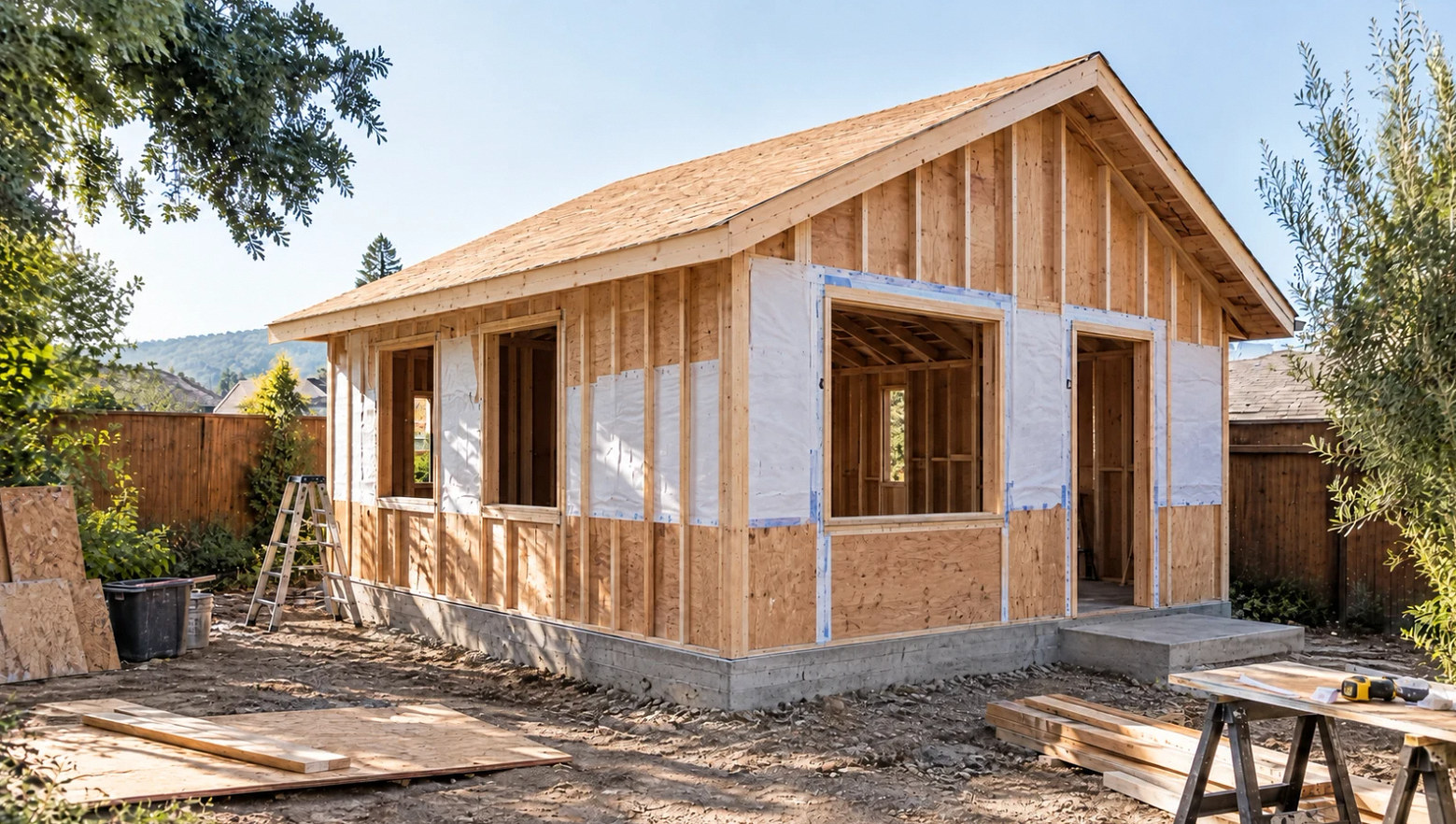
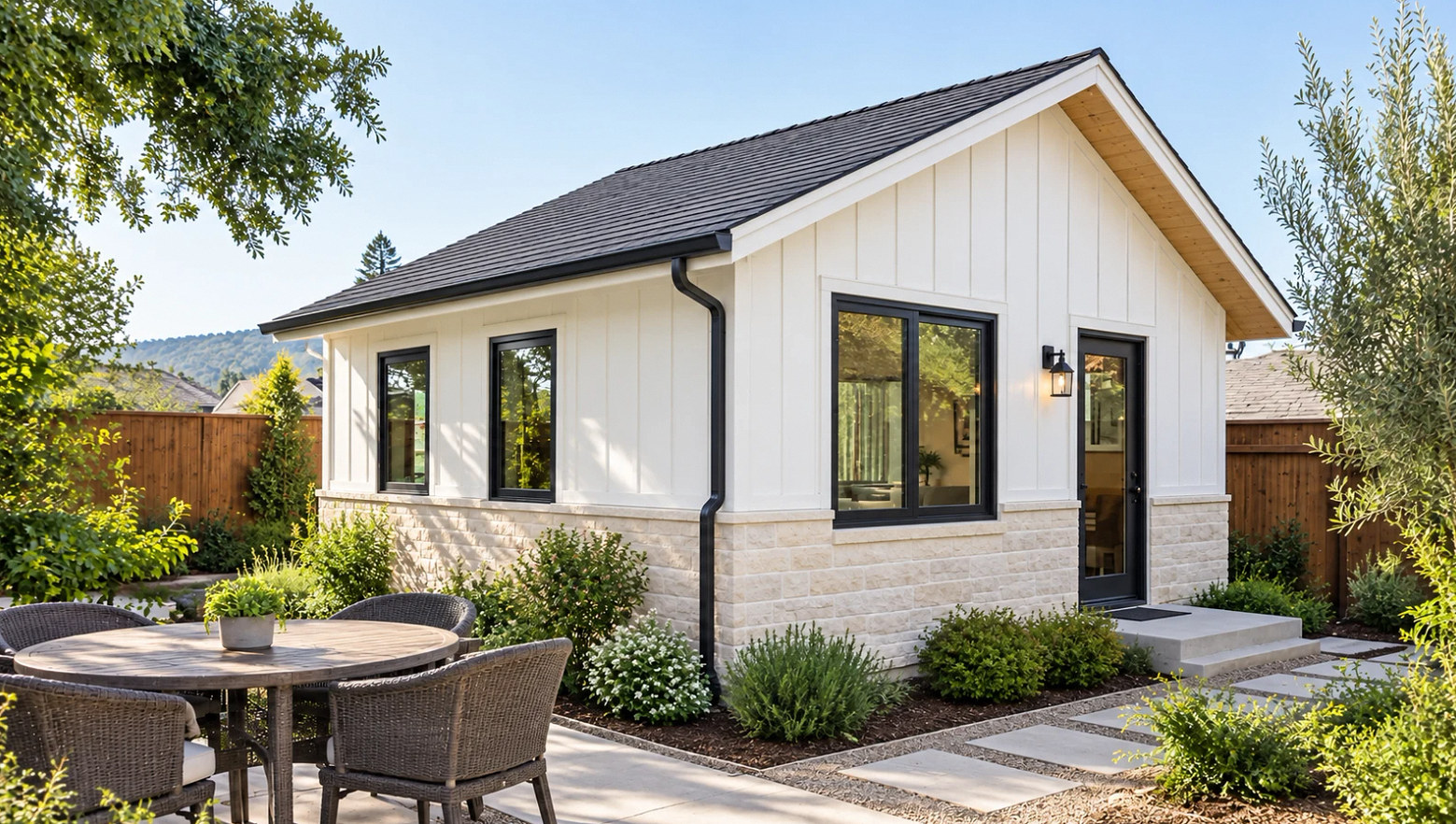
A stand-alone backyard unit with its own entrance, kitchen and bath. The most rental income, and the most construction: foundation, utilities and a new structure.
Garage conversion
Turns an existing garage into a permitted unit. Usually the lowest cost for a full ADU, because the walls, roof and slab are already there.
Junior ADU (JADU)
Up to 500 sq ft carved out of the existing home, with its own entrance and a basic kitchen. The fastest and least expensive option.
Attached ADU
A new addition with its own entrance and kitchen that shares a wall with the house. A good fit when the backyard is too shallow for a detached unit.
Utilities and sewer
Water, sewer and electrical service planned before design. Many ADUs need a main panel upgrade, and we handle the electrical in-house.
Ready on handover
Final inspection passed, utilities connected and every trade complete. Data and EV conduit are roughed in during framing, not added later.
WHAT DRIVES THE COST
What moves the price of an ADU.
Every ADU is priced after the lot review. These items change the number most, so we look at them first.
Type of ADU
A junior ADU inside the home costs the least, a garage conversion more, and a new detached building the most.
Size
Under state law, units under 750 square feet pay no impact fees, which is why many ADUs are designed just under that line.
Utilities
Trenching for water, sewer and power, and a PG&E service upgrade or separate meter, are often the biggest surprises.
Site access
Narrow side yards, slopes and trees slow construction and can require small equipment or hand work.
Soft costs
Design, engineering, permits and utility fees come on top of construction.
Finishes
Kitchen, bathroom and flooring selections move the budget as much as in a full-size home.
Planning the work
From lot review to keys.
Free lot review
Parcel map, setbacks, existing structures and utility connection points, so you know which ADU type fits.
Design and permit set
Plans, structural calculations and Title 24 energy compliance, submitted and tracked through city review.
Construction
About 4 to 6 months for a detached unit, 2 to 4 months for a garage conversion or junior ADU.
Inspection and handover
Final inspection, utilities connected and the unit ready to rent or move into.
How much does an ADU cost in the Bay Area?
Most Bay Area ADUs cost $100,000 to $400,000 in 2026. A junior ADU inside the home runs about $40,000 to $120,000, a garage conversion $100,000 to $200,000, and a new detached unit $250,000 to $400,000 or more. Design, permits and utility fees typically add 12 to 18 percent on top of construction.
How long does it take to build an ADU?
Most Bay Area ADUs take 9 to 14 months from the first design meeting to final inspection, and permitting is the larger share. City review typically takes 2 to 6 months including corrections. Once permits are issued, a detached ADU takes about 4 to 6 months to build, a garage conversion or junior ADU about 2 to 4 months.
Can I rent out my ADU without living on the property?
Yes. Since AB 976 took effect in 2024, California cities cannot require the owner to live on a property with an ADU, so you can rent both the house and the ADU. Junior ADUs are the exception: the owner must live in either the main home or the JADU. Short-term rentals are regulated city by city.
What are the size and setback limits for an ADU?
Most detached ADUs can be up to 1,200 sq ft with 4-foot side and rear setbacks, and state law guarantees at least 800 sq ft regardless of local lot coverage rules. Height is generally limited to 16 feet for a detached unit, with more allowed near transit and for attached units. Junior ADUs are capped at 500 sq ft inside the existing home.
Does an ADU raise property taxes or impact fees?
An ADU under 750 sq ft is exempt from impact fees under state law, and larger units can be charged fees proportional to the main home. Property tax is reassessed only on the value the ADU adds, not on the whole property.
How do utilities and sewer work for a new ADU?
A detached ADU usually connects to the existing water and sewer lines, and some cities require a separate meter or a sewer lateral inspection. Electrical is fed from the main panel through a subpanel, and many homes need a panel upgrade to carry the extra load. We coordinate the utility applications and inspections.
