
Commercial · Title 24 lighting controls
Commercial Lighting Controls, Designed around how the space works.
Coordinate occupancy sensors, daylight response, dimming and schedules with the lighting plan. Make the controls understandable for the people who use and maintain the building.
Project planning
A controls scope needs more than a device count. Bring the lighting plan and the intended operation of each room.
The starting point
Specify the behavior before choosing the switches.
A meeting room, open office and stockroom do not need the same lighting behavior. Define how lights turn on, respond to vacancy and daylight, and return to their scheduled state. Then match sensors, dimmers and drivers to that sequence.
A Title 24 lighting controls project also needs clear responsibilities for design, installation, programming and any required acceptance testing. Naming a control brand does not resolve those decisions or establish that an existing fixture will dim correctly.
Scope of work
From control intent to everyday operation.
Document existing controls
Identify control panels, sensors, switching zones and fixture drivers. Record systems that will remain and the areas affected by the alteration.
Define the sequence
Describe occupancy response, manual operation, scheduling and daylight behavior for each space. Resolve conflicting tenant and facility requirements early.
Check compatibility
Review the proposed control method against the fixture and driver documentation. Confirm interfaces before ordering mixed replacement equipment.
Install and identify
Coordinate sensor coverage, wall stations and control wiring with ceilings, partitions and furniture. Label zones so the operating intent remains traceable.
Program and check
Set the agreed sequence, check representative operating conditions and record the final settings. Resolve unexpected dimming or sensor behavior before handoff.
Coordinate acceptance
Identify required tests and documentation with the design team. Schedule a certified lighting-controls acceptance test technician where the project requires one.
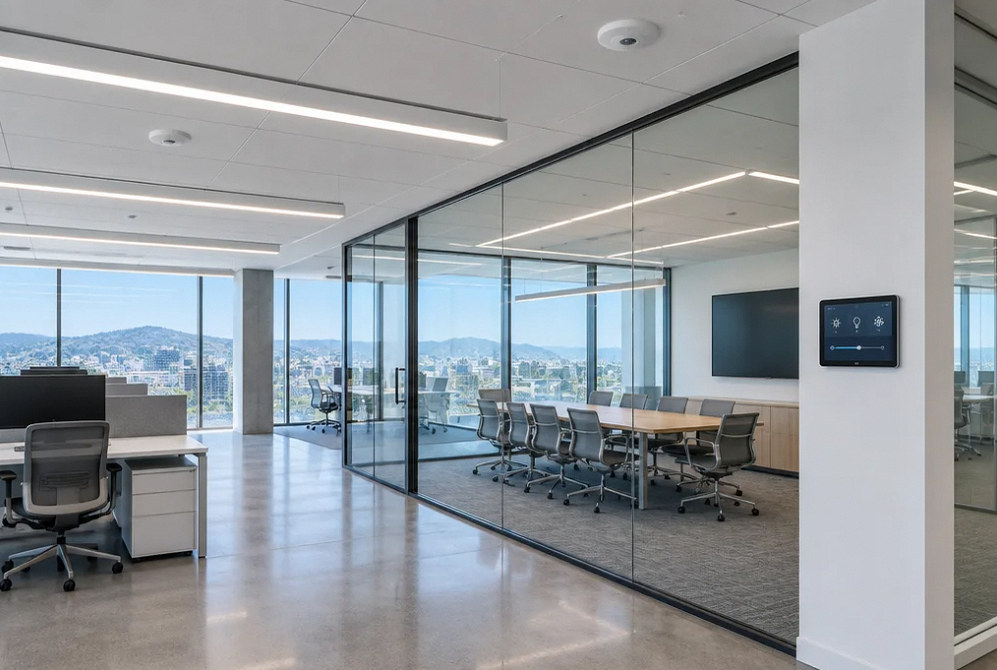
Installation concept.
Project handoff
Leave a usable record of the settings.
Agree the handoff package with the facility team before programming begins.
Zone map
Connect switches, sensors and control channels to the spaces they serve.
Operating sequence
Record occupied, vacant, daylight and scheduled behavior in plain language.
Project documents
Retain applicable compliance, installation and acceptance records for the permitted scope.
User instructions
Explain everyday overrides and identify who can change protected programming settings.
Project scenarios
Choose the right starting point for the controls.
The practical question is what stays, what changes and how the parts will work together.
Existing fixtures
Controls-only changes
Verify the interface
New sensors or scheduling may be possible without replacing every fixture. Review the driver, wiring and available control interface before defining the retrofit.
Lighting upgrade
New LEDs and controls
Coordinate one package
Fixture selection and controls should be reviewed together. A lamp or driver change can affect dimming performance and the functions the new system can support.
New tenant layout
Reworked control zones
Follow the rooms
Partitions and room uses can change occupancy coverage and daylight zones. Update the sequence with the tenant layout rather than leaving the previous zoning in place.
Keep the compliance design, installation scope and acceptance-testing responsibilities explicit; no single product guarantees project compliance.
FAQ
Title 24 controls questions to settle early.

Plan your project
Describe how the lighting should behave.
Share the lighting plan, existing control equipment and the rooms being changed. Tell us where operation, dimming or scheduling is causing problems.
Questions worth a closer look
From a short answer to a practical plan.
Explore the causes, tradeoffs and records behind these common project questions.
Should we replace every fixture when new LED lighting flickers?
Start by documenting the fixtures, drivers, controls and the conditions that trigger flicker. Review manufacturer compatibility and test an approved combination in a representative zone before committing to a full replacement; the circuit may also require investigation.
Read the full guide: LED retrofit flicker: review the fixture, driver and control as one system ↗What should be ready before the lighting-controls acceptance technician arrives?
Confirm the applicable tests with the design team, install and configure the specified controls, and prepare zone information, approved documents and safe access. Assign correction and retesting responsibilities, and include the completed acceptance records in the facility handover.
Read the full guide: Commercial lighting acceptance testing: plan the handover before installation ↗Contact Us
Request A Consultation
Local Services
We're in your city.
Choose your city and tell us what you need. We'll plan the project around your location.
Choose your city to include it with your project details.
Or call us to discuss your project:
(650) 550-0819Request received
Thank you. Your request has been received.
