
Structural drying · 6 min read
A Moisture Meter Says 100%: Does That Justify Demolition?
Interpret a high reading on tile or drywall by checking the instrument scale, comparison material and confirmation behind the removal decision.
YKCA · References checked 2026-10-03
Start with the essentials
A number needs a measurement context
At a glance
Three things to keep in view.
Identify the scale
Relative indication, wood equivalent and material moisture differ.
Check the comparison
Use the same material, instrument mode and repeatable location.
Confirm the condition
Connect the finding to the reason for access or removal.
The key point
Ask what the number measures before accepting the conclusion. A relative meter display is not the percentage of a wall made of water, and a thermal image is not independent proof of moisture.
A high number feels objective, especially when someone holds a meter against your wall and says it proves the room is saturated. The instrument may be finding a real problem. But the meaning of its display depends on the device, measurement mode and material. Those details matter before a structural drying assessment turns into a demolition authorization.
The aim is not to defeat the instrument or the assessor. It is to understand what was measured, how the finding was checked and why a particular action follows. That is a reasonable request when the decision involves removing a wall, tile assembly or expensive finish.
Related service: Structural drying questions and planning
Ask for the instrument and mode
Have the assessor identify the meter model and the mode being used. Ask whether its scale reports a relative indication, a wood moisture equivalent or a measurement intended for the material being tested. Protimeter's public guidance distinguishes its noninvasive relative scale from pin measurements. It also explains that a wood-based calibration used on another material needs interpretation.
Write the number with that context. A note saying bathroom wall 100% can create false certainty if the instrument actually uses a relative search scale. You do not need to reproduce the manufacturer's calibration, but you should receive a plain explanation. Ask the assessor to show the relevant instrument guidance if the display is being used to support a costly removal decision.
Sources for this section
Protimeter: Moisture meter scales, limitations and metal interference
Locate the reading precisely
Mark the position on a photograph or room sketch and identify the surface and assembly. A reading near metal corner bead is not necessarily comparable to one in the center of a wall. A tiled shower, painted gypsum wall and wood trim also should not be treated as interchangeable measurement surfaces. The record should be specific enough for the location to be checked again.
If the concern extends behind a finish, ask what depth or region the instrument can assess and what remains outside its reach. A surface check cannot automatically describe every concealed layer. Conversely, an indication beneath a finish does not identify the exact affected component. The assessor should distinguish what the instrument suggests from what has been directly observed.
Compare like with like
Ask for a suitable unaffected comparison area using the same material and instrument setup. The comparison is a way to understand the building's baseline, not a guarantee that a convenient nearby point is actually dry. If the reference area may also be affected, the assessor needs another basis for the target. Record why the chosen comparison is appropriate.
Keep repeated measurements consistent. A different instrument, angle, position or depth can produce a different result without a real change in the material. If a drying log shows a sudden jump, ask whether the method changed. It is better to annotate the record than to connect incompatible values into a convincing-looking but meaningless trend.
Sources for this section
Protimeter: Moisture meter scales, limitations and metal interference
Investigate possible interference before dismissing or accepting it
Protimeter warns that hidden metal can influence noninvasive readings and recommends confirming findings using an appropriate method. This is relevant around metal lath, corner details and concealed components. An unusually consistent high pattern can therefore be a reason for further investigation. It is not a reliable basis for declaring that no moisture exists.
Let the qualified assessor select safe confirmation. Do not drive pins or drill holes into an unknown assembly yourself, particularly near electrical or plumbing routes. Ask what the confirmation is expected to resolve and whether a targeted opening is needed. If the contractor cannot distinguish a possible interference pattern from the asserted damage, another assessment may be more useful than arguing about the display.
Sources for this section
Protimeter: Moisture meter scales, limitations and metal interference
Connect the measurement to material condition
A moisture finding is one part of deciding whether a material can remain. The assessment also needs to address its physical condition, contamination, access and drying feasibility. Ask why the proposed action is to dry, inspect, detach or replace. A very wet but retainable material and a physically failed material may lead to different scopes even when both initially produce high readings.
Thermal images require similar care. They show temperature patterns that can help guide investigation; they do not by themselves identify water content or prove the absence of moisture. Request the supporting observations and measurements for the affected area. Combining two unexplained pictures does not automatically produce a stronger diagnosis than one well-documented assessment.
Sources for this section
Request a decision record before authorizing removal
The useful record is compact: location, material, instrument and mode, finding, comparison or confirmation, condition and proposed action. Ask what uncertainty would remain if the material were retained and what an opening would resolve. This lets you evaluate a targeted next step rather than choosing between doing nothing and accepting an unexplained room-wide demolition.
If another assessor disagrees, have them address the same recorded locations and methods. That comparison can reveal a missed layer or an instrument limitation. Keep the original findings even when the conclusion changes; they explain how the decision developed. A defensible assessment can describe both its evidence and its limits without turning a single high number into a complete story about your house.
Common questions
Can hidden metal make a meter read high?
It can affect some noninvasive instruments. Protimeter specifically warns about metal behind a surface and recommends appropriate confirmation. The possibility of interference is a reason to investigate, not proof that every high reading is false.
Sources for this section
Protimeter: Moisture meter scales, limitations and metal interference
Can I compare my inexpensive meter with the contractor's number?
Only after identifying both instruments, modes, scales and measurement locations. Different displays may not be numerically comparable. Ask the contractor to demonstrate a repeatable comparison rather than treating a disagreement between two devices as proof that one party is wrong.
Sources for this section
Protimeter: Moisture meter scales, limitations and metal interference
Sources and further reading
References checked 2026-10-03. Guidance depends on the loss, affected materials, scope of work and property conditions.
The homeowner question behind this guide
These public discussions informed the questions addressed here. Personal experiences and comments are not technical findings or proof of insurance coverage.
Discuss the next step for your property.
Share what happened, which areas are affected and the decisions you need help with.
Discuss structural dryingRelated decisions
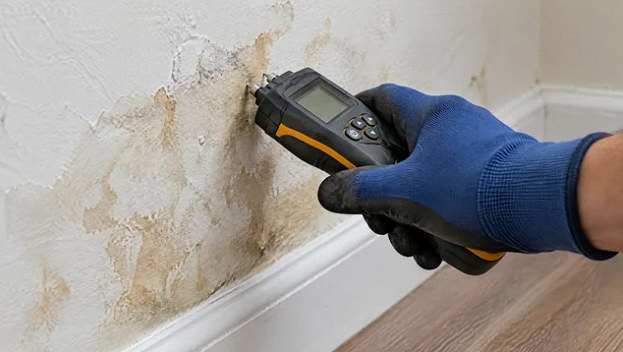
First decisions · 4 min read
Hidden Moisture: What Meters and Thermal Cameras Can Tell You
Learn how to read a moisture report, distinguish instrument scales, and ask useful questions about concealed walls, floors, and ceilings.
Read the guide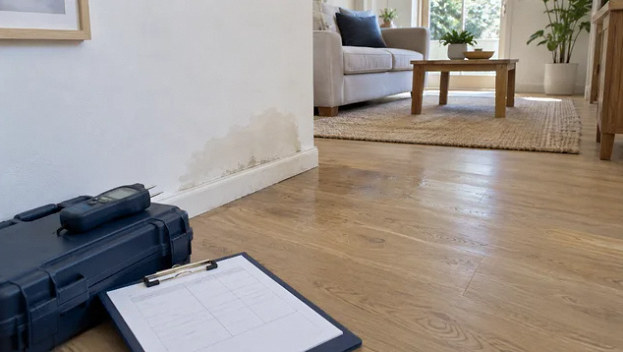
First decisions · 4 min read
Water Damage Categories and Classes: What the Numbers Mean
Understand contamination categories, drying classes, and the evidence to request when a restoration scope changes.
Read the guide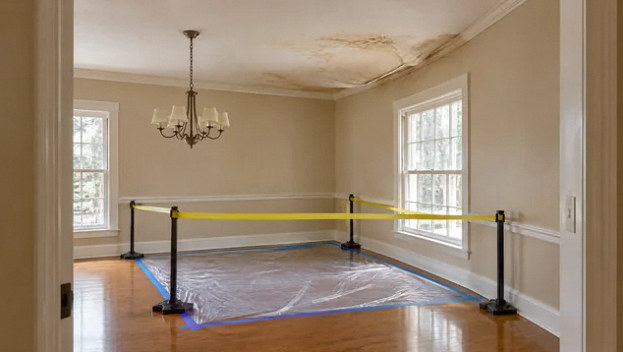
Materials and repairs · 5 min read
Wet Drywall and Ceilings: Dry, Open, or Replace?
Questions that help explain a drywall decision after a leak, including condition, concealed layers, access, and readiness for repairs.
Read the guide