
Structural drying · 6 min read
Drying Equipment and Your Electric Bill: Calculate the Added Use
Estimate electricity used by restoration fans and dehumidifiers, separate it from rental charges and keep records for a reimbursement request.
YKCA · References checked 2026-10-03
Start with the essentials
From equipment operation to energy cost
At a glance
Three things to keep in view.
Measure the load
Record actual watts when available, not a guessed fan rating.
Track the hours
Count each device's time on site and time operating separately.
Apply your tariff
Use the relevant energy rate and retain the original bill.
The key point
Estimate equipment energy from measured watts and operating hours, then apply your actual electricity tariff. Keep that calculation separate from the contractor's equipment rental invoice.
Structural drying can involve several machines running for days, so the electricity bill is a legitimate question. It is also easy to estimate badly. Counting machines does not reveal their power use, and a contractor's daily equipment rental charge is not the same expense as the electricity that operates the equipment.
Build a small record while the work is happening. That gives you a useful estimate, a way to check a surprising bill and evidence if you request reimbursement. It also allows you to discuss costs without interrupting a drying plan based on an alarming number found online.
Related service: Structural drying questions and planning
Make a device list before calculating
Ask the restoration team for the type and model of every powered device, its placement and the date it began operating. Keep air movers, dehumidifiers and filtration equipment as separate entries. Photograph labels only where they are safely accessible, without moving equipment or disconnecting cords. If a device is replaced or relocated, record the change instead of counting both as operating for the whole project.
Use the contractor's equipment log to confirm your list. A machine remaining on site may have been turned off, while a replacement may have begun mid-day. Installation and collection times are useful, but they are not always identical to operating hours. Ask the team to explain how interruptions, cycling and equipment changes should be represented in your calculation.
Use energy units correctly
Power is the rate at which equipment uses energy. Energy adds up over time. For a device drawing a known wattage, multiply watts by operating hours and divide by 1,000 to obtain kilowatt-hours, or kWh. Add the device totals before applying the appropriate electricity price. The Department of Energy's educational material explains this basic relationship.
Distinguish measured power from a label rating or assumption. Some devices cycle, and a rated maximum may not describe average operation. A current rating multiplied by nominal voltage is not necessarily a precise measurement of real watts. Ask whether the contractor has manufacturer information or suitable monitoring records. Do not insert an unsuitable household meter into a wet or high-load arrangement to improve your estimate.
Sources for this section
Match the calculation to your utility tariff
Look at the bill covering the drying period and identify the charges that vary with additional energy use. Rates can depend on time of day, usage tier or the structure of your account. Use the rate relevant to the added consumption rather than copying a statewide average. If you cannot separate the components confidently, ask the utility how to estimate the incremental cost.
A simple flat-rate example is a learning tool, not a forecast. Where time-of-use pricing applies, dividing the equipment hours across the relevant periods may improve the estimate. Fixed monthly fees would generally exist without the machines, so do not automatically attribute them to restoration. Record the assumptions beside the result so another person can understand how you obtained it.
Compare bills without treating the difference as proof
The previous month's bill can provide context, but weather, heating or cooling use, occupancy and billing days may have changed. If the household moved out temporarily, some ordinary usage may have fallen even while drying equipment added load. A whole-bill comparison and an equipment calculation therefore answer related but different questions.
If the actual increase is much larger than the equipment estimate, review the operating period and inputs before drawing a conclusion. Confirm whether heaters or other equipment were omitted and whether the billing dates overlap the job. Ask the utility about meter data if available. Do not assume a discrepancy proves either a billing error or that the contractor used an unreasonable number of machines.
Ask about reimbursement while records are available
For an insured loss, ask the adjuster whether incremental electricity expense is eligible for consideration and which records are required. Supply the dates, equipment list, calculation assumptions and original bill. If management or another party has offered to cover added use, request the method and agreement in writing. A technician's informal assurance may not be the final payment decision.
Keep utility expense separate from rental, monitoring and labor charges. Those line items pay for different things, even though they occur during the same period. California's claims guide emphasizes keeping records after a loss; it does not promise that every restoration-related expense is reimbursed. Coverage and the amount accepted require a response specific to the policy and facts.
Sources for this section
California Department of Insurance: Residential Property Claims Guide
Discuss cost through the drying plan, not an unrecorded shutdown
If cost is a concern, ask the team which material is still above the target, how its measurements are changing and what would allow equipment to be removed. You can request a review of device placement and the remaining scope without unplugging machines on your own. The decision should connect actual drying progress with continued equipment use.
Report any electrical warning signs promptly through the responsible professional rather than treating them as a normal consequence of high energy use. Crackling, damaged cords or water near electrical components raises a safety question that a utility-cost calculation cannot answer. For ordinary cost questions, an organized equipment log and a transparent estimate provide a much stronger basis for discussion than a guess based on the noise in the room.
Common questions
Can I multiply the label amps by voltage to get my exact bill?
That is not an exact energy measurement. A label may describe rated conditions, while real power and operating time vary. Ask for measured watts or energy-use records when available and label a nameplate-based calculation as an estimate.
Sources for this section
Will insurance reimburse the whole increase in my bill?
Do not assume that. Ask the adjuster which additional electricity costs can be considered, what evidence is required and how the comparison should be made. Other household use and rate changes may also affect the bill.
Sources for this section
California Department of Insurance: Residential Property Claims Guide
Sources and further reading
References checked 2026-10-03. Guidance depends on the loss, affected materials, scope of work and property conditions.
The homeowner question behind this guide
These public discussions informed the questions addressed here. Personal experiences and comments are not technical findings or proof of insurance coverage.
Discuss the next step for your property.
Share what happened, which areas are affected and the decisions you need help with.
Discuss structural dryingRelated decisions
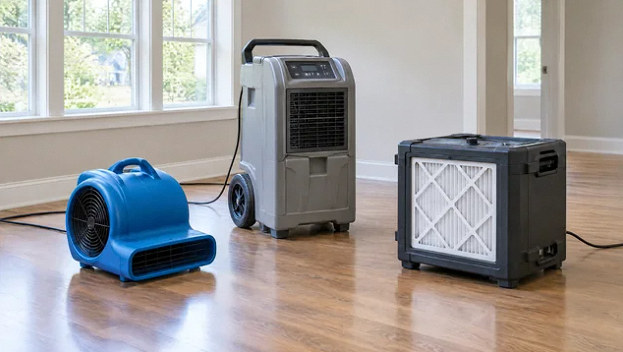
Drying and equipment · 5 min read
Fans, Dehumidifiers, and Air Scrubbers: What Each One Does
Understand the different jobs of restoration equipment and ask how the setup will reach wet materials and verify progress.
Read the guide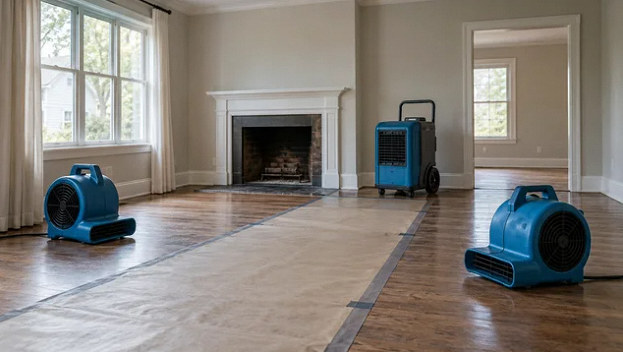
Drying and equipment · 3 min read
How Much Drying Equipment Does a Water Damage Job Need?
Compare a drying equipment plan using affected materials, room dimensions, machine capacity, and documented progress.
Read the guide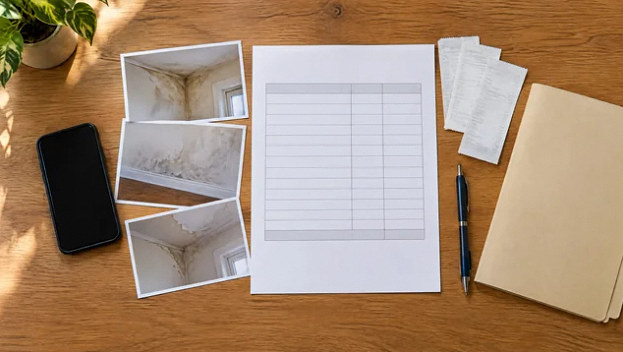
Documentation · 5 min read
Water Damage Estimates: Understand the Work and Keep Clear Records
Review emergency authorization, equipment charges, scope changes, and insurance documentation without assuming every cost is covered.
Read the guide