
Drying and equipment · 5 min read
How Long Does Water Damage Drying Take?
Understand what controls drying time, what a useful progress report includes, and which questions to ask before equipment is removed.
YKCA · References checked 2026-09-27
Start with the essentials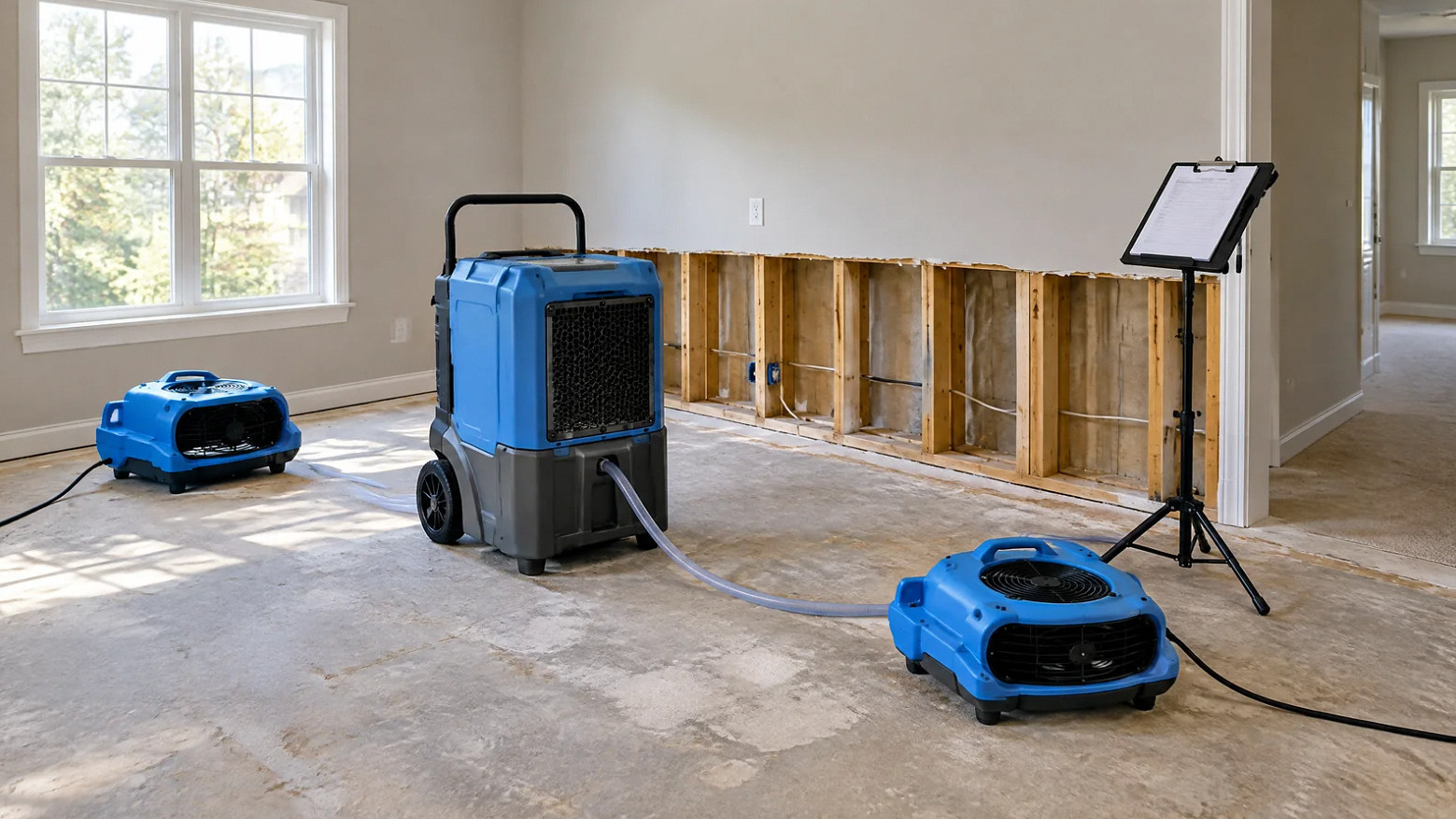
At a glance
Three things to keep in view.
Follow each material
Read progress by location and material. A room humidity reading cannot establish that a covered floor layer has reached its goal.
Explain stalled areas
Connect an unchanged reading to the next investigation or adjustment. More equipment time needs an explanation of the condition still being addressed.
Separate the milestones
Confirm whether a proposed completion date means drying, equipment pickup, or finished repairs before arranging furniture delivery or another trade.
The key point
Drying takes as long as the affected materials need to reach appropriate, verified conditions. Removing liquid water, helping the remaining moisture evaporate, and removing that vapor from the air are connected steps. Concealed layers, material type, and continuing water entry affect progress. Measurements determine completion; a calendar estimate helps with planning.
A wiped floor can look dry while material underneath remains wet. A room may also feel comfortable before its walls or floor have reached the intended condition. These differences explain why two leaks discovered on the same day can have different drying schedules.
An initial estimate should describe the affected materials and the next progress check. It becomes more useful as inspection resolves hidden areas and repeated measurements show how the materials are responding.
Water leaves in several steps
Extraction removes accessible liquid water. Removing that water early reduces the amount that must later leave by evaporation. The remaining moisture still has to move out of wet materials; an extractor passing over the surface does not complete that work.
Air movement helps water evaporate from accessible wet surfaces. That transfers moisture into the air. Dehumidification removes water vapor from the air so the space can continue supporting drying. These steps work together: circulating humid air alone does not remove the water from the room.
The appropriate method also depends on contamination. Ordinary fan drying can spread contamination, so the water source and the affected area need assessment before equipment is selected.
Sources for this section
The slowest wet layer affects the schedule
An exposed surface and a covered layer have different paths for moisture to leave. Water beneath flooring, behind a cabinet, or within a wall may need a different approach from water on an accessible surface. More airflow across the visible finish does not necessarily reach the material that is still wet.
The scope should identify those layers, including the supporting floor, and explain how progress will be checked. Material condition and contamination may also make removal appropriate. Drying time is therefore a question about the particular assembly, not just the size of the room.
Sources for this section
Dry means a material-specific result
Moisture instruments and room-humidity instruments answer different questions. EPA describes material moisture meters as tools for evaluating wet materials and tracking drying. A room-humidity result cannot establish the condition of every wall or floor layer.
A material reading needs context. Relative pinless readings are compared with an appropriate dry reference, rather than one universal number. The report should identify the reference and keep the instrument, material, and measurement location comparable across visits.
A progress update should explain the trend
A useful update identifies which locations are improving, which have reached their goal, and which need investigation. The results should connect to the next action, rather than simply report that equipment is still running.
- Which materials and locations were checked again?
- What changed, and which areas remain unresolved?
- Was equipment or access changed, and why?
- What finding would change the plan, and when is the next review?
A stalled area needs an explanation
Room readings need context: relative humidity changes with temperature, even without removal of water vapor. Equipment also has model-specific operating requirements. Review the material results alongside the operating record before treating a lower room-humidity reading or another day of equipment use as proof of progress.
Suppose the exposed floor improves but an area beside a cabinet does not. The next step is to confirm the finding and investigate the affected layer and water source. Report new leaks, alarms, or power interruptions so the team can account for changes between visits.
Separate equipment pickup from the repair schedule
Drying completion and repair completion are separate milestones. Final material measurements help document the first. Replacement trim, a flooring decision, painting, or other repairs may still remain.
Before equipment pickup, identify who receives the final measurements and who determines readiness for the planned finish. A completion date should state whether it refers to drying or normal use of the repaired room.
Common questions
Does the 24–48-hour mold guidance mean drying should finish within two days?
No. EPA presents that window as response guidance for clean-water damage and reducing mold risk, with qualifications. It is not a universal completion deadline or a guarantee about mold. The affected materials still require an appropriate assessment and verification.
Sources for this section
Can the room feel dry while work remains?
Yes. Air conditions and material conditions are different. A dry-feeling exposed surface also does not establish the condition of a covered layer. The completion record should address the materials in the scope, including any area that remains inaccessible or unresolved.
Sources for this section
Mold Remediation in Schools and Commercial Buildings Guide: Chapter 3
Sources and further reading
References checked 2026-09-27. Guidance depends on the loss, affected materials, scope of work and property conditions.
- Mold Remediation in Schools and Commercial Buildings Guide: Chapter 3
- FLIR & EXTECH - Pinless Moisture Meter Reading Values
- Table 1: Water Damage – Cleanup and Mold Prevention
- Understanding humidity, part 1: Fundamental concepts every engineer should know
- DryMAX XL Pro | XL LGR Dehumidifier Owner's Manual
Discuss the next step for your property.
Share what happened, which areas are affected and the decisions you need help with.
Discuss water damage restorationRelated decisions
First decisions · 4 min read
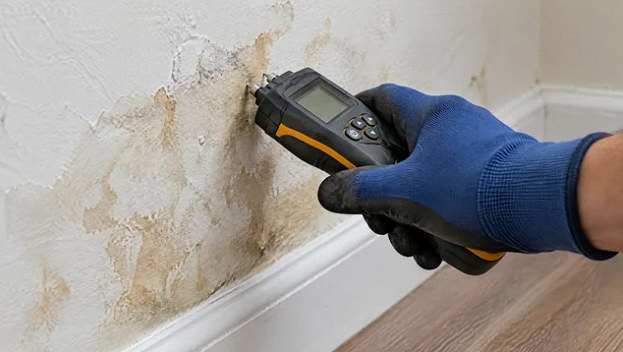
Hidden Moisture: What Meters and Thermal Cameras Can Tell You
Learn how to read a moisture report, distinguish instrument scales, and ask useful questions about concealed walls, floors, and ceilings.
Read the guide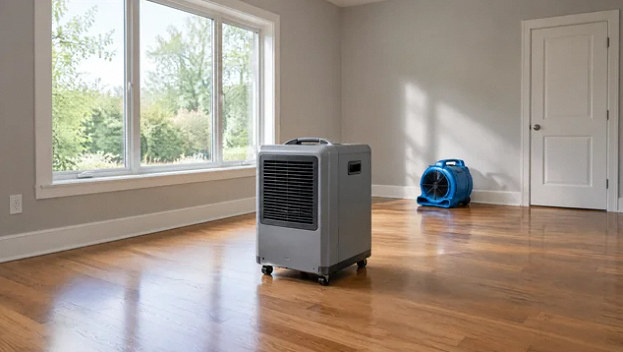
Drying and equipment · 5 min read
Should You Open Windows or Turn Off Drying Equipment?
Plan for heat, noise, windows, and equipment interruptions during water damage drying, with clear instructions for overnight operation.
Read the guide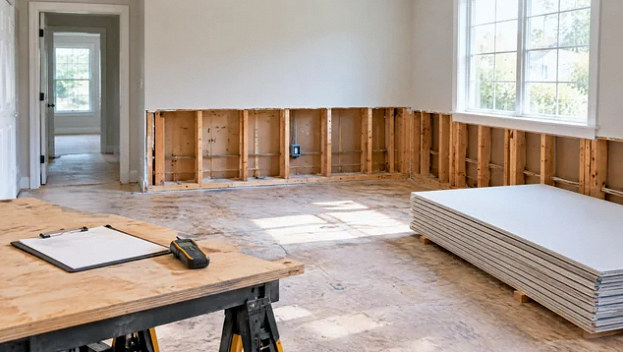
Materials and repairs · 5 min read
Before Rebuilding: How to Review the Drying Handoff
Ask for final material readings, remaining limitations, source-repair records, and a clear handoff before new finishes cover the work.
Read the guide