
First decisions · 5 min read
Sewage and Floodwater: Questions Before Cleanup Begins
Understand why contaminated water changes cleanup decisions, what to ask about belongings, and how to document damage safely.
YKCA · References checked 2026-09-27
Start with the essentials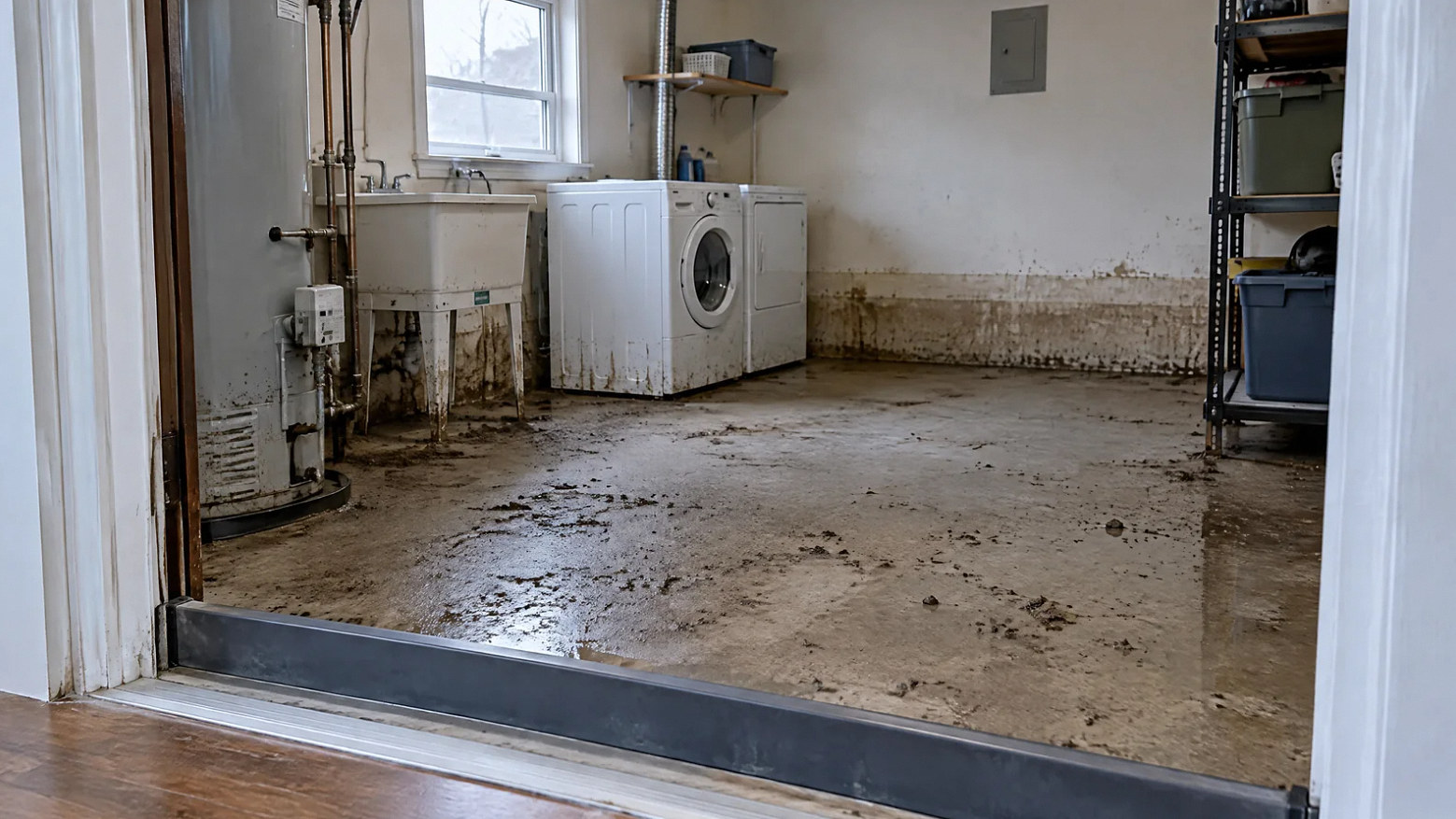
At a glance
Three things to keep in view.
Keep the boundary
Avoid entering standing water or adding a household fan. Have the responding team explain access routes and the planned contamination controls.
Assess what can remain
Compare cleanable exposed surfaces with absorbent or inaccessible affected layers. A decision to retain an item needs to address its affected parts.
Document necessary removal
Coordinate photographs and item details before disposal when possible. Do not enter unsafe space or keep contaminated belongings in living areas for evidence.
The key point
Treat sewage and outdoor floodwater as a contamination concern, even when the water looks clear. Keep people and pets away, address safe access, and ask for an experienced professional assessment. The plan must explain source control, affected materials, cleanup, and verification; simply removing water or improving the smell is insufficient.
The difficult question after a backup is often what can be saved. A familiar carpet, a child's belongings, or a recently finished room can make removal decisions particularly stressful. Begin by asking how the water source and contact path affect each decision.
Avoid making the entire plan about drying time. Contaminated-water work also needs decisions about access, cleaning, disposal, and protecting areas that were not affected.
Establish a safe boundary before collecting details
Keep children and pets out of the affected area. Electrical and structural hazards can accompany flooding, so do not enter standing water to collect belongings or reach a switch. Ask emergency personnel or qualified professionals about access when safety is uncertain.
From a safe location, report where the water appeared and whether it is still entering. You do not need to identify every contaminant before asking for help. If you suspect a gas leak, leave and contact emergency authorities without operating anything that could create a spark.
Sources for this section
Guidelines for Cleaning Safely After a DisasterSafety Guidelines: Reentering Your Flooded Home
Source repair and contamination removal solve different problems
Stopping a backup prevents further entry; it does not remove what the water deposited. Drying removes moisture, but is not a substitute for cleaning or a means of proving decontamination. Identify who will correct the plumbing or outdoor entry problem and who will assess the resulting damage. A completed drain service visit does not describe cleanup elsewhere in the house.
Describe the route without guessing: the first place water was noticed, connected rooms, nearby cabinets, and anything moved through the area. Mark uncertainty clearly. Ask the restoration team which additional areas need assessment before the scope can be considered complete.
Sources for this section
Mold Cleanup in Your HomeStandard for Professional Water Damage Restoration
Porosity and access affect what can be saved
CDC's disaster guidance calls for removal of drywall and insulation contaminated by sewage or floodwater, and discarding belongings that cannot be cleaned and dried promptly. Do not apply the salvage assumptions of a clean-water leak to this situation.
Porous materials have spaces that can hold water and contamination below the visible surface. Carpet is an assembly with backing, padding, and an underlying floor; upholstery includes internal filling. A hard exposed surface and an inaccessible absorbent layer therefore present different cleaning problems. A decision to retain an item needs to address the affected parts, rather than only how its outside looks.
For a valued item, ask what specialist assessment is available, what result is realistic, and what it would cost before authorizing treatment. Record each proposed outcome separately: evaluate, clean, remove, or retain pending a decision. Sentimental value deserves a discussion, but it cannot establish that an item is cleanable.
Sources for this section
Guidelines for Cleaning Safely After a DisasterMold Cleanup in Your Home
Drying airflow must fit the contamination controls
Do not add an ordinary fan to a contaminated area as an improvised drying solution. Ask the team to explain the work boundary, access route, equipment, and handling of removed items. Keep your questions focused on what each measure is intended to accomplish.
The work sequence matters. Moving air across an unresolved contaminated area can distribute particles into adjacent space. A temporary barrier, an air filter, and cleaning each have different purposes; no single device proves the entire area has been addressed. The crew should explain how people, equipment, and removed items move through the work boundary.
If a treatment is proposed, request its purpose and the instructions relevant to occupants and belongings. Neither a pleasant smell nor the presence of an air filter proves that the source has been removed. Do not mix household chemicals or experiment with a stronger cleaning recipe.
Keep a record without delaying necessary safety work
Ask the insurer or adjuster how to document items that need prompt removal, and ask the contractor to record conditions before disposal. Photographs should identify the room, item, and proposed action. Do not enter an unsafe area simply to improve your claim record.
For example, if a carpet must be removed before an adjuster visits, ask what photographs, measurements, and item information should be retained. Record who recommended removal and why. This supports a clear explanation of the work without promising that a particular policy will cover it.
Sources for this section
Common questions
Can clear floodwater be treated like a clean plumbing leak?
Appearance does not establish cleanliness. Ask the assessor to explain the known source, the route through the property, and what remains uncertain. Outdoor floodwater can bring contaminants into the home, so clean-water advice should not be adopted merely because there is little visible dirt.
Sources for this section
Is cleaning the carpet enough after a sewage backup?
Request an assessment of the entire affected assembly and a written explanation of any proposed salvage. The question includes the backing, padding, underlying surface, and ability to clean the materials adequately. A dry carpet surface or a treatment receipt alone does not answer whether that work is sufficient.
Sources for this section
Guidelines for Cleaning Safely After a DisasterMold Cleanup in Your Home
Sources and further reading
References checked 2026-09-27. Guidance depends on the loss, affected materials, scope of work and property conditions.
- Guidelines for Cleaning Safely After a Disaster
- Safety Guidelines: Reentering Your Flooded Home
- Mold Cleanup in Your Home
- Standard for Professional Water Damage Restoration
- Table 1: Water Damage – Cleanup and Mold Prevention
- A Brief Guide to Mold, Moisture and Your Home
- Mold Remediation in Schools and Commercial Buildings Guide: Chapter 3
- Residential Property Claims Guide
- Text Version of the Flooded Home
Discuss the next step for your property.
Share what happened, which areas are affected and the decisions you need help with.
Discuss water damage restorationRelated decisions
Materials and repairs · 5 min read
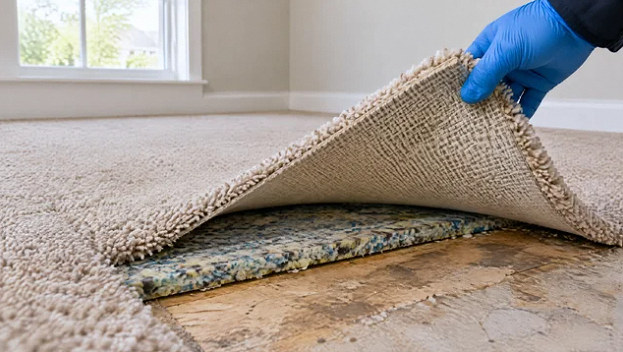
Wet Carpet and Padding: What Can Be Saved?
How to discuss carpet salvage after water damage, including the water source, padding, supporting floor, and repair expectations.
Read the guide
First decisions · 5 min read
Can You Stay Home During Water Damage Restoration?
Discuss safe access, usable rooms, household health needs, equipment, and temporary accommodation before deciding to stay home.
Read the guide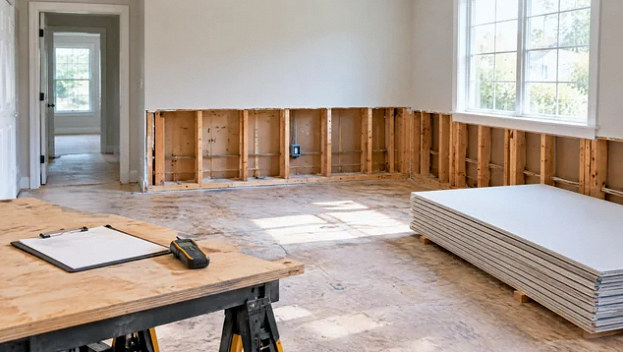
Materials and repairs · 5 min read
Before Rebuilding: How to Review the Drying Handoff
Ask for final material readings, remaining limitations, source-repair records, and a clear handoff before new finishes cover the work.
Read the guide