
Flood damage · 6 min read
Before Rebuilding a Basement That Has Flooded More Than Once
Investigate the recurring water route, assess prevention options and verify drying before investing in replacement finishes.
YKCA · References checked 2026-10-03
Start with the essentials
A practical decision sequence
At a glance
Three things to keep in view.
Compare the events
Identify documented water routes and unresolved causes.
Plan risk reduction
Match each proposed measure to a specific failure or consequence.
Release reconstruction
Verify current cleanup, drying and required source-control work.
The key point
Keep two open questions separate: is this loss cleaned and dry enough for repair, and what will reduce the chance or consequences of another flood? A new pump or comfortable room humidity does not answer both.
The basement has flooded again during heavy rain. The water is gone, room humidity looks normal and a new sump pump is on order. You are deciding whether to replace the carpet and cabinets or stop investing in a space that might become wet again.
The next decision should connect the cause of recurrence, practical risk reduction and the readiness of the existing materials. Finishing the room quickly may feel like recovery, but it can conceal access needed to understand why the previous repair did not prevent another event.
Related service: Flood damage questions and planning
Compare the events before assuming one recurring cause
Create a short record for each incident: weather, entry location, approximate water level, pump behavior, power availability and repairs made afterward. Separate documented observations from explanations remembered later. Two wet-basement events can have different sources, even when the same carpet was damaged both times.
Ask the appropriate assessor to compare the records. A failed float switch, outside runoff crossing a threshold and a sewer problem call for different investigations. Do not order a large drainage system simply because that was the first advertised solution. Equally, do not assume a replacement pump resolves water that bypasses its collection area. The proposed correction should identify the particular pathway or failure it addresses.
Obtain a cause assessment while access is available
Use the period before finish installation to investigate relevant walls, floor edges, drainage paths and utility spaces under professional direction. Ask which observations can be made now and which depend on future weather, testing or specialist evaluation. Do not intentionally flood the property to reproduce the problem or open structural assemblies without an appropriate plan.
A useful report distinguishes observed defects, likely contributors and unresolved questions. If exterior grading, shared drainage or a public system may be involved, identify who is responsible for investigating that portion. The restoration contractor may know which materials were wet without being the right person to design the source correction. Make that boundary explicit before accepting a proposal that combines cleanup and prevention under one vague description.
Compare risk-reduction options by the failure they address
NFIP's damage-reduction guidance includes maintaining drainage, using a functioning sump system and water alarm, and protecting utilities. These measures address different parts of flood risk. A water alarm can improve notification without stopping entry, while a pump depends on collection, discharge and power arrangements that need to suit the property.
Ask each provider to explain the purpose and limitations of its recommendation. Request the maintenance needs, response to power loss, access requirements and any permit or design considerations. Compare proposals against the documented problem rather than by the number of products installed. A smaller intervention may be appropriate for a specific defect, while a broader site issue may need assessment beyond a pump replacement.
Sources for this section
Consider reducing damage even when entry cannot be eliminated
FEMA's home-protection guidance includes improving runoff and drainage and elevating utilities or service equipment where appropriate. These are planning options, not permission to relocate electrical, fuel or mechanical equipment without design and required approvals. Ask qualified professionals what is feasible for your building and the relevant flood conditions.
Discuss the future use of the lower level as part of that planning. Storage arrangements, replaceable finish choices and keeping important belongings elsewhere may reduce the consequences of a future event. Do not label a product floodproof simply because it tolerates surface moisture. The design needs to consider the complete assembly, contamination cleanup, access and what would have to be removed after another loss.
Sources for this section
Verify this loss independently of the prevention project
The building still needs a documented cleanup and drying handoff for the current event. Ask for findings on retained materials, concealed areas and any contamination-related removal. A comfortable room humidity reading does not establish the moisture condition inside a wall or beneath flooring. Likewise, a new pump does not show that previously wet materials are ready to be enclosed.
Ask the restoration lead to identify the acceptance criteria and remaining limitations for the current scope. Keep that record separate from the drainage contractor's source-control report. Both may be necessary before reconstruction, but they answer different questions. This distinction is especially useful if one company finishes its work sooner and the owner is tempted to treat its completion invoice as clearance for every remaining stage.
Put reconstruction decisions behind specific hold points
Before ordering finishes, list the decisions that must be resolved: source assessment, selected correction, required approvals, utility work and drying verification. Ask the project lead to schedule these dependencies so later work does not conceal inspection points or block equipment maintenance. A written hold point makes the reason for a delay visible and reviewable.
Separate required repairs from elective improvements. You may decide to restore an unfinished functional space before investing in a finished recreation room. Review the budget using the documented risk and remaining uncertainty rather than a promise that a particular system will prevent every future flood. If selling is being considered, obtain relevant real-estate and legal advice about disclosure; this restoration article cannot determine those obligations.
Test and maintain the new arrangement under qualified guidance
At completion, request the installer’s demonstration and written maintenance instructions for the chosen system. Identify who checks alarms, pump operation, discharge and access, and how occupants know a problem needs attention. If backup power is part of the design, have the responsible professional explain its operating limits and required upkeep.
Keep the incident record, cause assessment, mitigation handoff and prevention documents together. Review them after significant changes to the property or another water event. This article cannot predict future flooding or choose a drainage design from photographs. Its practical result is a reconstruction decision based on known causes, verified current conditions and a maintainable risk-reduction plan, with remaining uncertainty stated before money is committed to finishes.
Common questions
Does a new sump pump mean the basement is ready to rebuild?
No. Confirm what caused the event and whether the new arrangement addresses it, then review cleanup and material-moisture findings separately. Pump replacement does not establish that retained assemblies are dry or that every entry route is controlled.
Should I replace the finishes exactly as before after repeated flooding?
Review the recurring cause and risk-reduction options first. Consider future use, maintenance access and damage consequences with qualified professionals, then select finishes as part of that plan rather than assuming the previous assembly is the best choice.
Sources for this section
Sources and further reading
References checked 2026-10-03. Guidance depends on the loss, affected materials, scope of work and property conditions.
The homeowner question behind this guide
These public discussions informed the questions addressed here. Personal experiences and comments are not technical findings or proof of insurance coverage.
Discuss the next step for your property.
Share what happened, which areas are affected and the decisions you need help with.
Discuss flood damageRelated decisions
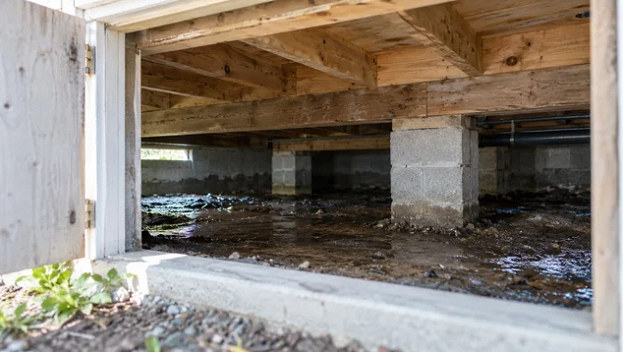
Materials and repairs · 3 min read
Water in Crawlspaces and Basements: Beyond Pumping It Out
Plan assessment of standing water, access, drainage, insulation, and framing beneath the occupied part of a building.
Read the guide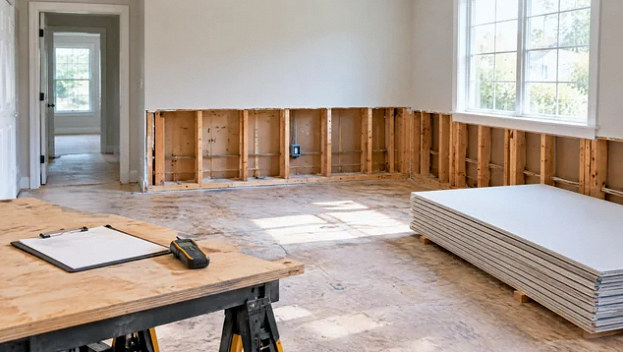
Materials and repairs · 5 min read
Before Rebuilding: How to Review the Drying Handoff
Ask for final material readings, remaining limitations, source-repair records, and a clear handoff before new finishes cover the work.
Read the guide