
First decisions · 4 min read
Hidden Moisture: What Meters and Thermal Cameras Can Tell You
Learn how to read a moisture report, distinguish instrument scales, and ask useful questions about concealed walls, floors, and ceilings.
YKCA · References checked 2026-09-27
Start with the essentials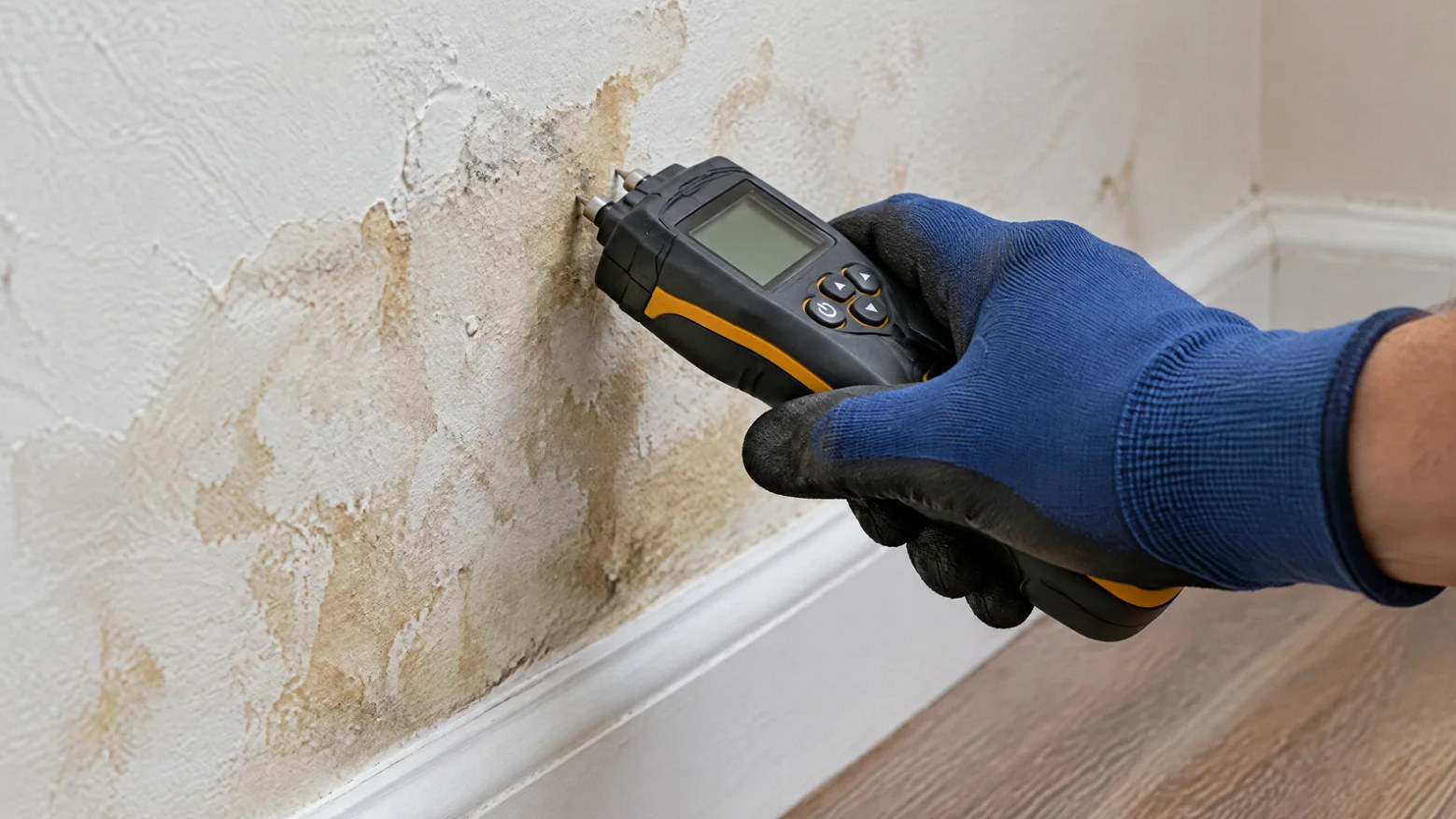
At a glance
Three things to keep in view.
Identify the reading
Check whether a number describes room air or a building material, then find the instrument mode and scale used to interpret it.
Confirm the image
Treat a thermal pattern as a location to investigate. Pair it with appropriate moisture measurements before accepting a conclusion about hidden water.
Keep locations comparable
Give each measurement point a room and location label. Preserve earlier results so another person can follow the same area over time.
The key point
A moisture number is useful when you know the instrument, its scale, the material, and the location being tested. Thermal images can help guide investigation, but they need confirmation. Ask for a simple map and an explanation of the findings before treating a high reading as a diagnosis or a low one as clearance.
A wall may look normal while you still have questions about the space behind it. Conversely, one alarming meter reading can prompt a replacement recommendation that needs more explanation. The right response is to understand what was measured and what remains uncertain.
You can ask for that explanation without buying professional instruments or making holes in the wall. A readable inspection record is more useful than a photograph of a display with no location or settings.
Separate air readings from material readings
A humidity instrument describes the air at its location. A material moisture meter investigates a building material. EPA treats these as distinct tools. On your report, look for separate labels rather than assuming that every percentage describes the wall or floor.
Ask the technician to point to the physical location for each result. Was the reading taken in the room, at the wall surface, or in an accessible material layer? Write down the answer in ordinary words so the information remains useful when the next contractor arrives.
Sources for this section
Mold Remediation in Schools and Commercial Buildings Guide: Chapter 3
Find out what the number means
Manufacturers use different modes and scales. Protimeter, for example, distinguishes wood moisture equivalent readings from its non-invasive relative scale. A number on one of those scales is not automatically the percentage of water in drywall.
Ask for the meter model and mode, the material being tested, and the comparison used to interpret the result. If someone describes a maximum display as “100% wet,” ask what that means for that instrument. Do not convert it into an assumed amount of water or a repair cost.
Sources for this section
Treat a thermal image as a lead to investigate
FLIR explains that thermal imaging identifies temperature patterns and that moisture findings need verification. A cold-colored area on an image is therefore a place to investigate, not a standalone picture of water inside a wall.
For example, imagine a cool rectangle beside a window after a leak. Ask what direct observations or measurements support the interpretation, whether adjacent areas were checked, and how the finding relates to the known water path. Save the image with that explanation instead of a caption that declares unseen damage.
Sources for this section
Unusual readings need confirmation
Protimeter notes that metal can influence non-invasive readings. The practical question is whether the operator considered the surface and assembly, especially when one isolated location behaves differently from nearby areas.
You should not have to decide whether a hidden object caused the reading. Ask what confirming method was appropriate and whether any area remains inaccessible. If access would disturb finishes, discuss who would perform that work, what precautions apply, and how the opening would be repaired.
Sources for this section
Keep a map that another person can understand
Give each location a simple identifier such as “hallway wall, point A” and connect it to a photograph or sketch. Ask the contractor to maintain comparable measurements when tracking progress. Keep original results alongside updates rather than replacing yesterday's record.
- Room and exact location of the measurement.
- Material or layer evaluated, including any depth information provided.
- Instrument and mode used.
- Date, result, and the technician's interpretation.
- Reference or target and why it is appropriate.
- Areas that were not evaluated and the planned next step.
Common questions
Should every part of my house have the same dry reading?
No single pinless value applies to every material and environment. FLIR recommends interpreting readings against an appropriate known dry reference. Ask why the comparison fits this assembly rather than borrowing a target from a different room or an internet example.
Sources for this section
Can a moisture meter tell me whether there is mold?
A moisture finding identifies a moisture question. It is not, by itself, a mold identification or clearance report. Ask which observations support any separate recommendation for investigation or cleanup, and what that recommendation is intended to resolve.
Sources for this section
Mold Remediation in Schools and Commercial Buildings Guide: Chapter 3
Sources and further reading
References checked 2026-09-27. Guidance depends on the loss, affected materials, scope of work and property conditions.
Discuss the next step for your property.
Share what happened, which areas are affected and the decisions you need help with.
Discuss water damage restorationRelated decisions
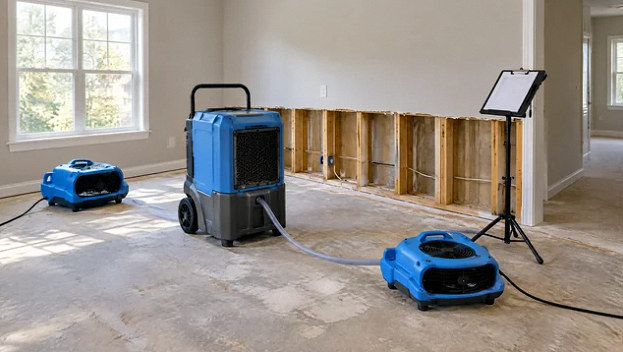
Drying and equipment · 5 min read
How Long Does Water Damage Drying Take?
Understand what controls drying time, what a useful progress report includes, and which questions to ask before equipment is removed.
Read the guide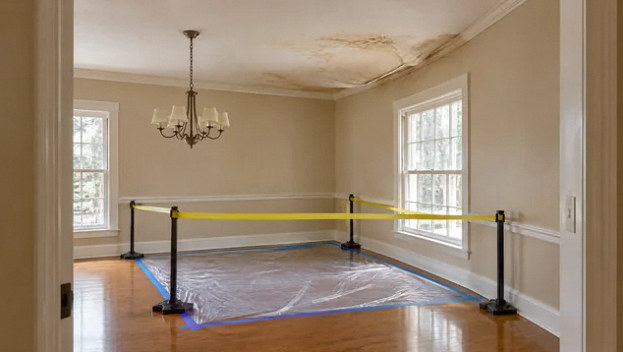
Materials and repairs · 5 min read
Wet Drywall and Ceilings: Dry, Open, or Replace?
Questions that help explain a drywall decision after a leak, including condition, concealed layers, access, and readiness for repairs.
Read the guide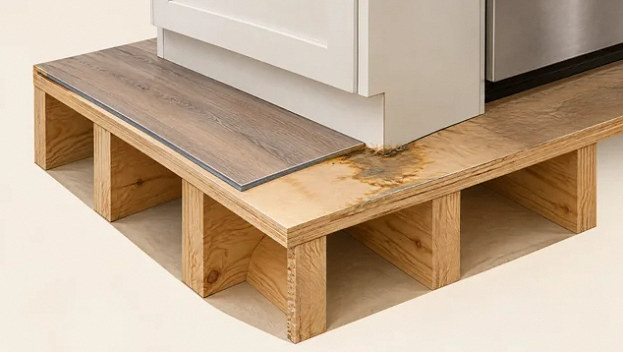
Materials and repairs · 5 min read
Water Under Vinyl, Tile, and Cabinets
A homeowner's guide to questions about concealed floor layers, cabinet areas, access, and the handoff from drying to repairs.
Read the guide