
Theaters & concert halls · Practical guide
Assistive Listening That Patrons Can Actually Use: Test the Whole Visit
Plan receiver availability, hearing-aid compatibility, source audio, coverage and front-of-house support before selecting an assistive-listening system.
YKCA Journal · 5 min read · Updated October 3, 2026
Start here
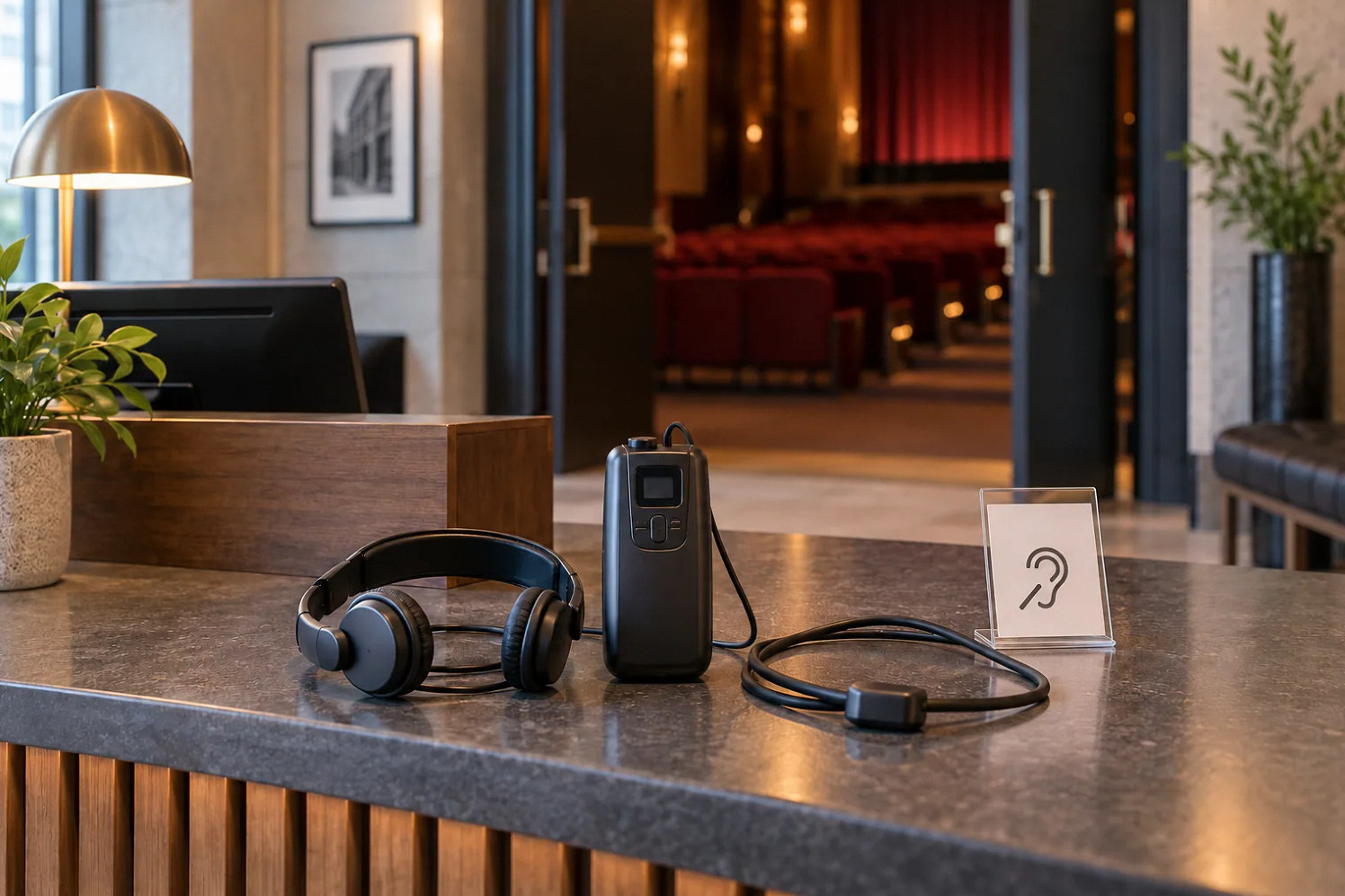
An accessible listening service includes the audio path, required receivers, signage, staff workflow and the patron’s experience in a seat.
Start with the patron journey and the required service
A transmitter receiving audio in the rack does not prove that a patron can use the listening service. The visitor must discover it, obtain a suitable device, understand its controls and hear the intended program comfortably in their seat. Assign responsibility for this full path before choosing equipment.
A phone-based option depends on network access and the ability of staff to help patrons connect. Ask the AV and accessibility teams to identify the required service and the role of optional personal-device listening. A sound system installation should include this operational boundary in its scope.
Review receiver obligations before choosing delivery technology
The U.S. Access Board's ADA provisions address when assistive listening is required, receiver quantities, hearing-aid compatibility and technical characteristics. Have the project's accessibility reviewer apply the relevant requirements to the actual venue, including its seating and operating arrangements. Do not select a convenient technology first and then assume the obligations will somehow fit.
Personal-phone support can be an additional feature, but an app download is not evidence that the required receivers are provided. Ask the proposal to identify the venue-supplied inventory, compatible accessories, signs and the basis used for determining quantities. Keep that review distinct from the product demonstration. A manufacturer sales claim and a project-specific accessibility determination answer different questions.
Reference: U.S. Access Board ADA Chapter 2 · U.S. Access Board ADA Chapter 7
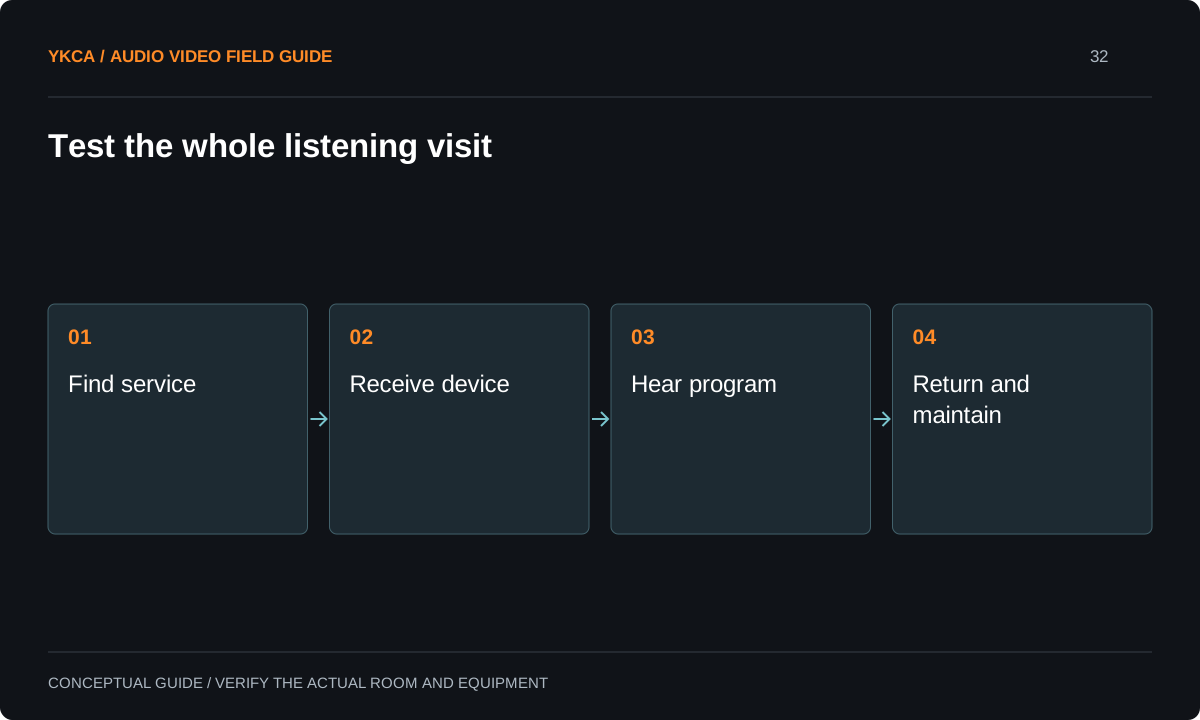
- Find service
- Receive device
- Hear program
- Return and maintain
Give the listening system an appropriate program feed
Identify what patrons need to hear during each type of program: dialogue, music, announcements and relevant stage sound. The correct source is not automatically the loudest output or whichever spare connector is easiest to reach. Ask the audio designer to define the feed and how staff confirm that it contains the intended content.
Include unamplified or lightly amplified performances in the discussion if they are part of the venue's program. The audience may hear acoustic stage sound that is absent from a console output. The solution should be designed for the actual performance types, with levels and processing evaluated appropriately. Document who owns that setup and how it is checked before doors open without depending on a patron complaint.
Worked example: a successful demo that misses opening-night friction
Imagine a demonstration with an installer holding a phone next to the rack. Audio plays, so the system appears complete. On performance night, a patron arrives without that app, a loan receiver has not been charged and staff cannot explain which accessory works with the patron's hearing device. The rack test never addressed those dependencies.
Rehearse the service with front-of-house staff before acceptance. Have a staff member retrieve a receiver, explain the controls and accompany a test listener to several agreed seats. For personal-device features, test the actual onboarding instructions and realistic network conditions. Record any unresolved delay, coverage or usability concern and require a defined disposition rather than accepting that technology always behaves that way.
Compare options using the venue’s actual constraints
Ask each proposed delivery method to be evaluated against seating coverage, hearing-aid compatibility, receiver management and operating support. Include building constraints and interference or network dependencies that the specialist identifies. Do not assume one method is best for every venue or that a claim about another theater establishes performance in yours.
The Access Board's technical guidance recognizes different system approaches with different advantages and disadvantages. Use a demonstration and project review to make those tradeoffs concrete. If a hybrid arrangement is proposed, clarify which part fulfills the core service and which part is optional. Multiple technologies can add flexibility, but they also add staff procedures, inventory and maintenance that need an assigned owner.
Reference: U.S. Access Board ADA Chapter 7
Accept daily readiness, not only installation completion
The handoff should include inventory, charging and cleaning instructions, storage, replacement procedures, signage and staff training. Use manufacturer instructions for the actual devices. Specify who checks the feed and receivers before each event and who responds when a device does not work. Keep a simple record of issues so recurring complaints can be investigated.
Test the service after staff turnover and major program changes. Ask for user feedback through a respectful, voluntary process without retaining unnecessary personal information. The venue does not need to record patrons' medical details to improve a checkout instruction or identify a coverage problem. A maintained service with clear staff responsibilities is more valuable than an expensive system that visitors cannot locate or operate.
Compare the next steps
A decision table for this problem
| Decision or observation | What to request | Acceptance evidence |
|---|---|---|
| Patron has no phone | Venue-provided receiver plan | Required service available without personal device |
| Hearing-aid compatibility | Applicable review and accessories | Documented suitable receiver options |
| Speech missing from feed | Program-source design | Representative performance content heard |
| App onboarding difficult | Staff-supported trial | Usable instructions and fallback |
| Devices uncharged | Daily readiness responsibility | Working inventory available before doors |
Use this in the room
Your working checklist
Common questions
Does a phone app replace loan receivers?
Do not assume that. Have the accessibility reviewer verify receiver obligations and the proposed method for meeting them.
Should we send the main console mix?
Only if the designer determines that it contains the needed program for the venue’s performance types. Acoustic content may require a different approach.
How should we handle reported delay?
Document the device, connection path, seat and test conditions. Have the specialist evaluate the full path and a suitable alternative if the experience is unacceptable.
Read the original guidance
Sources and discussion context
Research used primary documents and, where full text was unavailable, indexed excerpts from official sources. A citation does not mean the complete document was accessible. Product behavior depends on the actual model, configuration and documentation. Confirm the requirements for your venue before changing the installation.
Reader problems behind this guide
These Reddit discussions helped identify the practical question. They are individual experiences, not technical authority or a measure of how common the problem is. Examples and diagrams illustrate planning decisions; they are not records of completed YKCA projects or installation drawings.
- Anyone have experience with wifi audio assistive systems
Venue wanted optional phone listening but worried about network congestion, onboarding and staff support.
Research access: opened post.
Keep the whole system in view
