
Stage power · Practical guide
Stage Power Planning: Why Speaker Watts Do Not Tell You the Electrical Load
Build an equipment and event-use schedule that an electrical designer can use without confusing audio output ratings with input power.
YKCA Journal · 5 min read · Updated October 3, 2026
Start here
Collect electrical input data with its operating conditions, then have the actual event and building supply evaluated together.
Use the number that describes electrical input
An amplifier's advertised audio output describes what it can deliver to a loudspeaker under specified conditions. It is not the same number as electrical input from the building. A stage inventory that adds speaker marketing watts can therefore produce a large but unhelpful total. Start with the exact manufacturer's electrical information for each actual model.
That is a real distinction to resolve before sizing a system. Yamaha specifications provide examples of consumption listed separately for idle and defined output conditions. Those numbers describe particular products and tests; they are not universal conversion factors for other amplifiers or an automatic circuit-sizing method.
A stage power installation begins with this operating brief so the designer can evaluate a specific use instead of an undefined promise.
Reference: Yamaha STAGEPAS 100 specifications · Yamaha PC-D/DI specifications
Create one inventory across production departments
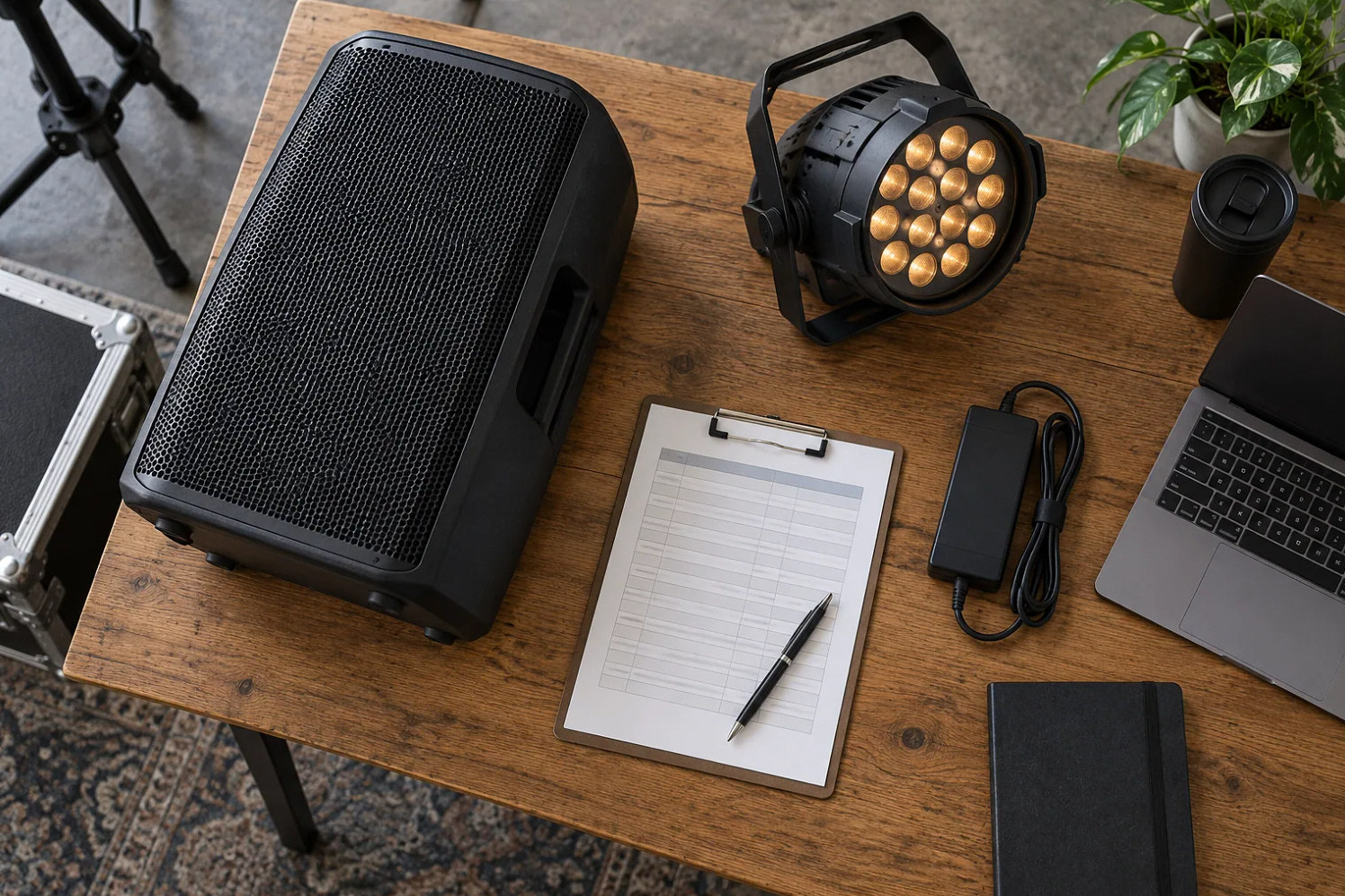
Use one schedule for audio, lighting, video, backline and control equipment. Add the unglamorous loads that often appear after the initial plan: stage fans, instrument supplies, charging stations and event equipment supplied by others. Identify the person responsible for confirming each department's entries. Include model, quantity, electrical input document, proposed location and whether the item is fixed or brought by a renter.
Mark unknowns explicitly. A future rental package can be an allowance with defined review requirements, rather than a guessed number hidden in the total. Keep alternative equipment packages separate so the electrical reviewer understands which combinations may operate together. Otherwise two mutually exclusive show layouts can accidentally become one misleading maximum equipment list.
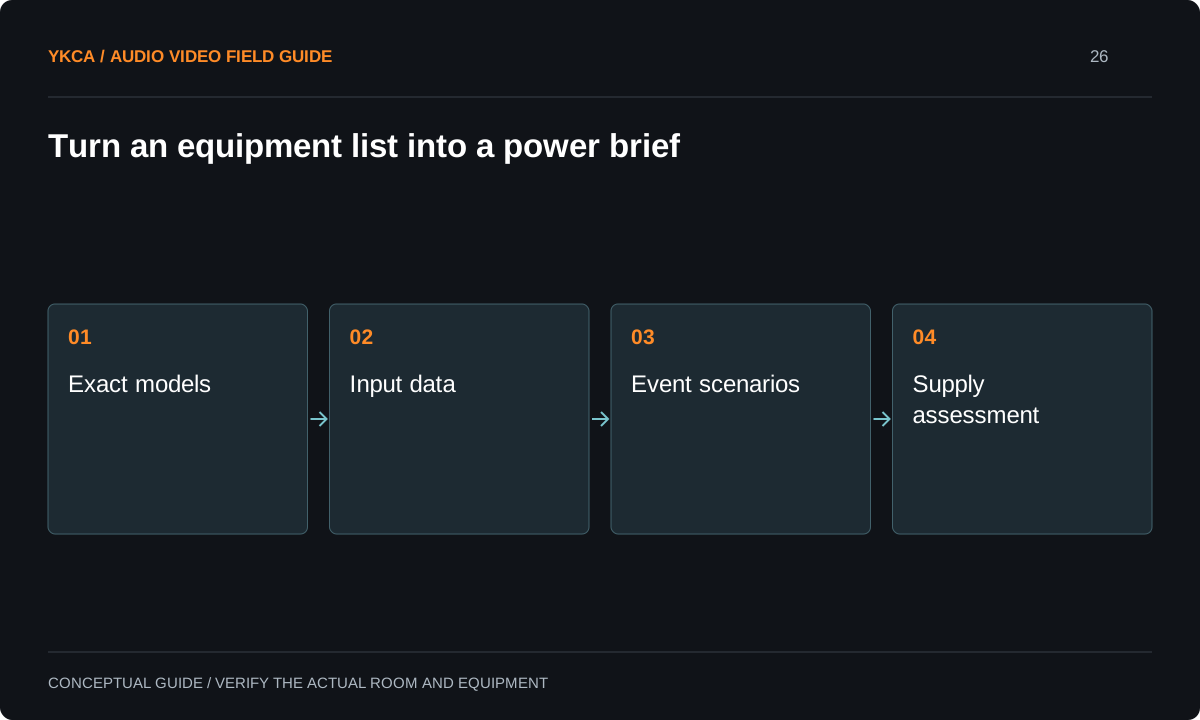
- Exact models
- Input data
- Event scenarios
- Supply assessment
Describe time, startup and simultaneous operation
The reviewer needs more than a list of devices. Explain which equipment operates continuously through a program, which starts together and which is used only during particular scenes or event types. Startup and normal operation are different conditions. Do not assume that a system behaving normally after startup proves that simultaneous energization will be acceptable.
Create short event scenarios: spoken presentation, band performance, full lighting rehearsal and any production with a large video package. Identify rehearsal conditions as well as the public performance. Equipment may be driven differently during setup or testing. Let the qualified electrical professional decide how these scenarios affect the design; the owner's role is to make the expected use complete and credible.
Worked example: two events using the same stage
Imagine a venue alternating between a lecture and a concert. Both use the same console and installed speakers, but the concert adds backline, monitors and a lighting package. The lecture adds a presentation computer and a confidence display. Treating both as simply the house PA conceals meaningful differences.
Build two columns showing which equipment is active in each event. Ask the designer to evaluate the supply and distribution against both, including their startup arrangements. If a future touring act exceeds the agreed envelope, route its equipment schedule for review. This is more useful than advertising that the stage supports any band because one previous concert completed without a trip.
Connect the schedule to verified building information
Pair the inventory with available panel schedules, outlet locations, distribution equipment records and any known operational problems. These records are inputs for qualified field verification; they should not be treated as proof that every label is accurate. Include photographs that can be taken safely without opening energized equipment, and identify who can provide building access for the assessment.
Ask the proposal to distinguish investigation, design and installation. It should identify unknown capacity or condition issues and explain how they will be resolved. Federal workplace rules address grounding and protective equipment, but those provisions do not by themselves establish the adopted local requirements for a particular California installation. The responsible professional must determine the applicable project requirements.
Reference: OSHA 1910.304: Wiring design and protection
Accept a documented operating envelope
At handoff, request the final equipment schedule, circuit and outlet identification, permitted operating assumptions and the process for rental changes. The acceptance demonstration should follow a representative agreed event scenario rather than power up a few convenient devices. Record what was exercised and any limitations of the demonstration.
Give booking and production staff a simple way to request a power review before promising a setup. A useful operating envelope states the reviewed configuration and what changes require attention. It does not promise that breakers will never trip. As equipment changes, update the inventory and ask whether the earlier assessment still applies. The schedule is a living operational record, not a one-time procurement attachment.
Compare the next steps
A decision table for this problem
| Decision or observation | What to request | Acceptance evidence |
|---|---|---|
| Audio output wattage | Actual electrical input document | Correct model and test condition identified |
| Unknown rental equipment | Advance equipment schedule | Review completed before commitment |
| Many devices start together | Startup-use description | Agreed energization scenario evaluated |
| Shared event loads | Combined departmental inventory | No unassigned incidental equipment |
| Existing building circuits | Qualified verification scope | Circuit map linked to accepted use |
Use this in the room
Your working checklist
Common questions
Can we size from measured rehearsal consumption?
Measurements can help a qualified reviewer, but one rehearsal may not represent startup, other show conditions or future equipment. Keep the manufacturer data and intended-use description.
Does one-eighth power mean the equipment always draws that amount?
No. It is a specified operating or test condition. Read the exact product documentation and let the electrical reviewer determine how to use it.
Should every future device be included now?
Define a reasonable future allowance or expansion scenario with the design team. Unbounded promises are less useful than a documented plan for specific growth.
Read the original guidance
Sources and discussion context
Research used primary documents and, where full text was unavailable, indexed excerpts from official sources. A citation does not mean the complete document was accessible. Product behavior depends on the actual model, configuration and documentation. Confirm the requirements for your venue before changing the installation.
- Yamaha STAGEPAS 100 specifications↗
- Yamaha PC-D/DI specifications↗
- OSHA 1910.304: Wiring design and protection↗
Reader problems behind this guide
These Reddit discussions helped identify the practical question. They are individual experiences, not technical authority or a measure of how common the problem is. Examples and diagrams illustrate planning decisions; they are not records of completed YKCA projects or installation drawings.
- My band is gigging more: could I get some recommendations for a standard stage power distribution layout for a band?
Band member was confused by one-eighth-power ratings while planning PA, backline and lighting circuits.
Research access: search excerpt only.
Keep the whole system in view
