
Rigging & trusses · Practical guide
When Motorized Rigging Solves an Access Problem, and What It Adds to Operations
Compare fixed, manual and motorized rigging around maintenance access, production needs, operator training and lifecycle responsibilities.
YKCA Journal · 5 min read · Updated October 3, 2026
Start here
Select motorization around a defined operating task and access problem, then budget the controls, training, inspection and recovery procedure.
Describe the task that currently consumes access time
A motorized rigging proposal should start with a task: changing a fixture, refocusing lights, handling a curtain or placing scenery. List how often that task occurs, who performs it and what currently prevents efficient access. A lift may need a clear floor, stored seating may occupy that area, or a fixed pipe may require an awkward work window.
The useful lesson is to evaluate service access before equipment selection. Motorization is one possible response, not an automatic answer. A revised fixed position, different maintenance arrangement or other properly designed system may suit a venue whose equipment rarely changes.
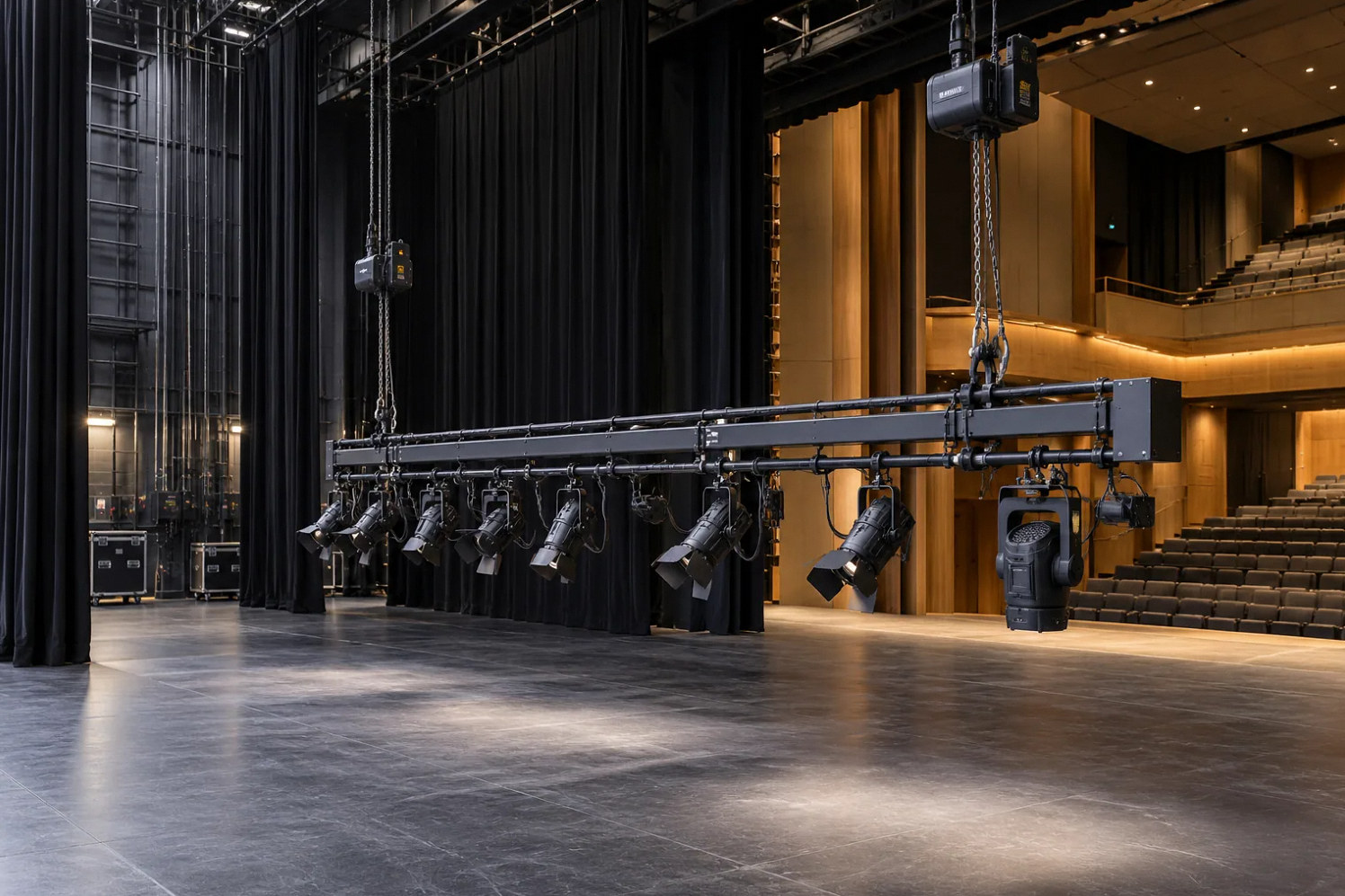
A stage rigging installation should be compared on the full operating workflow, including the people and space needed to use it.
Separate maintenance movement from performance movement
Lowering equipment for service and moving scenery during a performance create different operating demands. Write down whether movement is expected only in controlled work periods or as a show cue, and identify who would authorize and operate it. Do not purchase a simple access solution while assuming it can later become a show automation system.
ETC describes motorized products for several theater applications, including curtains, lighting and screens. That range demonstrates why the actual use must drive selection. Request a proposal identifying supported functions and excluded uses. If a vendor mentions future capability, require the additional controls, engineering and commissioning scope to be described before treating it as part of the installed system.
Reference: ETC rigging systems
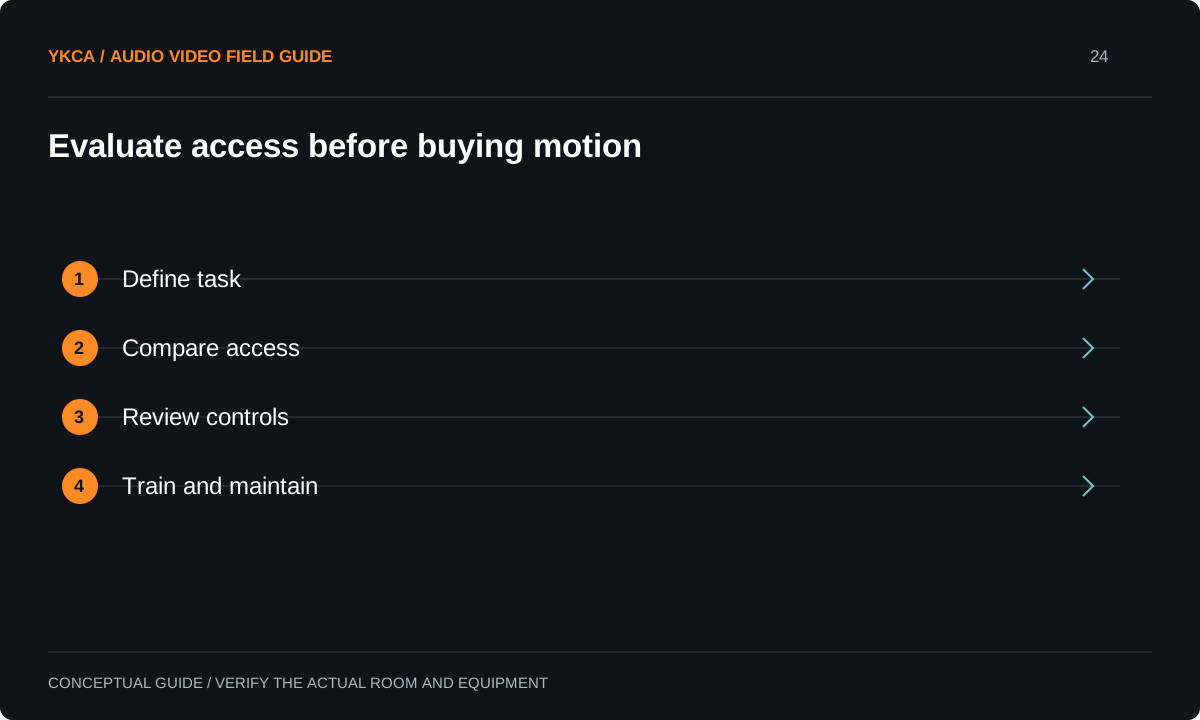
- Define task
- Compare access
- Review controls
- Train and maintain
Compare the whole operating arrangement
Compare options using staff tasks rather than motor counts. Where does equipment arrive for service? Is the landing area clear? Can the operator see the movement or follow the specified observation procedure? What must be removed from the stage first? Who has control access, and how are keys or credentials managed when staff change?
A motorized system may reduce one access burden while adding machinery maintenance and training requirements. A fixed arrangement may have fewer operating controls but require repeated access equipment and more downtime. Include both effects in the decision. The owner should be able to explain why the selected arrangement fits the venue's work, not merely repeat that the new technology is easier.
Worked example: a lighting pipe over a multipurpose stage
Imagine a stage used for concerts, assemblies and occasional scenery-heavy productions. A lighting pipe could be brought to a service position, but the floor beneath it is frequently occupied by stored risers. The access benefit depends on a realistic plan to clear that area and protect the work period.
Ask the designer to demonstrate the proposed service workflow on the room plan. Operations staff should identify conflicts with storage and rehearsal. Compare the downtime and staffing of each option without inventing a payback period. If clearing the stage is impractical every week, changing the storage arrangement may be as important as choosing the hoist. Resolve that dependency before approving procurement.
Check integration and fault recovery as explicit scope
Existing machinery and new controls are not automatically compatible. ETC's Fixed-Speed Motor Starter is an example of a product intended for defined integration applications; that does not establish compatibility with every legacy motor or safety arrangement. Ask the design team to name what is being retained, what interfaces are required and how the complete combination will be verified.
Require a documented response to faults and power interruptions that matches the selected equipment. Staff need to know who may investigate, how the area is controlled and who can authorize return to use. An emergency-stop demonstration is only one part of that training. Do not let an informal promise of easy manual recovery replace the manufacturer's approved procedures.
Reference: ETC Fixed-Speed Motor Starter · J.R. Clancy operations manuals
Accept the operating system, not just the installed hoist
Plan acceptance around the actual authorized users. The responsible professional should demonstrate permitted operation, limits, controls and the defined response to abnormal conditions. Training records should identify the participants and materials provided. Include configuration records, relevant manuals, maintenance responsibilities and the inspection program in the handoff.
Ask staff to describe the procedure in their own words and locate the instructions they would need during a problem. Reserve follow-up training for turnover or changed duties. A venue benefits from motorization when the equipment, space and operating practices work together. The purchase is incomplete if the machine moves correctly but nobody has been assigned responsibility for its ongoing condition and authorized use.
Compare the next steps
A decision table for this problem
| Decision or observation | What to request | Acceptance evidence |
|---|---|---|
| Rare equipment changes | Fixed-access scenario | Practical service method documented |
| Frequent maintenance access | Motorized service-position study | Floor and access conflicts resolved |
| Movement during shows | Defined performance requirements | Design explicitly covers intended movement |
| Existing motor retained | Compatibility and control review | Documented supported combination |
| Staff turnover | Training and access-control plan | Authorized operators and records current |
Use this in the room
Your working checklist
Common questions
Does motorization eliminate rigging training?
No. It changes the operating tasks and introduces equipment-specific controls and procedures. Training must match the installed system and permitted uses.
Should every pipe be motorized?
Not automatically. Prioritize actual access and movement needs, then compare complete options for those tasks with the design team.
Can an old winch use the new control panel?
That requires a documented compatibility and safety review. Similar electrical connections or matching branding do not establish a supported complete system.
Read the original guidance
Sources and discussion context
Research used primary documents and, where full text was unavailable, indexed excerpts from official sources. A citation does not mean the complete document was accessible. Product behavior depends on the actual model, configuration and documentation. Confirm the requirements for your venue before changing the installation.
Reader problems behind this guide
These Reddit discussions helped identify the practical question. They are individual experiences, not technical authority or a measure of how common the problem is. Examples and diagrams illustrate planning decisions; they are not records of completed YKCA projects or installation drawings.
- Question about the physical design of high school theatres
A renovated theater left every light requiring a scissor lift and limited practical access.
Research access: search excerpt only.
Keep the whole system in view
