
Materials and repairs · 5 min read
Hardwood Floor Cupping After Water Damage
What to ask before sanding or replacing a wet wood floor, including moisture through the boards, the subfloor, and repair options.
YKCA · References checked 2026-09-27
Start with the essentials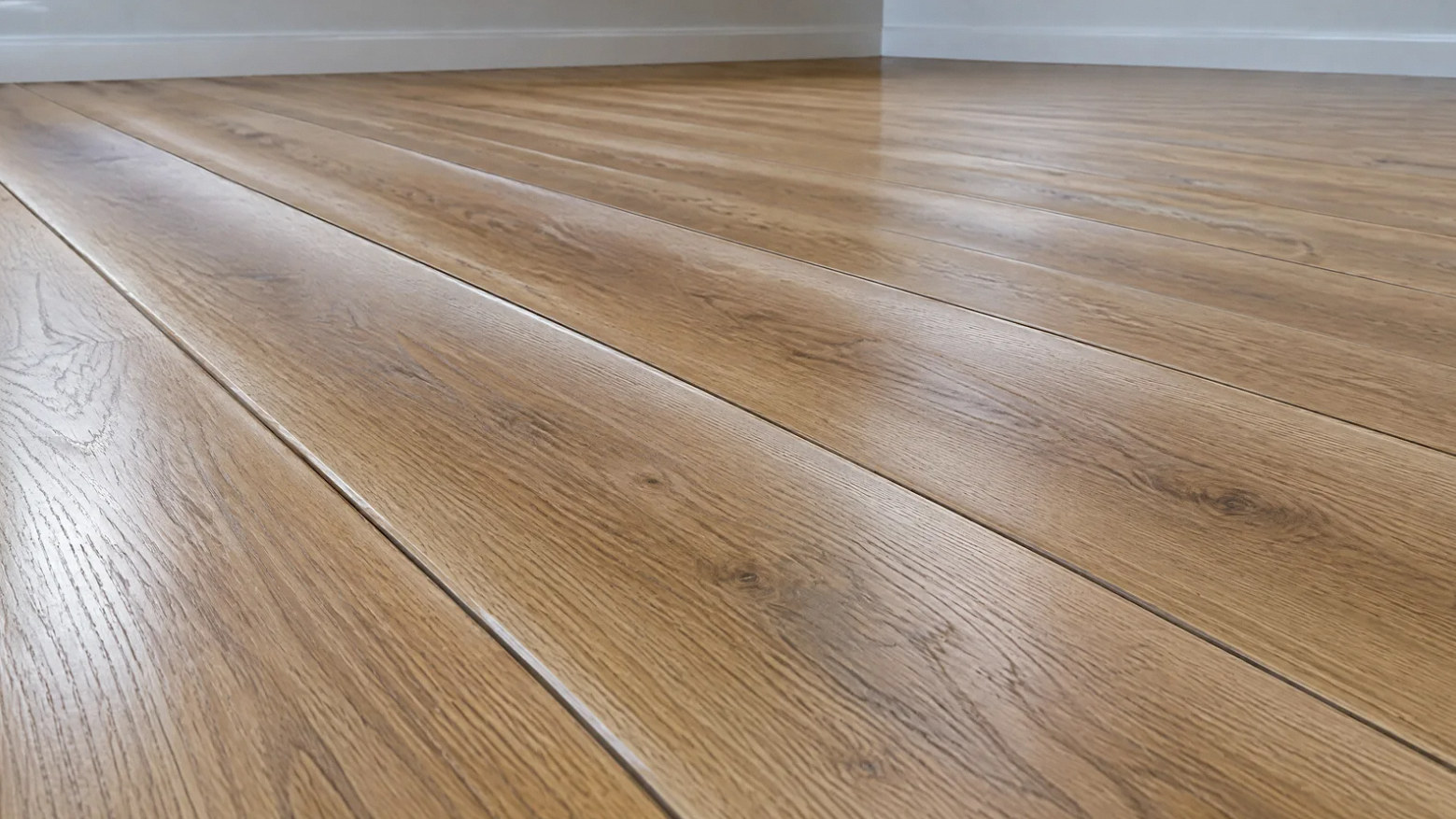
At a glance
Three things to keep in view.
Pause the sanding decision
Obtain an assessment of moisture through the boards before authorizing sanding. Removing raised edges too early can change the eventual floor shape.
Identify your floor
Use spare boards or purchase records to establish the product. Repair options need to fit that floor and its present condition.
Compare repair boundaries
Separate moisture assessment, board replacement, matching, sanding, and finish work in each proposal so the reason for each difference is visible.
The key point
Raised board edges after a leak deserve a moisture assessment before a sanding decision. Ask the flooring professional what has been checked through the boards and in the supporting assembly, and what shows the floor is ready for evaluation. Neither a smooth-looking surface nor elapsed time guarantees a particular repair outcome.
Cupping describes boards whose edges sit higher than their centers. After a leak, you may receive very different recommendations: wait, sand, replace selected boards, or replace a larger area. The most useful comparison starts with the evidence and the exact floor construction.
Identify the product if possible, collect the drying records, and ask each contractor to separate moisture questions from repairability and appearance. Those are related decisions, but they are not interchangeable.
Understand why appearance can keep changing
USDA's Wood Handbook explains that wood exchanges moisture with its surroundings and that surface conditions can change before deeper material follows. A finish slows moisture exchange; it does not stop it. This is why the floor's appearance on one day cannot settle every question.
Ask which observations are being tracked during the assessment. Use photographs from similar positions and record when they were taken. Describe changes without assigning a cause yourself: a new ridge, a loose area, or an expanding stain gives the professional something specific to evaluate.
Sources for this section
Wood Handbook, Chapter 4: Moisture Relations and Physical Properties of Wood
Sanding too early can change the shape again
The National Wood Flooring Association's magazine describes the risk of sanding a cupped floor while moisture differs through its thickness. Removing the raised edges too early can leave the center higher after the wood continues drying. Its example supports measuring the condition, not choosing a universal waiting period.
Before authorizing sanding, ask the flooring professional to explain the relevant measurements, remaining imbalance, and product limitations. Keep that explanation with the estimate. A statement that the room has been dry for a certain number of days is less useful than evidence tied to the floor.
Sources for this section
Repair options depend on the installed floor
Ask the flooring professional to identify any remaining loose attachment, visible separation, or other physical damage and explain how it affects the proposed repair. The written recommendation should address the moisture findings and the condition of the installed floor.
Ask whether the installed product is solid wood, engineered wood, or something else, and how that identification was made. Share spare boards, receipts, or manufacturer information if available. Also ask what is known about the installation method and the supporting floor.
Have the contractor explain whether the proposed refinishing or repair is appropriate for that product and its present condition. Do not assume that a method suitable for a neighbor's floor applies to yours. When a product record is unavailable, include that uncertainty in the written recommendation.
Compare the reasons behind the repair options
Suppose one estimate proposes sanding the room and another proposes replacing several boards first. Ask each contractor to point out the condition that the other proposal may not address. Request the same explanation for any recommendation to replace a larger area.
Separate the scope into moisture assessment, repair of affected components, matching, sanding, finish, and trim. Ask what each price assumes and what finding could change it. If the disagreement remains substantial, an independent flooring assessment can help you define the question before you select a repair.
- Which boards are considered repairable, and why?
- What supports the proposed boundary of replacement?
- What matching limitations should I expect?
- Who handles any unresolved supporting-floor work?
- What conditions must be met before the finish work starts?
Keep the drying and flooring decisions connected
Ask the drying contractor to send the final record directly to the flooring professional with your authorization. Arrange for unanswered questions to be addressed before scheduling the finish work. This reduces the chance that one team assumes the other checked a concealed area.
Document your choice among the explained options, including appearance compromises you accept and work that is excluded. Keep photographs before any sanding or removal. The record is useful later if you need to distinguish an existing condition from a new change.
Common questions
Will a cupped floor always flatten after drying?
Do not plan on a guaranteed outcome. Ask the flooring professional to evaluate the actual product, condition, and moisture findings, then explain the viable options. Moisture behavior alone does not establish that a specific damaged floor can be restored to its previous appearance.
Can I use the dry-looking top of a board as the deciding check?
The NWFA example shows why measurements through the board can matter even when the surface appears ready. Ask for the basis of the flooring professional's decision and any remaining uncertainty; do not try to make deep test holes yourself.
Sources for this section
Sources and further reading
References checked 2026-09-27. Guidance depends on the loss, affected materials, scope of work and property conditions.
Discuss the next step for your property.
Share what happened, which areas are affected and the decisions you need help with.
Discuss water damage restorationRelated decisions
Materials and repairs · 5 min read
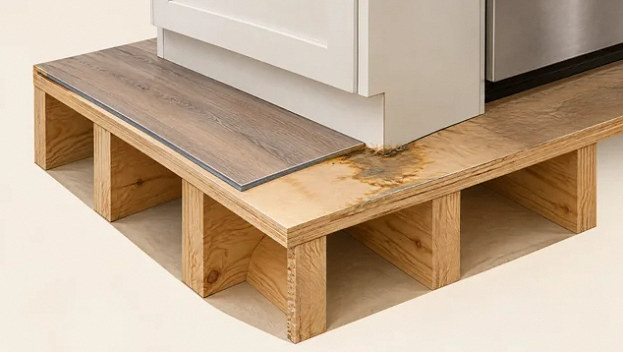
Water Under Vinyl, Tile, and Cabinets
A homeowner's guide to questions about concealed floor layers, cabinet areas, access, and the handoff from drying to repairs.
Read the guide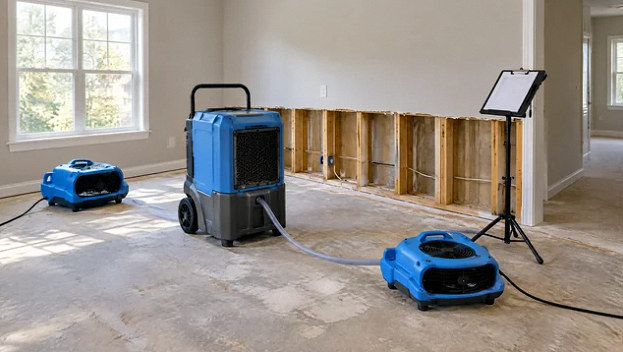
Drying and equipment · 5 min read
How Long Does Water Damage Drying Take?
Understand what controls drying time, what a useful progress report includes, and which questions to ask before equipment is removed.
Read the guide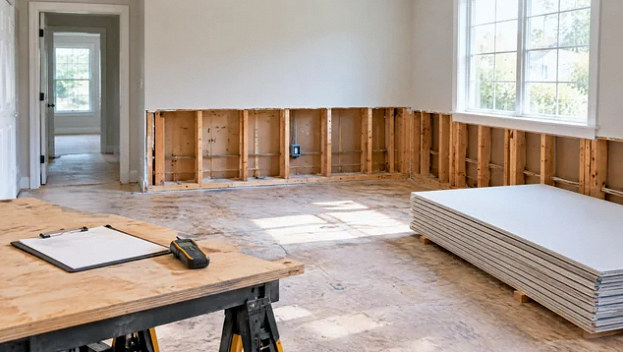
Materials and repairs · 5 min read
Before Rebuilding: How to Review the Drying Handoff
Ask for final material readings, remaining limitations, source-repair records, and a clear handoff before new finishes cover the work.
Read the guide