
First decisions · 5 min read
Can You Stay Home During Water Damage Restoration?
Discuss safe access, usable rooms, household health needs, equipment, and temporary accommodation before deciding to stay home.
YKCA · References checked 2026-09-27
Start with the essentials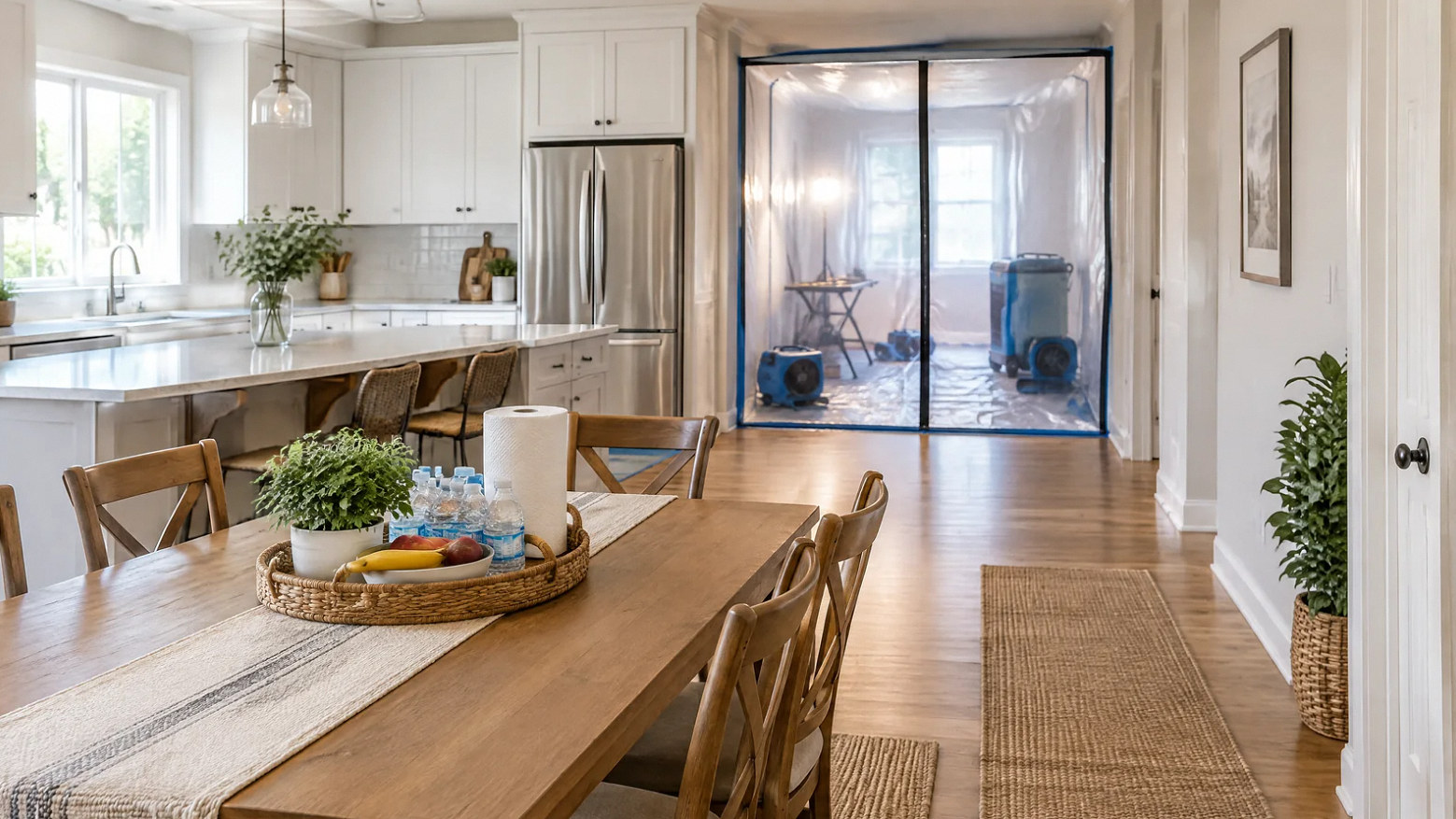
At a glance
Three things to keep in view.
Trace daily routes
Map the bathroom, food preparation area, sleeping space, and exit against the work boundary. Identify any route that cannot remain usable.
Explain household needs
Discuss children, pets, mobility, sleep, and relevant health restrictions. Keep individual medical questions with a healthcare professional and practical arrangements with the crew.
Separate lodging coverage
Confirm possible living expense coverage, documentation, and limits directly with the insurer. A contractor's recommendation to leave does not establish reimbursement.
The key point
Deciding to stay requires a plan for the people who actually live in the home. Discuss affected areas, essential rooms, access routes, contamination concerns, and equipment operation. Request clear conditions for returning or remaining, and review lodging coverage directly with your insurer instead of assuming that either safety or payment is guaranteed.
A home can have an untouched bedroom and still be difficult to use while restoration work occupies its hallways, bathroom, or kitchen. The decision is about the household's full day, including sleeping, meals, pets, mobility, and leaving the building.
Raise those needs before equipment and temporary barriers are placed. A practical living plan should be understandable to every occupant and updated when the work changes.
A usable room is not the same as an assessed living area
Disaster-damaged structures need appropriate safety assessment before reentry. Ask who has addressed electrical, structural, and contamination concerns, and which areas remain restricted. Do not interpret the arrival of drying equipment as approval to occupy every room.
Be specific about access. Can everyone reach the exit without crossing the work zone? Is the bathroom usable? Can a person using a walker move through the remaining route? Request answers for your layout rather than a general statement that people usually stay during this kind of work.
Sources for this section
Guidelines for Cleaning Safely After a DisasterSafety Guidelines: Reentering Your Flooded Home
Household needs change the occupancy discussion
Tell the contractor about children, pets, mobility needs, and household members with respiratory or immune concerns. EPA advises people with breathing problems or weakened immune systems to stay away from moldy sites. Individual health questions belong with a healthcare professional.
You do not need to place personal medical details in a general project folder. Explain the practical restriction needed and ask whether the proposed arrangement can meet it. Identify a household contact who can relay changes without requiring every resident to negotiate separately with the crew.
Sources for this section
The route between rooms matters as much as the rooms
Use a simple list: wake up, use the bathroom, prepare food, leave for work, return, and sleep. Discuss each step against the proposed layout. Include where children play, where pets stay, and whether essential belongings are trapped inside the work area.
A work boundary is more than a line on a floor plan. Opening an enclosure to reach another room can interfere with the arrangement intended to limit contamination movement. Where airflow controls are part of the work, their purpose differs from ordinary room ventilation. Have the team explain permitted routes and how access is maintained; do not improvise a new opening.
For example, a family may have a spare bedroom but need to cross a restricted hallway to reach the only bathroom. The spare room alone does not resolve the living arrangement. Ask the crew to explain workable access or discuss an alternative place to stay.
- Identify rooms available to occupants and rooms reserved for work.
- Agree on routes for the crew and household.
- Set a contact for access problems and changes in scope.
Equipment affects circulation, access, and comfort
Different equipment can add different burdens: directed airflow, warm discharge air, drainage hoses, and required clearance around the unit. A machine may sound normal while its placement creates a practical problem for an occupant. Those observations belong in the setup review, alongside the technical drying plan.
Ask about heat, noise, overnight operation, drainage, and alarms while the crew is present. If the arrangement prevents sleep or ordinary use of essential space, say so before deciding to remain. Request a specific response instead of relying on permission to improvise later.
Keep exits and agreed routes usable. Have the contractor address cords, hoses, and equipment placement; do not rearrange the setup yourself. Confirm what changes you may make, what requires a call, and how to get help when the regular contact is unavailable.
Lodging coverage is separate from the decision to leave
Ask your insurer whether additional living expenses apply, what documentation is needed, and what limits or approval steps affect your situation. Keep relevant receipts and a record of the answer. A contractor's opinion about lodging does not establish policy coverage.
Also ask when the living arrangement will be reviewed. A newly discovered affected area, changed work boundary, or equipment change can alter the original plan. Record the reason for moving out or returning, the person who advised you, and the questions still awaiting an answer.
Sources for this section
Residential Property Claims GuideTop Ten Tips for People Affected by Winter Storms
Common questions
Is sleeping in the room next to the work area acceptable?
Ask for an assessment of that room and the route to it, including how it relates to the affected area and equipment. Consider the needs of the person sleeping there. Distance from a visible wet spot does not, on its own, answer the occupancy question.
Sources for this section
Text Version of the Flooded HomeGuidelines for Cleaning Safely After a Disaster
Will insurance pay for a hotel because the equipment is loud?
Do not assume that it will. Describe the actual living conditions to your insurer and ask how your policy applies, what evidence is required, and what expenses are eligible. Keep the response with your claim records; neither a general article nor a contractor can guarantee payment.
Sources for this section
Sources and further reading
References checked 2026-09-27. Guidance depends on the loss, affected materials, scope of work and property conditions.
- Guidelines for Cleaning Safely After a Disaster
- Safety Guidelines: Reentering Your Flooded Home
- Text Version of the Flooded Home
- Mold Remediation in Schools and Commercial Buildings Guide: Chapter 3
- DryMAX XL Pro | XL LGR Dehumidifier Owner's Manual
- Residential Property Claims Guide
- Top Ten Tips for People Affected by Winter Storms
Discuss the next step for your property.
Share what happened, which areas are affected and the decisions you need help with.
Discuss water damage restorationRelated decisions
Drying and equipment · 5 min read
Should You Open Windows or Turn Off Drying Equipment?
Plan for heat, noise, windows, and equipment interruptions during water damage drying, with clear instructions for overnight operation.
Read the guide
First decisions · 5 min read
Sewage and Floodwater: Questions Before Cleanup Begins
Understand why contaminated water changes cleanup decisions, what to ask about belongings, and how to document damage safely.
Read the guide
Documentation · 5 min read
Water Damage Estimates: Understand the Work and Keep Clear Records
Review emergency authorization, equipment charges, scope changes, and insurance documentation without assuming every cost is covered.
Read the guide