Medical & Dental Build-Outs · 8 min read
Dental Office Buildout Budget: Separate Construction, Equipment and Opening Costs
Build a dental office budget that separates construction, equipment, owner purchases and opening expenses, with clear allowances and bid comparisons.
YKCA Journal · Sources reviewed October 3, 2026
Read the guide
The key decision
A useful dental buildout budget explains who buys, installs and verifies every major item, then protects room for the unknowns that can change opening readiness.
A construction quote is only one part of opening a practice
Start with a project budget that shows the complete path to opening. Building work is one category. Design and approvals, clinical equipment, information technology, furnishings, relocation and the practice's opening activities are separate categories. Combining them into one unexplained cost per square foot hides missing scope. The more important first question is whether each category has an owner and a reliable basis, not whether the total resembles a number discussed online.
Create a budget register with four statuses: quoted, estimated, allowed and excluded. Quoted means a defined supplier or contractor offered a price for stated work. Estimated means the team has a reasoned planning figure. An allowance reserves an amount for a choice or condition that is still unresolved. An exclusion identifies a cost outside that proposal. None should quietly be treated as the others when the owner checks available funds.
Establish the treatment program that the budget is buying
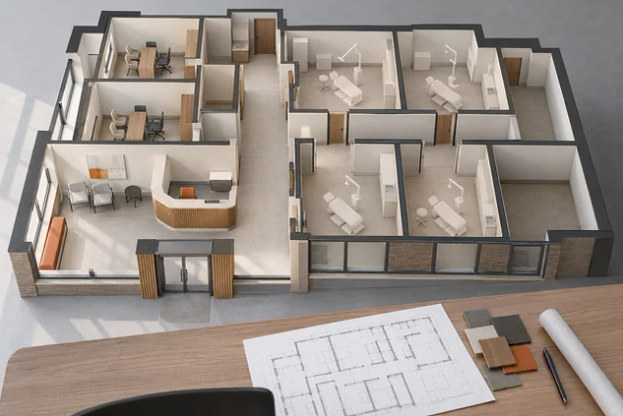
Define the opening-day room count and the services assigned to each room. Distinguish an equipped operatory from an unfinished future room and from a room with only planned pathways. These options represent different construction and purchasing decisions. A future room might require work today to avoid disruptive access later, but the extent of that work must be designed, priced and documented. The phrase future ready has no useful budget meaning on its own.
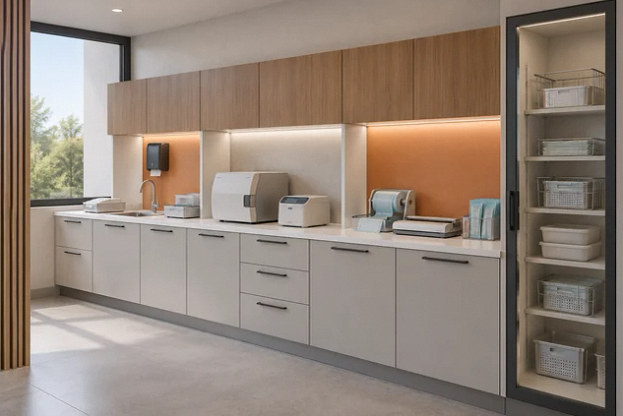
Include support capacity in the discussion. More treatment rooms can increase demand on sterilization, storage, staff space and circulation even when the reception design changes very little. CDC's dental guidance describes organized instrument-processing functions; it does not prescribe a construction budget. Use the clinical team's workflow to establish the necessary support program, then let the design and construction teams price it. Do not delete support functions merely to preserve a preferred operatory count.
Sources: CDC: Guidelines for Infection Control in Dental Health-Care Settings
Find the gaps between the builder and the equipment supplier
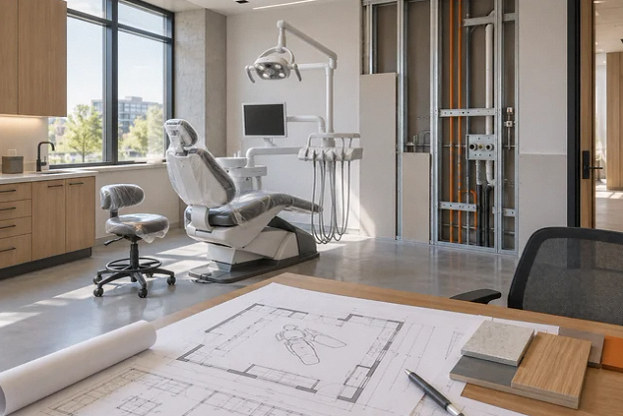
For each major device, ask who supplies the unit, delivers it, moves it into place, connects it and performs startup. Review site preparation and casework separately from the equipment purchase. A supplier may include installation but exclude the building utilities needed to make installation possible. A contractor may carry those utilities while excluding specialty testing. Those are reasonable arrangements when written clearly; together they can also leave an unnoticed gap.
Imaging equipment deserves its own line of coordination. California's Radiologic Health Branch separately addresses machine registration and facility compliance. Identify the qualified parties responsible for project-specific shielding review, equipment installation and required documentation. Do not assume that a construction permit closes every equipment-related obligation. The budget should show the actual proposed responsibilities, including any specialist costs that have not yet been quoted, without inventing a universal shielding package for all dental offices.
Put registration on the owner's equipment calendar as well as the construction schedule. CDPH states that radiation machines must be registered within 30 days of acquisition. Assign who tracks acquisition, submits the registration and keeps the confirmation. Do not move that obligation to a guessed number of days after the building final or opening date. Confirm the current registration process with CDPH and budget the applicable administrative work separately from vendor installation and project-specific shielding review.
Sources: CDPH: Radiation Machine Registration
Compare bids with a common scope matrix
Send competing builders the same drawings, equipment schedule, known site conditions and owner purchasing list. Ask each to identify exclusions and assumptions in comparable categories. Compare demolition, rough construction, utility distribution, finishes, casework, coordination and closeout. A cheaper total may reflect a different equipment assumption, less access work or a shorter included phasing period. Those differences deserve a written answer before the owner treats the proposals as equivalent.
Use a scope matrix to track interfaces rather than demanding identical trade breakdowns from every contractor. For example, record whether the chair connection scope includes the specific vendor's required work, whether floor restoration follows utility installation and whether after-hours access is assumed. An unanswered line remains a question. Do not fill it with an optimistic zero. When a bidder offers an alternate, show the changed outcome and any consequence for the other packages beside the proposed savings.
Budget dental wastewater equipment and recurring service explicitly
Ask the dental supplier and plumbing designer to identify whether the practice needs an amalgam separator and where it belongs in the proposed system. EPA's dental rule covers specified discharges to public wastewater treatment works and includes separator, operating and reporting requirements for covered offices. Applicability and exceptions matter: confirm the practice's activities and obligations with the relevant wastewater Control Authority. A statement that the office does not place new amalgam is not enough information if it will remove existing amalgam restorations.
Where required, show the complete installed scope: equipment purchase, compatible plumbing connections, access for service, commissioning responsibilities and closeout information. Then list replacement collection components, maintenance arrangements and waste handling in the operating budget. Ask who will perform each task and what the vendor actually includes. A separator line item that omits installation or leaves it inaccessible behind cabinetry does not describe a usable purchase.
Keep these known categories out of an unexplained contingency fund. Carry a labeled allowance while a vendor quote is outstanding, and reserve contingency for remaining uncertainty such as a concealed route that cannot yet be inspected. At each budget review, show committed cost, pending quotes and unresolved conditions separately. This makes the support equipment visible when the owner compares a lower chair-package price with the complete cost of opening and maintaining the practice.
Sources: EPA: Dental Effluent Guidelines and Amalgam Separators
Test a smaller opening phase against the cost of returning
In a hypothetical startup, the owner intends to open three treatment rooms and add two later. One option completes all concealed pathways now while deferring selected equipment and finishes. Another completes only the first phase and accepts a later construction interruption. Compare the actual proposed work, temporary protection and future access in both options. Building five fully equipped rooms today is a third business choice, not an automatic requirement for preserving growth.
The owner should review these alternatives alongside staffing and patient demand assumptions with its business advisers. Construction planning can identify which choices are expensive to reverse; it cannot establish that more rooms will generate enough revenue. Assign a future activation condition, such as a verified operational need, rather than an arbitrary date. Record what the later phase would still require so an unfinished room does not get counted as operational capacity in lender presentations or opening plans.
Create a purchasing calendar that matches the build
For each owner purchase, record the approval date, order commitment, expected delivery, site-readiness condition and receiving responsibility. Casework, equipment and information technology often follow different purchasing paths, yet they meet in the same room. Ask who will inspect a shipment and where it will be stored if the room is not ready. Early delivery can create handling and protection costs rather than an automatic schedule benefit.
At every commitment point, compare the remaining available budget with the forecast cost of the incomplete scope. An unused allowance is not a saving until the relevant item is selected and its full installed cost is understood. Likewise, a deposit is part of the total purchase, not an additional contingency reserve. A purchasing calendar gives the practice a practical way to see when decisions become financially binding and which delayed selection could affect another vendor's work.
Keep budget and schedule decisions in the same meeting
A low-cost product that arrives after the required installation sequence may increase temporary work or postpone opening. Conversely, an available standard finish may simplify procurement without compromising the clinical program. Review long-lead selections, vendor appointment dates and the sequence for closeout while checking the budget. Do not assume that spending more always shortens the job; some dependencies require approvals or building access rather than a different product price.
End each budget review with an updated total, a change log and a list of decisions due before the next commitment. Keep owner purchases visible until delivery, installation and acceptance are complete. The final comparison should distinguish the construction contract from the full opening budget and identify the items still dependent on unverified conditions. That gives the practice a usable financial planning document instead of an attractive total that excludes the work needed to use the rooms.
Compare the choices
A decision table for this project
| Budget item | Question to resolve | Record to request |
|---|---|---|
| Treatment equipment | Who provides site preparation and startup? | Vendor scope and utility requirements |
| Unselected finishes | What allowance and quantity are assumed? | Selection schedule with decision dates |
| Future rooms | What is built now and deferred? | Phased scope drawings |
| Unknown conditions | What investigation can reduce uncertainty? | Risk register and contingency forecast |
Prepare for the next step
Your project checklist
Common questions
Should we choose the lowest cost per square foot?
Only after confirming the scope and building assumptions are comparable. A square-foot figure does not show equipment, specialist work, landlord obligations or the consequences of phasing. Use it as a reasonableness check after the detailed comparison.
Can an equipment discount offset a construction overrun?
Possibly, but compare the complete installed outcome. A substituted device may require different connections, casework or delivery arrangements. Confirm those effects before recording the purchase discount as a net project saving.
Behind this guide
Sources & review date
Sources reviewed October 3, 2026. Confirm current requirements with the agencies and design professionals responsible for your project.
Official guidance3 references
The questions behind this guide2 discussions
These Reddit discussions helped identify the concerns addressed here. They are individual experiences, not verified cost benchmarks or evidence of local demand. Technical guidance comes from the sources above.
- For those who did a start up - how is it going for you?
Owners discuss startup buildout expense, contractor selection and the pressure of opening overhead. Qualitative discussion; not a technical source or local demand measurement.
- Anybody regret growing larger?
Owners question whether additional rooms and construction debt justify the staffing needed to use them. Qualitative discussion; not a technical source or local demand measurement.
Apply it to your property
Plan your next step.
Medical & Dental Build-Outs
Bring your site information, equipment list and unresolved questions to the project conversation.
Continue with the next decision