
Materials and repairs · 3 min read
Wet HVAC and Electrical Equipment: Who Needs to Inspect It?
Separate building drying from the assessment of heating, cooling, wiring devices, and equipment exposed to water.
YKCA · References checked 2026-10-03
Start with the essentials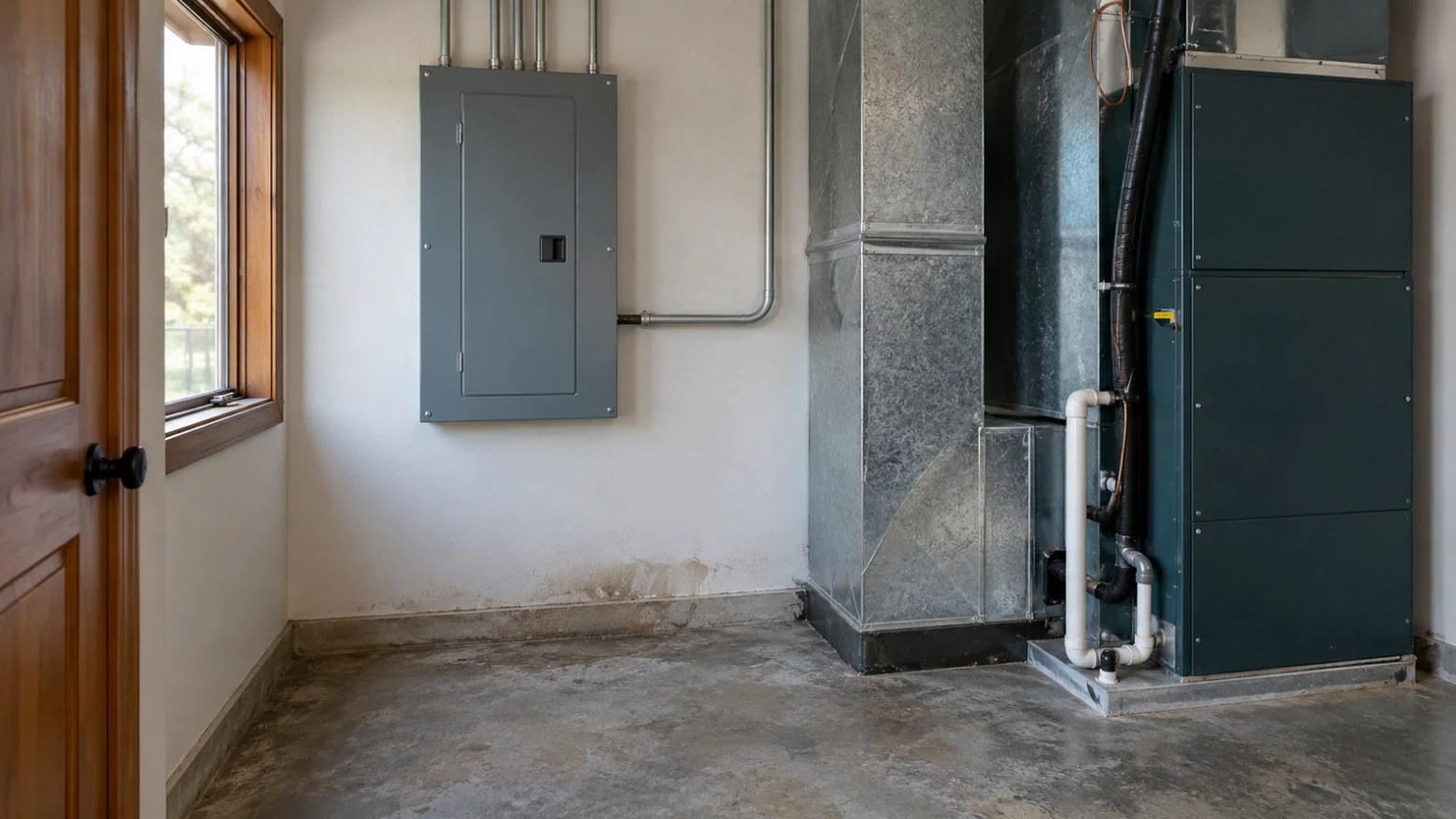
At a glance
Three things to keep in view.
Identify
List each affected device and system.
Assign
Name the qualified provider for each assessment.
Restore
Document return-to-service decisions separately.
The key point
A dry exterior does not establish that water-exposed electrical or HVAC equipment can return to service. Arrange the appropriate specialist assessment before testing it by switching it on.
A restoration crew may dry the room while an electrician, HVAC provider, or equipment specialist handles affected systems. Those tasks need coordination. Otherwise a homeowner can mistake the end of room drying for permission to restart equipment that has not been evaluated.
Separate system assessment from room drying
NEMA's water-damaged equipment guide distinguishes equipment that needs replacement from equipment that may be considered for reconditioning with manufacturer involvement. CDC calls for electrical assessment before restoring power after flooding. EPA also addresses wet or mold-contaminated HVAC components in its duct guidance.
These references do not support a blanket “dry it and try it” approach. Tell the project lead which devices, controls, outlets, ducts, or mechanical components were exposed. Do not enter water or a restricted area to collect model numbers.
Make an affected-equipment list
Record each accessible item by location and function. A wall control, receptacle, furnace component, and portable appliance need different decisions. Photograph labels only when access is safe and the item can be observed without handling it.
Ask who is responsible for each assessment. A plumber fixing the leak does not automatically evaluate the adjacent electrical device, and an equipment manufacturer may require information that the building drying report does not contain. Assigning the task prevents these gaps.
Coordinate safe temporary conditions
The household and drying crew may need a plan for temperature, power, or access while equipment is unavailable. Ask the responsible trades to coordinate a suitable arrangement. Do not improvise power connections or move equipment to unassessed circuits.
Keep the occupant instructions separate from the specialist work instructions. A resident needs to know which controls to leave alone, which areas are restricted, and whom to contact. They should not be expected to decide whether a wet component can be safely tested.
Get a clear return-to-service record
Request a description of the equipment assessed, findings, work completed, and any restrictions that remain. A record should identify the actual system or device, rather than say only that “the house was checked.”
Before the final repair handoff, reconcile unresolved equipment with the building work. A finished wall may conceal wiring or a control connection that another trade still needs to address. Schedule those dependencies before finishes are closed and document who authorizes normal operation of each affected system.
Common questions
If a wet device still works, is it safe to keep using?
Continued operation does not establish that a water-exposed device is safe. Do not use a functional test as your assessment method. Have the appropriate qualified specialist evaluate the equipment and applicable manufacturer guidance.
Sources and further reading
References checked 2026-10-03. Guidance depends on the loss, affected materials, scope of work and property conditions.
Discuss the next step for your property.
Share what happened, which areas are affected and the decisions you need help with.
Discuss water damage restorationRelated decisions
First decisions · 4 min read
Water Damage: What to Do First and Who to Call
A practical starting point after a leak: safe access, stopping the source, choosing help, photos, and questions before drying begins.
Read the guide
First decisions · 5 min read
Can You Stay Home During Water Damage Restoration?
Discuss safe access, usable rooms, household health needs, equipment, and temporary accommodation before deciding to stay home.
Read the guide