
Materials and repairs · 3 min read
Wet Books, Documents, and Photographs: What to Prioritize
Plan fast, careful decisions for damaged records and photographs, including when to involve a paper or photo conservator.
YKCA · References checked 2026-10-03
Start with the essentials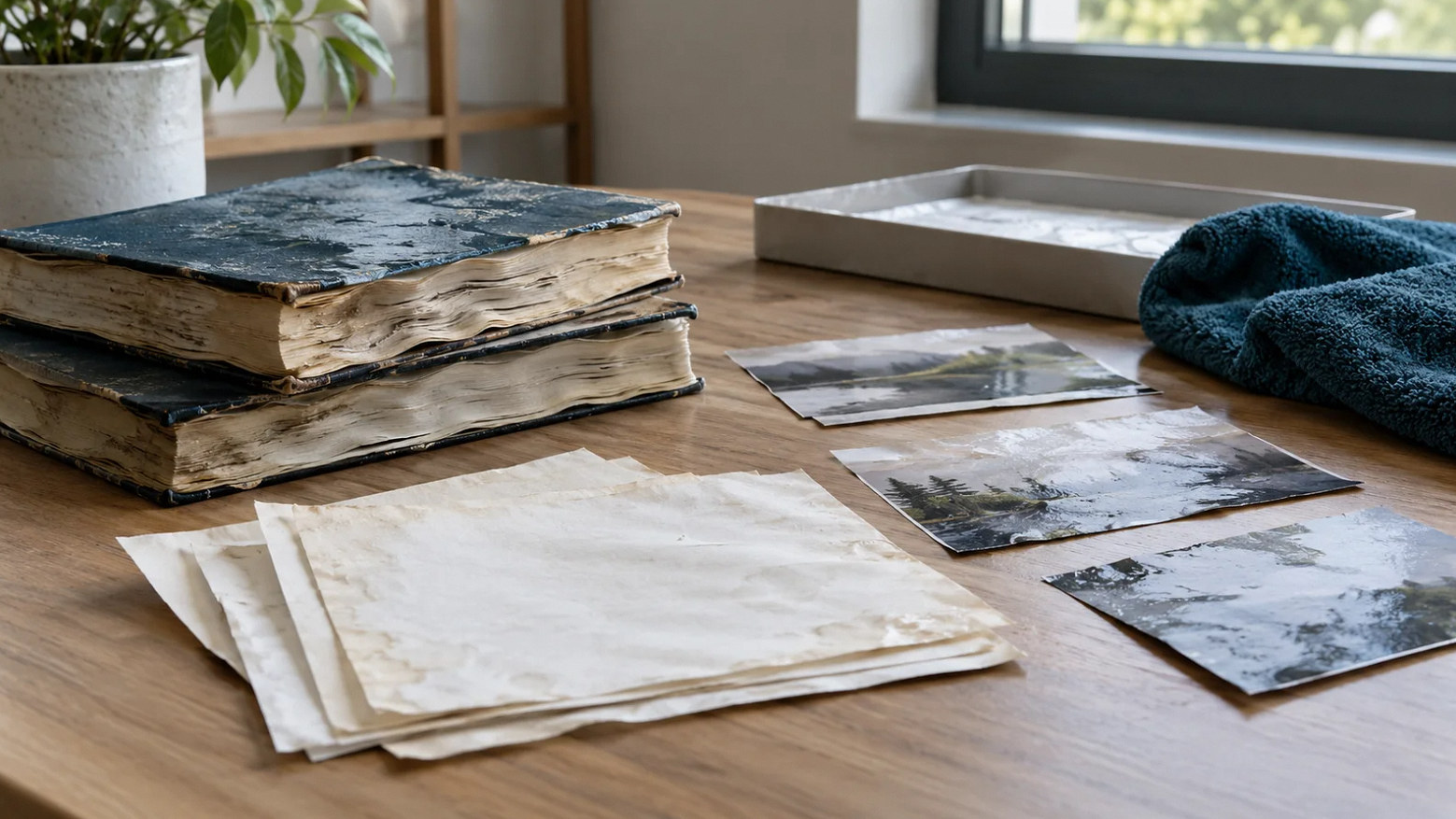
At a glance
Three things to keep in view.
Priority
Identify unique originals and essential records.
Material
Distinguish paper, photographs, and other media.
Handoff
Preserve identification through specialist treatment.
The key point
Identify irreplaceable records and photographs early, then seek advice suited to the material. Freezing and drying methods that help some paper collections can damage other objects.
A box of family photographs and a shelf of business records are not ordinary building materials. Inks, coatings, bindings, adhesives, and photographic processes can respond differently to water. The first decision is what needs priority attention and who can advise on safe stabilization.
Treat paper and photographs as different materials
NEDCC describes freezing as a way to stabilize many wet books and records while recovery is arranged. Its photograph guidance emphasizes that photographic processes differ and that some materials require special handling. This does not support putting every wet item into a freezer without identifying it.
A conservator can help choose an approach for unusual or valuable objects. Explain whether the material is a book, loose paper, photograph, album, film, or another medium. Also describe the water source and whether items are stuck together or attached to glass.
Sources for this section
NEDCC: Freezing and Drying Wet Books and RecordsNEDCC: Emergency Salvage of Wet Photographs
Set priorities before packing everything together
Start with unique originals, essential records, and items with significant personal value. A replaceable printed manual and the only copy of a family photograph have different recovery priorities. Note whether a usable digital copy or duplicate already exists.
Create a short inventory that keeps related pages or photographs connected to their original grouping. For business records, designate one responsible person to handle sensitive information. Avoid spreading private documents across a public work area while trying to sort the entire collection at once.
Avoid irreversible handling decisions
Wet materials can be fragile. Do not force apart pages or photographs that resist separation, and do not peel a photograph from glass simply to see whether it is damaged. Tell the specialist about adhesion before attempting further handling.
Keep the focus on stabilization and identification rather than making everything look presentable immediately. A rushed cosmetic action can destroy information that a specialist might otherwise preserve. Ask what can safely be done now and what should wait for trained treatment.
Arrange the handoff to a specialist
Provide photographs of the affected collection from a safe location, approximate quantity, material types, and discovery time. State what is known about contamination and what has already been done. These details help a provider advise on urgency and logistics.
Confirm how items will be identified during transfer and what record you will receive. If the collection includes important legal or financial documents, coordinate practical access to necessary copies with the appropriate institution or adviser while recovery is underway.
Define a useful recovery outcome
Recovery may prioritize legibility, image preservation, or access to information rather than a return to untouched appearance. Discuss those priorities with the specialist before approving treatment. Ask whether digitization, conservation, or replacement is the appropriate objective for each group.
Keep the treatment record and resulting copies together with the contents inventory. A restored room does not mean the document recovery task is complete. Assign a follow-up for items still at a specialist and for records that must be replaced through another source.
Common questions
Should I use a hair dryer on wet photographs?
Do not apply improvised heat to a valuable photograph or album. Identify the material and follow advice from a qualified photograph conservator or a preservation resource such as NEDCC. The safest recovery method depends on the photographic process and condition.
Sources and further reading
References checked 2026-10-03. Guidance depends on the loss, affected materials, scope of work and property conditions.
Discuss the next step for your property.
Share what happened, which areas are affected and the decisions you need help with.
Discuss water damage restorationRelated decisions

Materials and repairs · 3 min read
Furniture and Belongings After Water Damage: A Salvage Plan
Organize assessment, cleaning, storage, and replacement decisions for furniture and personal belongings after a leak.
Read the guide
First decisions · 4 min read
Water Damage: What to Do First and Who to Call
A practical starting point after a leak: safe access, stopping the source, choosing help, photos, and questions before drying begins.
Read the guide