
Materials and repairs · 3 min read
Water in Crawlspaces and Basements: Beyond Pumping It Out
Plan assessment of standing water, access, drainage, insulation, and framing beneath the occupied part of a building.
YKCA · References checked 2026-10-03
Start with the essentials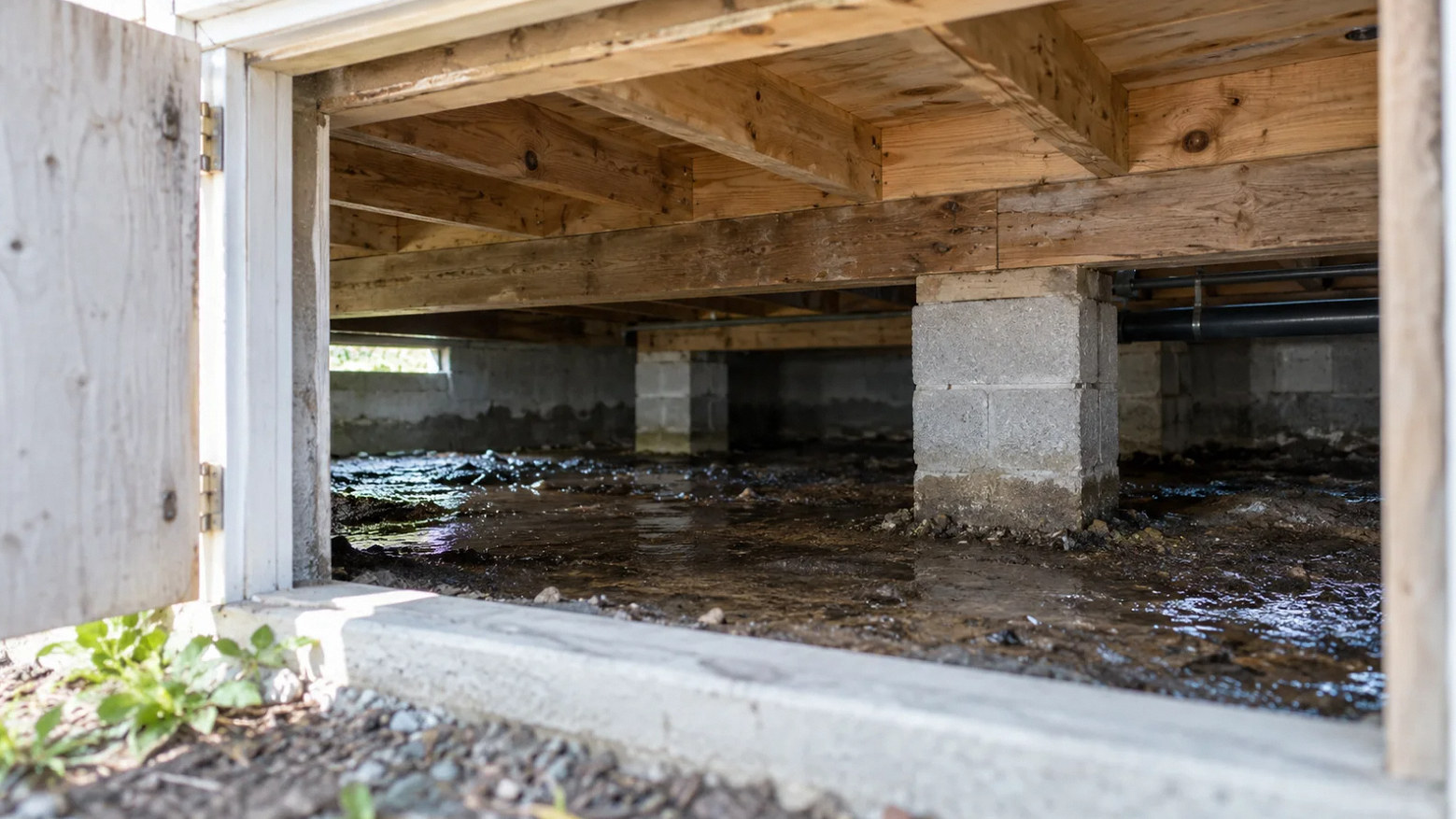
At a glance
Three things to keep in view.
Access
Keep entry and power decisions with qualified people.
Source
Identify ongoing water entry before closing the job.
Assembly
Check insulation, framing, and other affected systems.
The key point
Pumping out water is one part of a below-floor recovery plan. Safe access, continuing entry, affected materials, and verification still need explicit decisions.
Water beneath a house can seem less urgent when the living room stays dry. Yet the concealed space may contain electrical equipment, insulation, framing, ductwork, and access hazards. A complete scope should address that environment rather than stop at the disappearance of standing water.
Establish who can safely assess the space
CDC's flood guidance addresses electrical hazards, crawlspace drainage, and the dangers of fuel-powered equipment in enclosed areas. EPA advises waiting for safe access to a flooded property. These are reasons to use an appropriate assessment process, not to crawl in simply to estimate the water depth.
Stay out of water near electrical equipment and avoid entering a restricted below-floor space. Report what can be observed safely, including where water is appearing and whether another contractor has already inspected the area.
Sources for this section
Safety Guidelines: Reentering Your Flooded HomeText Version of the Flooded Home
Identify whether water is still entering
The plan should distinguish a plumbing failure from rainfall, drainage, groundwater, or another source. Ask what has been confirmed and what still needs investigation. A pump can remove water while leaving the entry route unresolved.
Keep the source-repair and restoration scopes connected. If a drainage specialist or plumber has another visit scheduled, the drying team needs that information. Record new water observations after the initial removal so they can be compared with weather, plumbing use, or other relevant events.
Treat deep basement water as a specialist decision
Where substantial water and structural concerns are present, removal needs an assessment of the site and surrounding conditions. Do not select a pump rate from a classroom volume calculation alone. Estimating gallons does not establish a safe dewatering method.
Ask who is evaluating the building and sequencing removal. The homeowner's role is to provide access information and known history, not to balance structural loads by trial and error. Keep evacuation or access restrictions clear until the responsible professionals revise them.
Include the materials above the ground
The scope may need to address insulation, floor framing, supports, ducts, and debris, depending on what was affected. Ask for an itemized description rather than a single “crawlspace cleanup” line with no material decisions.
Photographs from the professional inspection can show what was accessible, removed, retained, and left unresolved. Have them labelled by area. If one end of the space could not be reached, that limitation should stay visible rather than disappear in an overall completion statement.
Verify the result and the prevention handoff
Ask which observations and measurements support completion for the retained building materials. Ground conditions and structural materials are different assessment subjects; a dry-looking patch of soil does not establish that joists or insulation are ready to cover.
Finish with a source-control and maintenance handoff. Identify any drainage work, plumbing follow-up, or monitoring still required and who owns it. A clean space after removal is useful, but the owner also needs to know what prevents the same entry route from repeating the problem.
Common questions
Can I run a gasoline pump in a garage with the door open?
No. Fuel-powered equipment can create dangerous carbon monoxide in enclosed or partly enclosed spaces. Follow the equipment instructions and CDC placement guidance; do not use an open garage door as a substitute for safe outdoor placement.
Sources and further reading
References checked 2026-10-03. Guidance depends on the loss, affected materials, scope of work and property conditions.
Discuss the next step for your property.
Share what happened, which areas are affected and the decisions you need help with.
Discuss water damage restorationRelated decisions
Drying and equipment · 3 min read
Why Water Extraction Comes Before Structural Drying
See what pumping, extraction, and drying each accomplish, and what to ask when standing water has disappeared.
Read the guide
Materials and repairs · 3 min read
Wet Insulation and Wall Cavities After a Leak
What a dry wall surface can hide, why insulation type matters, and what to document before closing the wall.
Read the guide