
Reconstruction · 6 min read
Your Drying Crew Has Left: How to Organize the Rebuild Handoff
Organize the transfer from drying to rebuilding with removal records, assigned responsibilities, inspection needs, and a practical schedule.
YKCA · References checked 2026-10-03
Start with the essentials
Three decisions to document
At a glance
Three things to keep in view.
Transfer
Collect removal and drying records.
Assign
Name the owner of every open task.
Sequence
Confirm dependencies before a start date.
The key point
Before booking reconstruction, identify what was removed, what remains unresolved, and who owns each inspection, repair, and protection task.
A kitchen leak has been stopped, drying equipment has left, and the lower cabinets are sitting in the garage. The homeowner expects a repair date, but the mitigation company is waiting for a builder and the builder is waiting for records. This illustrative situation calls for a handoff meeting with a room list, named responsibilities, and a decision about the next safe step.
Related service: Reconstruction questions and planning
Start with a room-by-room transfer record
Arrange a walkthrough with the outgoing project contact and the person pricing reconstruction, even if they work for the same company. Use the same room names in the photo record, drying report, and proposed estimate. A kitchen described as Room 1 in one file and the dining area in another makes evidence unnecessarily difficult to follow.
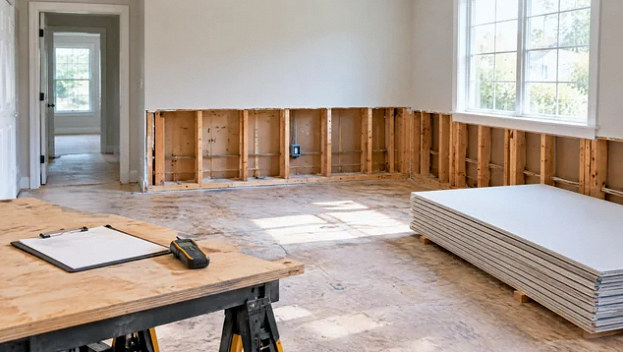
For each room, record removed finishes, disconnected fixtures, items retained for reuse, protected belongings, and inaccessible areas. Photograph the condition at transfer. A list saying “drywall removed” leaves questions about insulation, backing, trim, and paint boundaries. Those are construction questions the next contractor needs to answer before promising a completion date.
Before the walkthrough, draw a simple boundary around the affected area on a printed plan or room sketch. Mark disconnected equipment and the location of retained materials. Ask each participant to identify one missing fact that prevents their next task. If their answers differ, resolve the dependency in the meeting. For example, the builder may need to know whether a countertop can remain supported, while the cabinet fabricator needs an accurate opening measurement. Those questions belong ahead of the final price. Record whether the proposed investigation itself is included in the current agreement, and arrange access so the person qualified to answer can inspect without another unnecessary mobilization.
Separate a drying conclusion from construction readiness
Ask for the final moisture report, its measurement locations, and any untested layers. Have the builder identify what information is needed for the intended replacement materials. A drying contractor's closeout and a flooring manufacturer's installation conditions serve different purposes; keep both visible in the handoff.
EPA advises drying a flooded home before replacing walls and floors. That general instruction does not supply a universal moisture number for every assembly. An article or a photograph cannot establish that your concealed framing, slab, or subfloor is ready. Missing observations should become a named inspection task, not an assumption made because the equipment rental stopped.
Sources for this section
Assign the unfinished middle of the job
List the tasks between mitigation and finished construction: source repair verification, temporary cabinet support, secure openings, safe electrical conditions, debris pickup, and protection from another leak. Put one responsible contact and a next date beside each item. This can be a short shared document rather than a complicated project-management system.
If a plumber disconnected the sink, ask who reconnects it and who checks it before the cabinet space is concealed. If a cabinet shop retained the doors, record where they are stored and who checks their condition. A handoff is successful when the next person can proceed without guessing what a previous trade intended.
Build a scope around actual boundaries
The reconstruction proposal should explain the work in each affected room and the stopping point at each adjoining surface. Ask whether it includes insulation, drywall finish, primer, painting, baseboards, cabinet installation, appliance connections, and final cleaning. Do not assume that an insurer's line-item estimate is the contractor's complete agreement.
California CSLB guidance calls for a detailed written scope, permit responsibility, schedule, and written changes. Use that framework to turn missing tasks into explicit inclusions, exclusions, or allowances. An allowance should say what remains unknown and how the amount will be resolved. An unexplained total marked “rebuild” is not enough to schedule several trades reliably.
Sources for this section
Put dependencies before calendar promises
Work backward from the intended return date. Identify which decisions must happen first: scope approval, required permits, inspections, material selection, cabinet fabrication, and delivery. Ask for a tentative sequence that labels these dependencies. A supplier estimate is different from a confirmed delivery, and a scheduled inspection is different from a passed inspection.
Choose an owner for weekly updates and decide what triggers an immediate call. A delayed cabinet can affect a countertop measurement, sink connection, and kitchen availability. That chain deserves an updated plan before the family rearranges housing. Request realistic next milestones rather than repeated promises that the entire project will be finished soon.
Transfer financial questions separately
Keep the mitigation invoice, reconstruction contract, insurer estimate, and payment record as separate files with clear dates. Ask the insurer which portions remain under review and whether it needs more documentation. Ask the builder what work it can schedule under the signed agreement. One answer does not substitute for the other.
If temporary accommodation is involved, send the proposed repair sequence to the adjuster and ask how the policy applies to the anticipated period. Do not interpret a builder's availability as insurer authorization. Record who is waiting on whom and the specific information needed so a delay can be addressed instead of becoming a vague disagreement about pace.
Close the meeting with a usable next action
Send a concise recap: the rooms transferred, documents supplied, open conditions, responsible people, and the next scheduled decision. Attach a small index of photographs rather than an unexplained folder containing hundreds of images. Ask recipients to correct factual errors promptly. Keep the recap with the original reports so later revisions remain understandable.
For the illustrative kitchen, the next action might be a joint cabinet and plumbing inspection before the builder finalizes its scope. It might instead be obtaining a missing drying record. Either is more useful than collecting another general estimate. The handoff is ready when the builder can explain what it knows, what it must verify, and how those unknowns affect the sequence.
Common questions
What should my mitigation company give the builder?
Request the removal record, dated photographs, final drying observations, source-repair information, and a list of unresolved areas. The builder should confirm what it still needs before setting a firm scope or start date.
Does one company handling both phases eliminate the handoff?
No. The information still has to pass from mitigation to reconstruction, with clear responsibility for inspections and remaining conditions. A shared company name does not prove that every task is included.
Sources and further reading
References checked 2026-10-03. Guidance depends on the loss, affected materials, scope of work and property conditions.
The homeowner question behind this guide
These public discussions informed the questions addressed here. Personal experiences and comments are not technical findings or proof of insurance coverage.
Discuss the next step for your property.
Share what happened, which areas are affected and the decisions you need help with.
Discuss reconstructionRelated decisions
Materials and repairs · 5 min read
Before Rebuilding: How to Review the Drying Handoff
Ask for final material readings, remaining limitations, source-repair records, and a clear handoff before new finishes cover the work.
Read the guide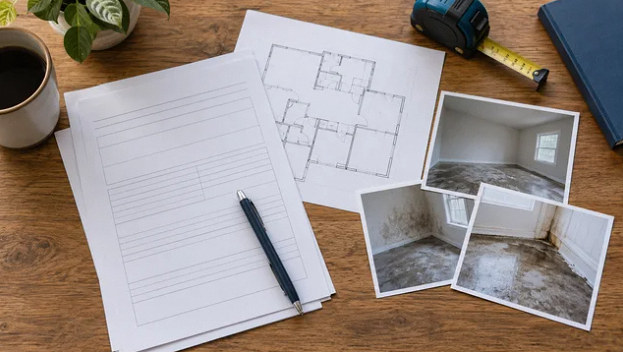
Documentation · 3 min read
Before You Sign a Water Damage Work Authorization
Clarify the initial scope, payment responsibility, equipment charges, changes, and handoff before restoration work begins.
Read the guide