
Documentation · 3 min read
Before You Sign a Water Damage Work Authorization
Clarify the initial scope, payment responsibility, equipment charges, changes, and handoff before restoration work begins.
YKCA · References checked 2026-10-03
Start with the essentials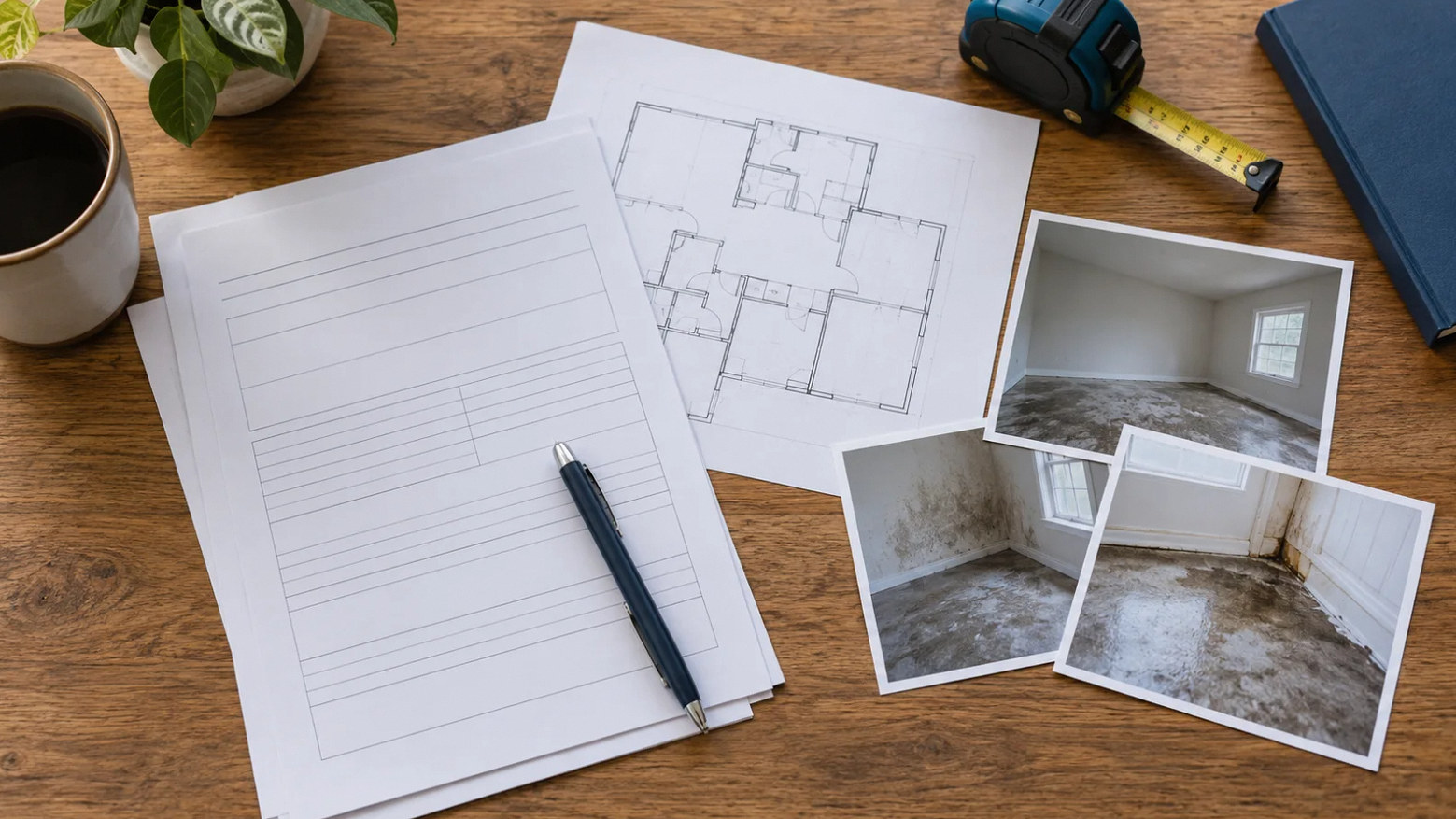
At a glance
Three things to keep in view.
Scope
State the work authorized now.
Charges
Explain rates, duration, and the review process.
Changes
Keep written decisions linked to new findings.
The key point
A work authorization should make the immediate work understandable. Keep the contractor agreement, insurance claim, and later repair scope distinct, with clear connections between them.
An urgent leak can leave little time for a long paperwork review. Even so, the person authorizing work needs to understand what starts now, how charges are determined, and what requires a later decision. A short explanation of those boundaries can prevent substantial confusion.
Separate the contract from the insurance decision
California's CSLB describes written home-improvement contracts and written, signed change orders for changes to covered work. The Department of Insurance explains the claims process and the importance of keeping records. The exact contract requirements depend on the work and circumstances; a generic form title does not settle them.
An insurer's involvement does not automatically make the insurer the contractor's customer or guarantee payment for every charge. Read the payment terms and ask the insurer about the applicable policy and claim rather than relying on a contractor's general coverage assurance.
Sources for this section
CSLB: Home Improvement ContractsResidential Property Claims Guide
Define the initial authorized work
Ask which activities begin under the document: assessment, extraction, selective removal, drying, cleaning, contents handling, or repairs. Some may remain provisional until inspection provides more information. Those limits should be understandable to the person signing.
Record who can approve a change and how they will be reached. In a rental, condo, or managed building, the person providing access may not have authority to approve every repair. Resolve that distinction before treating a key handoff as blanket authorization.
Understand how equipment charges accumulate
Find the equipment rates or pricing method, the initial estimated duration, and the process for reviewing additional days. Ask how placement, monitoring, changes, and removal will be recorded. Keep that record with the invoice.
A tentative duration should not be mistaken for an unconditional completion promise. At the same time, “until dry” should come with an explanation of the goals and monitoring process. The owner needs a way to follow the charge as the job develops.
Keep changes specific
When hidden conditions change the scope, request an explanation tied to the new finding. Identify the added work, its cost or pricing basis, and any effect on scheduling. Keep the revised document alongside the original rather than replacing the earlier record.
A useful question is “Which newly observed condition requires this work?” That helps separate necessary restoration from optional improvements. If the owner chooses an upgrade during repairs, describe that decision distinctly so it does not become confused with the original loss.
Review completion documents before closing the file
A completion or satisfaction document may cover a limited phase or a broader project. Read what it actually states and identify unresolved work before signing. Equipment pickup, completed drying, and finished reconstruction are different milestones.
Keep a final list of remaining items, responsible parties, and expected follow-ups. If there is a disputed charge or term, obtain appropriate advice using the actual documents. General blog guidance cannot resolve a specific contract or insurance dispute, but a well-organized file makes that review much more useful.
Common questions
Does insurance automatically pay for a hotel because equipment is noisy?
No automatic coverage follows from equipment noise. Ask the insurer about the policy, claim circumstances, documentation, and any authorization needed for temporary living arrangements. Separately discuss a workable occupancy plan with the restoration team.
Sources and further reading
References checked 2026-10-03. Guidance depends on the loss, affected materials, scope of work and property conditions.
Discuss the next step for your property.
Share what happened, which areas are affected and the decisions you need help with.
Discuss water damage restorationRelated decisions
Documentation · 5 min read
Water Damage Estimates: Understand the Work and Keep Clear Records
Review emergency authorization, equipment charges, scope changes, and insurance documentation without assuming every cost is covered.
Read the guide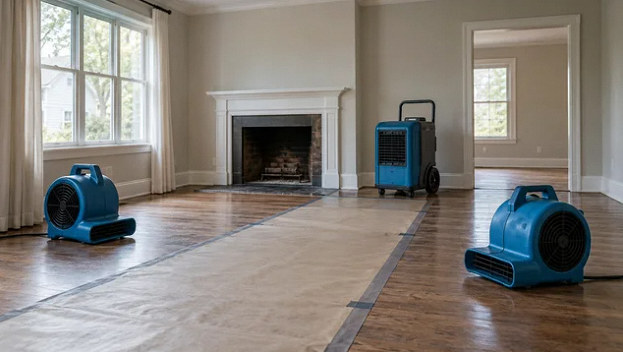
Drying and equipment · 3 min read
How Much Drying Equipment Does a Water Damage Job Need?
Compare a drying equipment plan using affected materials, room dimensions, machine capacity, and documented progress.
Read the guide