
Materials and repairs · 3 min read
Concrete Moisture After a Leak: Before New Flooring Goes Down
Why a dry-looking concrete slab may still need flooring-specific moisture testing before an adhesive or covering is installed.
YKCA · References checked 2026-10-03
Start with the essentials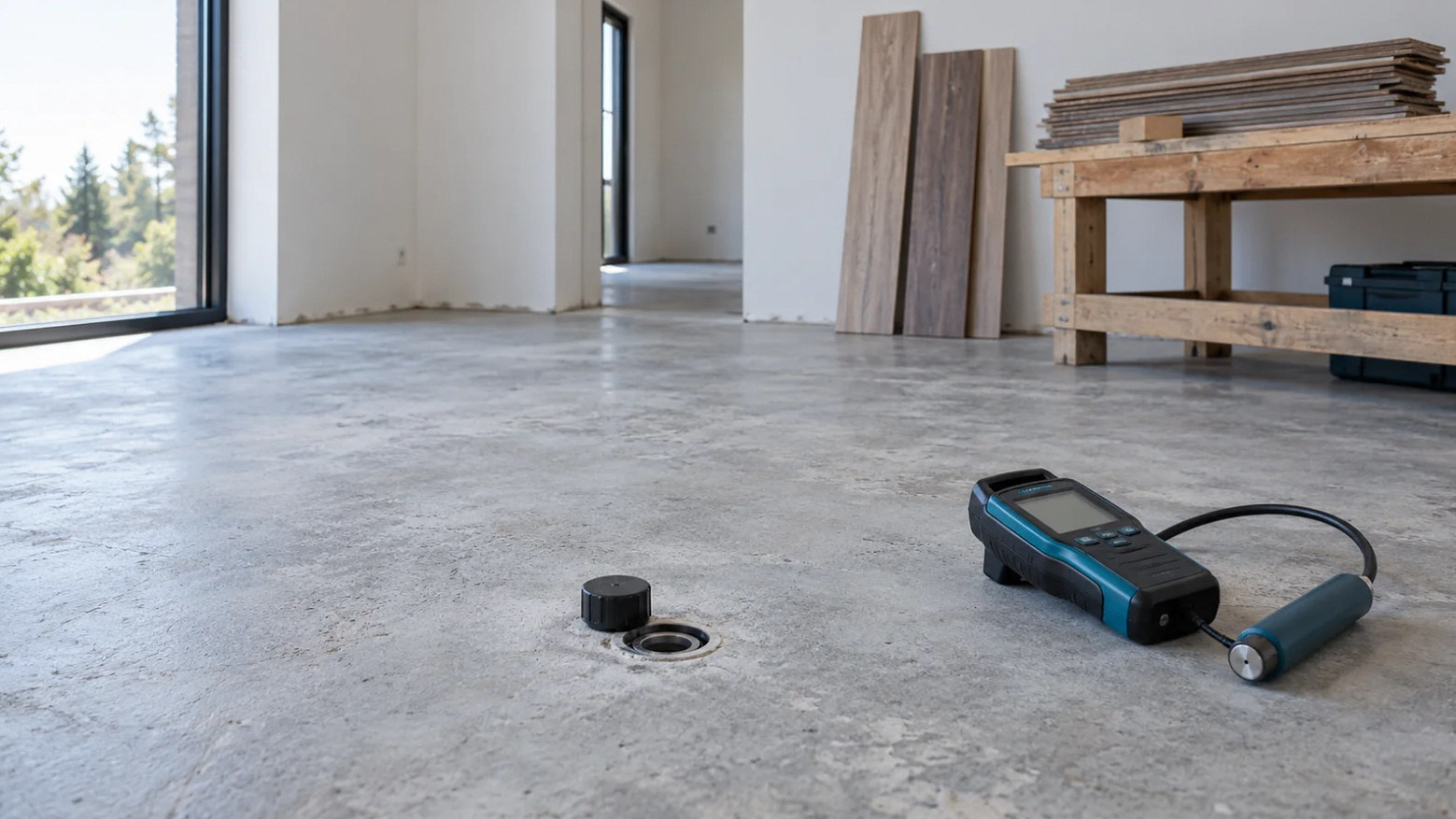
At a glance
Three things to keep in view.
Method
Name the actual moisture test.
System
Use the selected flooring and adhesive requirements.
Record
Keep locations, conditions, results, and date.
The key point
Completing water-loss drying and meeting a flooring system’s installation requirements are separate milestones. Agree on the required testing before scheduling the new floor.
Concrete can look dry long before a flooring installer is ready to cover it. A hand-held meter reading may help investigate an area, but it does not automatically satisfy the requirements for a particular adhesive, underlayment, or finish.
Identify the required test and what it measures
ASTM F2170 describes relative-humidity testing within concrete slabs using in situ probes. Its public scope notes that results describe tested locations at the time of testing. ACI's guidance on slabs and floor coverings addresses moisture testing and manufacturer requirements as connected issues.
These references do not establish one universal acceptable value for every flooring system. Ask the installer which current product instructions and test method apply. Keep the actual test report, not just a verbal statement that the slab “passed.”
Separate investigation readings from installation acceptance
A surface scan can help locate areas that deserve attention. The acceptance method for the selected flooring may require a different procedure. Ask the person taking measurements to state their purpose so the report is not used later for a conclusion it was never intended to support.
Record locations on a sketch. A result from the center of one room cannot silently stand in for every area affected by a leak. The planned installation area and its relevant conditions should be clear to both the testing provider and flooring contractor.
Revisit ongoing moisture sources
The original leak may not be the only moisture issue affecting a slab. Ask whether the investigation found continuing entry, a separate ground-related concern, or another condition that needs attention. A new covering should not be expected to solve an unexplained moisture source.
If a moisture-control product is proposed, get its exact role in writing. Identify who selects it, what substrate preparation it requires, and how it works with the adhesive and finish. Avoid treating a generic “sealer” line as a complete flooring-system specification.
Coordinate timing and responsibility
Testing should be scheduled within the installation plan, with enough time to respond if results do not meet the selected product's requirements. Ask who orders the test, who interprets it, and who confirms readiness before installation begins.
Keep environmental conditions and any limitations in the report. If the installation is delayed or conditions change materially, the installer needs to decide whether the earlier results remain appropriate. A date on a report matters because it describes a particular assessment, not an indefinite guarantee.
Preserve the record for the completed floor
The final file should identify the flooring, adhesive, any moisture-control system, and relevant test results. Include the area installed and any exclusions. This makes later troubleshooting more practical if a problem appears after the room returns to use.
Do not let a disagreement about responsibility erase the technical question. Whether the owner, insurer, restorer, or installer orders the test, someone must connect the results to the selected floor system. Resolve that handoff before the slab is covered and direct access is lost.
Common questions
Is there one safe concrete moisture percentage?
No single percentage applies to every instrument, test method, adhesive, and floor covering. Ask for the exact measurement method and the requirements of the products being installed. A number without those details is not enough to approve installation.
Sources and further reading
References checked 2026-10-03. Guidance depends on the loss, affected materials, scope of work and property conditions.
Discuss the next step for your property.
Share what happened, which areas are affected and the decisions you need help with.
Discuss water damage restorationRelated decisions
Materials and repairs · 5 min read
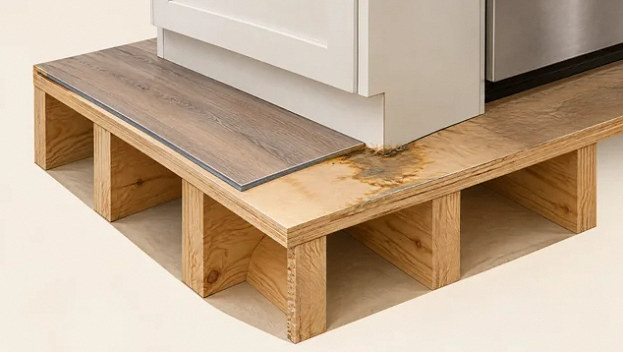
Water Under Vinyl, Tile, and Cabinets
A homeowner's guide to questions about concealed floor layers, cabinet areas, access, and the handoff from drying to repairs.
Read the guide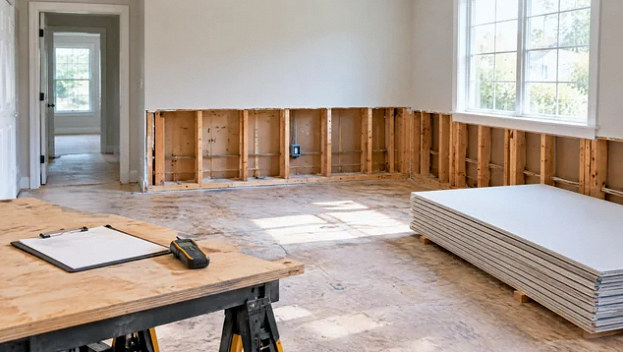
Materials and repairs · 5 min read
Before Rebuilding: How to Review the Drying Handoff
Ask for final material readings, remaining limitations, source-repair records, and a clear handoff before new finishes cover the work.
Read the guide