
Emergency response · 6 min read
An After-Hours Leak: Confirming Help Before You Wait
Separate an answered phone from a confirmed response, and build a practical overnight plan for water damage.
YKCA · References checked 2026-10-03
Start with the essentials
A practical decision sequence
At a glance
Three things to keep in view.
Protect people
Resolve immediate hazards and observe access restrictions.
Confirm the response
Identify the next action, contact and current availability.
Arrange the handoff
Record source control and schedule an on-site assessment.
The key point
A night call needs a named next action, a responsible contact and a fallback if conditions change. An answered phone does not establish a crew arrival or a safe waiting period.
It is late, a toilet has overflowed, and the plumber has stopped the source. One company says demolition must start immediately; another says an assessor can call tomorrow. Your real decision is what can safely wait, what needs attention now, and who has actually agreed to respond.
An online description cannot establish contamination, hidden moisture or safe occupancy. Use the first conversation to arrange an assessment and resolve immediate hazards, rather than asking a dispatcher to promise that nothing will change overnight.
Related service: Emergency response questions and planning
Separate immediate danger from a property appointment
Leave an area with fire, a suspected gas leak, threatening ceiling movement or immediate electrical danger and contact emergency services from a safe location. Tell the restoration dispatcher if responders have restricted entry. Property restoration personnel should not be treated as a substitute for fire, utility or emergency medical response.
Once people are safe, describe the current problem in simple terms. Say whether water is still entering, whether its source was repaired or merely isolated, and whether it reached other rooms. “The plumber closed a valve; the line is not repaired” helps the next person more than “everything is fixed.” Do not investigate a hazardous room just to make that account more complete.
Sources for this section
Ask what the company has actually accepted
A call center may collect information without assigning a crew. Before ending the call, ask whether the next step is a callback, an assessment visit or authorized mitigation. Obtain the responding company name, callback contact and any arrival window it can currently confirm. Repeat the address and access instructions so a dispatch error does not consume the night.
Ask what happens if the proposed window changes. A useful arrangement identifies who will notify you and when you should call again if nobody arrives. Write down the answer with the time of the call. A website's availability message cannot establish this arrangement for your particular property, and a tentative estimate should stay labeled tentative in your notes.
Explain the observations that affect priority
Prepare a short account organized around the present condition, not a guess about the eventual claim. Include the discovery time, known source, affected level of the building, whether occupants remain inside, and any safe-entry restriction. State unknowns explicitly. A leak discovered at midnight could have started earlier; treating discovery as the start can distort the assessment.
Mention practical constraints that could prevent useful work: a locked unit, no authorized signer, an unavailable elevator, loss of power or a resident who cannot use the only safe exit independently. Send photographs only if they already exist or can be obtained from a safe position. A responder needs these constraints before selecting equipment or telling you the visit is ready.
Avoid using a mold deadline as an overnight guarantee
EPA emphasizes prompt moisture control and drying water-damaged areas and items within 24 to 48 hours to help prevent mold growth. That guidance is not permission to leave every wet assembly untouched until the second day, and it does not prove that every overnight leak already contains mold. Conditions and material histories still require assessment.
Ask what specific step reduces ongoing damage before the full inspection. The answer might involve source control, professional extraction or a restricted area that must remain unused. Request the reason for that step and the condition that would change it. A universal instruction to run every fan or remove every finish is not a substitute for understanding the water source and affected materials.
Sources for this section
Bound the first visit without negotiating the entire recovery
Ask for the proposed initial work, its charging basis and what requires another decision. An emergency visit can be defined around inspection and stabilization while reconstruction remains undecided. Confirm whether there is an attendance charge even if the crew determines it cannot proceed, and ask how equipment rental time is recorded if equipment stays overnight.
Keep insurance expectations separate from permission to work. Record any claim number, but do not let a contractor's confidence about payment replace your insurer's response or the contract's payment terms. If a price cannot yet be fixed, ask what will be measured, who will explain the cost and when you can review it. Uncertainty should be visible rather than buried in reassurance.
Build a fallback for a missed visit
If no one can attend, ask the company to describe the limits of its remote advice and when it will reassess. Keep the property manager, utility and repair contractor contacts together. If the event changes from a stable, isolated leak to active spreading water or a new safety concern, report the change promptly and use emergency services when there is immediate danger.
Do not spend the night waiting solely because someone said they would try. Confirm whether the appointment still exists, then seek another available assessment if appropriate. Preserve the earlier communication so multiple companies do not arrive expecting exclusive authorization. Give any replacement responder the same factual summary and explain what another contractor has already done.
Make the morning handoff specific
The next assessor should receive the source-control status, photographs, call log, initial work record and access restrictions. Ask for an affected-area assessment and a plan for checking concealed moisture. A quiet room or dry-looking surface does not tell the next contractor what happened inside a wall, and overnight equipment alone is not proof of completion.
Close the handoff with one responsible contact and a review time. Identify which questions remain open, such as whether a toilet overflow reached a floor cavity or whether a repair restored the water supply. A remote article cannot determine those answers. Its useful result is a clear sequence: protect people, confirm the response, record stabilization and obtain an on-site assessment before expanding the scope.
Common questions
Does a 24/7 restoration number mean a crew is on the way?
No. Confirm whether the call created a callback, an assessment appointment or an assigned response. Ask for the company contact, current arrival window and what happens if availability changes.
Sources for this section
Can a stopped leak wait until morning?
A stopped source does not establish safe occupancy or acceptable delay. Describe the water source, affected materials and utility concerns to a qualified responder, then obtain a plan based on the conditions. Immediate danger needs emergency services.
Sources and further reading
References checked 2026-10-03. Guidance depends on the loss, affected materials, scope of work and property conditions.
The homeowner question behind this guide
These public discussions informed the questions addressed here. Personal experiences and comments are not technical findings or proof of insurance coverage.
Discuss the next step for your property.
Share what happened, which areas are affected and the decisions you need help with.
Discuss emergency responseRelated decisions
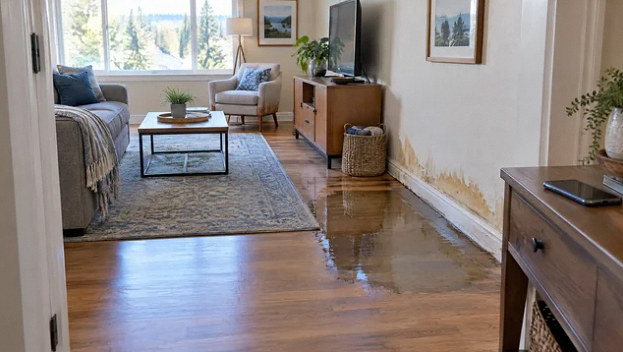
First decisions · 4 min read
Water Damage: What to Do First and Who to Call
A practical starting point after a leak: safe access, stopping the source, choosing help, photos, and questions before drying begins.
Read the guide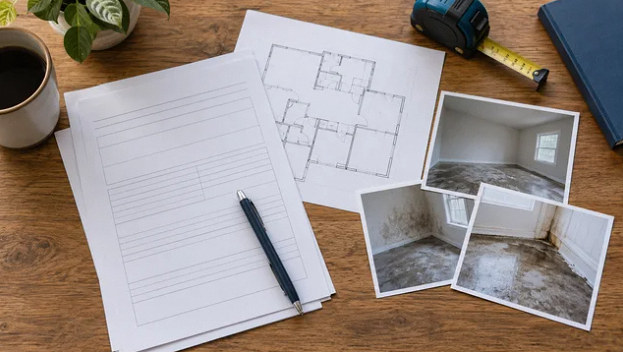
Documentation · 3 min read
Before You Sign a Water Damage Work Authorization
Clarify the initial scope, payment responsibility, equipment charges, changes, and handoff before restoration work begins.
Read the guide