
Materials and repairs · 3 min read
Wet Plywood, OSB, and Subfloors: Repair or Replace?
Separate moisture, surface swelling, structural condition, and flooring requirements when reviewing a water-damaged subfloor.
YKCA · References checked 2026-10-03
Start with the essentials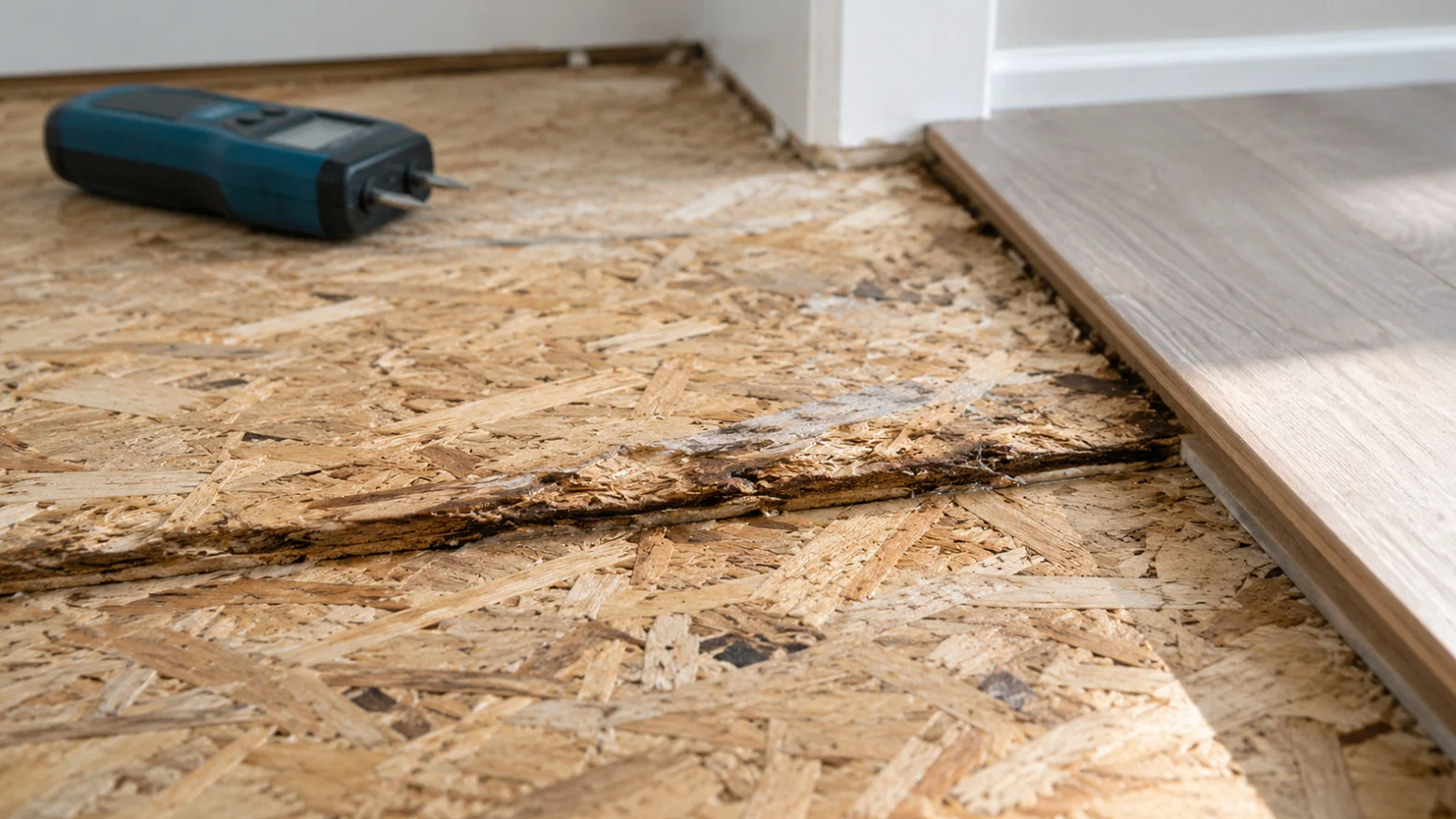
At a glance
Three things to keep in view.
Product
Identify plywood, OSB, or another panel.
Condition
Separate surface issues from structural concerns.
Finish
Confirm readiness for the selected flooring system.
The key point
A wet subfloor needs assessment of its material, condition, contamination, and intended finish. Neither “all wet wood must go” nor “plywood is waterproof” is a reliable decision rule.
Once a floor covering is lifted, a homeowner may see swollen edges, stains, or a rough surface. Those observations matter, but they answer different questions. A drying result, a structural assessment, and preparation for new flooring should not be collapsed into one yes-or-no judgment.
Identify the panel product
APA distinguishes structural plywood and oriented strand board, or OSB, from a generic idea of “pressed wood.” Its guidance explains that structural panels use water-resistant adhesives and often remain structurally serviceable after wetting, while severe or prolonged exposure may require expert evaluation.
That does not make them waterproof or automatically suitable to keep after contaminated water. Product identification and the actual condition matter. Record any visible grade stamp or product information so the assessor and repair contractor are discussing the same material.
Separate surface appearance from structural questions
A raised joint can interfere with a new finish even when the panel does not need wholesale structural replacement. Conversely, a panel that looks reasonably flat may still have a condition requiring further evaluation. Avoid making either conclusion from a photograph alone.
Ask the assessor to identify the specific concern: surface preparation, panel integrity, support, fasteners, or another part of the floor assembly. If structural evaluation is needed, establish who will provide it. Do not test a suspicious area by loading or jumping on it.
Include the underside and connected framing
A top-surface inspection may not resolve the entire assembly. Water can involve joists, wall plates, insulation, and spaces below the floor. Ask what access is available and which components have been checked.
Where access is impossible, the limitation should remain in the report. The next step may be additional investigation or a revised repair approach. “No visible damage” should describe the inspected location, not silently become a conclusion about an area nobody could see.
Agree on the basis for drying completion
Keep the measurement locations, instrument details, and comparison basis with the drying log. Different materials and instrument scales should not be treated as interchangeable percentages. Ask the technician to explain the goal for the retained panel and relevant framing.
Before laying a new finish, coordinate with the flooring installer. Their product requirements may include conditions beyond the restoration drying target. Solving the water loss and preparing an acceptable installation surface are related tasks with distinct checks.
Compare repairs at the assembly level
If replacement is proposed, identify the affected area, support requirements, access, and finish restoration. A small panel replacement can involve more work than its visible area suggests, especially near partitions or built-ins. The estimate should explain those connections.
If retention is proposed, document how damage, cleaning, drying, and surface preparation will be addressed. Keep any manufacturer's guidance used in that decision. The stronger proposal gives you a reasoned plan for the actual floor rather than a slogan about which wood product is better.
Common questions
Does OSB always need replacement after one leak?
No automatic rule follows from the product name alone. The assessment must consider exposure, contamination, physical condition, and the work needed for the next floor covering. Ask for the findings that support retention or replacement.
Sources and further reading
References checked 2026-10-03. Guidance depends on the loss, affected materials, scope of work and property conditions.
Discuss the next step for your property.
Share what happened, which areas are affected and the decisions you need help with.
Discuss water damage restorationRelated decisions
Materials and repairs · 5 min read
Hardwood Floor Cupping After Water Damage
What to ask before sanding or replacing a wet wood floor, including moisture through the boards, the subfloor, and repair options.
Read the guide
Materials and repairs · 5 min read
Water Under Vinyl, Tile, and Cabinets
A homeowner's guide to questions about concealed floor layers, cabinet areas, access, and the handoff from drying to repairs.
Read the guide