
Burst pipe · 6 min read
A Second Slab Leak: What to Review Before Another Repair
Build a failure history and request a broader plumbing assessment when another slab leak appears shortly after the first repair.
YKCA · References checked 2026-10-03
Start with the essentials
A practical decision sequence
At a glance
Three things to keep in view.
Connect the records
Map both failures and the earlier repair.
Evaluate the system
Define what further assessment can change the decision.
Hold the right access
Coordinate inspections and the longer-term repair before finishes.
The key point
A second leak deserves a comparison of the two failures and a review of the remaining system. Establish whether the new event involves the earlier work, a separate defect or an unresolved source before choosing the next scope.
The first slab leak was repaired two months ago. Now water is appearing near a different bathroom, and you are wondering whether another patch will only postpone the next disruption. Online replies may jump straight to a whole-house repipe, but they cannot inspect the failed parts or reconstruct the first repair.
This decision begins with a failure history. The aim is to identify what the repeated events actually establish, what further assessment could change the plan and how to avoid rebuilding finishes before the plumbing strategy is settled.
Related service: Burst pipe questions and planning
Stabilize the new event without deciding its cause
Arrange safe source control and assessment of the current damage. Tell the responding plumber that a recent repair exists, but describe the new observations independently: location, discovery time, active water and any change in use. Keep people clear of hazardous wet areas and report electrical or structural concerns to the appropriate responders.
Do not postpone urgent work while deciding who is responsible for the second event. At the same time, avoid assuming that the previous contractor caused it merely because the dates are close. Ask the responder to record the condition before necessary changes obscure it. A neutral account protects the usefulness of the evidence whether the eventual finding points to the previous repair, another pipe or a different source altogether.
Put both incidents on the same simple map
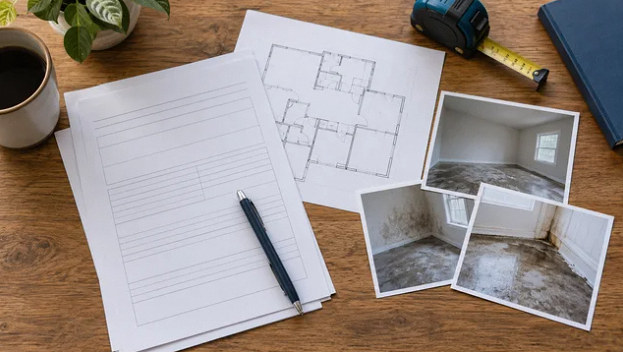
Use a floor plan or clear room sketch to mark the first confirmed failure, the repaired segment and the new affected area. Distinguish the visible wet spot from the location of a pipe defect; those points may not be the same. Include dates, who made each observation and which locations remain unverified.
Gather the first detection report, invoice, photographs, any retained repair details and the drying handoff. If those records do not describe the exact segment, ask the original contractor for clarification. A statement such as repaired bathroom leak may be too vague to connect the two events. The useful comparison identifies actual pipe locations and work, not just room names or the fact that both incidents involved water.
Ask whether this is the same failure or a separate one
Have the qualified plumber compare the new findings with the earlier repair. Ask whether the leak is at the repaired connection, elsewhere on the same branch or on a different part of the system. If the answer is uncertain, ask what additional investigation would resolve it and whether that information affects the proposed repair.
Request findings in plain language with uncertainty preserved. A stain that returns after repair may require a moisture assessment as well as plumbing tests; it does not automatically prove another broken pipe. Conversely, confirming a separate leak should not erase the record of the earlier event. Keeping the incidents distinct helps both contractors and any insurer understand what was found, what was corrected and what still needs examination.
Request a broader assessment with a defined purpose
Two failures justify asking whether a limited repair remains appropriate, but the number alone does not identify a cause. Request a proposal for evaluating relevant system conditions, repair history and remaining piping. Ask the plumber which observations or measurements would support a broader replacement recommendation and which concealed areas cannot reasonably be assessed.
Avoid accepting a single universal explanation based on the house's age or a photograph of one fitting. The assessment should identify what was actually examined and connect findings to the recommended work. If a specialist's opinion is needed, clarify its purpose before paying for another visit. The goal is useful evidence for a system decision, not a succession of opinions that repeat the same conclusion without explaining its basis.
Review the first repair agreement without assigning blame
Read the scope and any written warranty for the earlier work. Check which segment and work were covered, the notification process and the response offered for a reported problem. Contact the original contractor with the new documented findings and ask it to explain whether they concern its work.
Preserve messages and reports, and avoid authorizing avoidable removal of relevant evidence before the involved parties have had a reasonable opportunity to discuss inspection. Necessary safety and damage-control work must still proceed. If responsibilities remain disputed, obtain appropriate professional advice rather than treating online comments as a legal determination. A warranty question and the immediate need to stabilize the building can be managed separately, with their costs and decisions recorded.
Set a decision point before finishes are rebuilt
If the current repair could be temporary while a broader plan is developed, have that status stated explicitly. Ask which fixtures can be used, what monitoring is appropriate and what will trigger another review. Do not let a temporary arrangement become permanent merely because the visible water stopped and another contractor is ready to paint.
Confirm permit and inspection requirements for the selected plumbing changes with the local authority. San Jose publishes a plumbing permit process for system replacement and pipe configuration changes. Coordinate any required inspection access with the reconstruction schedule. If another reroute or replacement is likely, consider the implications before restoring an opening that the next authorized phase would immediately need to reopen.
Sources for this section
Leave with a system record and a response plan
Keep a dated record of repaired and remaining piping, verification results and unresolved limitations. EPA WaterSense discusses water-use monitoring as a way to identify leaks. Ask the plumber or utility how an appropriate monitoring arrangement might help detect abnormal use at this property, without treating an alarm as a guarantee against damage.
Identify who receives alerts, who can arrange access and which contact handles another event. Review the building-moisture assessment separately from the plumbing plan. This article cannot determine why two pipes failed or predict the next failure. Its practical result is a decision supported by a joined-up incident record, defined further investigation and an explicit point when the household chooses its longer-term plumbing strategy.
Sources for this section
Common questions
Does a second slab leak mean every pipe must be replaced?
Not automatically. Ask a qualified plumber to compare the actual failure locations, examine relevant system conditions and explain what supports a localized or broader scope. Two events raise a useful assessment question but do not establish the cause by themselves.
Should I rebuild the first opening while the second leak is being investigated?
Coordinate with the plumbing and restoration leads first. Confirm whether future work needs that access, whether required inspections are complete and whether affected materials meet the reconstruction criteria. Keep any temporary arrangement clearly documented.
Sources for this section
Sources and further reading
References checked 2026-10-03. Guidance depends on the loss, affected materials, scope of work and property conditions.
The homeowner question behind this guide
These public discussions informed the questions addressed here. Personal experiences and comments are not technical findings or proof of insurance coverage.
Discuss the next step for your property.
Share what happened, which areas are affected and the decisions you need help with.
Discuss burst pipeRelated decisions
Documentation · 3 min read
Before You Sign a Water Damage Work Authorization
Clarify the initial scope, payment responsibility, equipment charges, changes, and handoff before restoration work begins.
Read the guide
Drying and equipment · 3 min read
Why Water Damage Drying Can Stall
What to review when drying readings stop improving: the source, concealed layers, measurement locations, and equipment operation.
Read the guide