
First decisions · 3 min read
Do You Need Mold Testing After Water Damage?
When a mold assessment or testing plan may help, what results cannot prove, and why drying should not wait for a species name.
YKCA · References checked 2026-10-03
Start with the essentials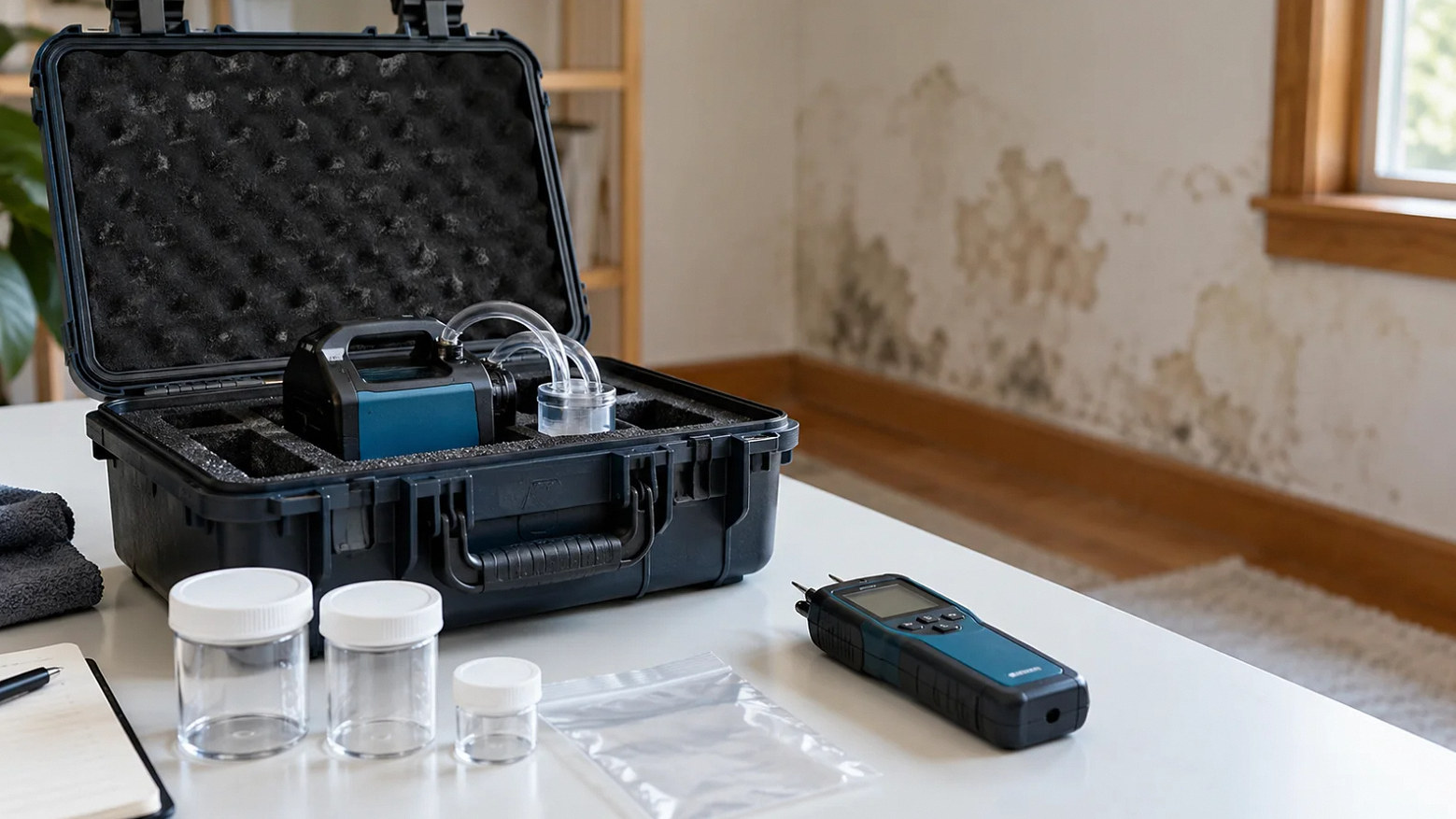
At a glance
Three things to keep in view.
Question
Define what the test should help decide.
Context
Read findings with moisture and inspection records.
Limits
Keep building findings separate from medical advice.
The key point
Testing is useful when it answers a defined question. A moisture investigation and a plan to address visible growth can be more informative than collecting samples without a purpose.
After a leak, homeowners are often offered an air test, a surface sample, or a clearance package. These services do not all answer the same question. Before purchasing one, establish what the result could change in the cleanup or repair plan.
Start with the decision the test would support
CDC/NIOSH does not recommend routine air sampling for mold and notes the absence of health-based indoor-air standards for mold. EPA also explains that sampling is generally unnecessary when visible mold is present. These points do not mean a qualified assessment can never be useful.
Ask the assessor to state the question, method, and interpretation before collecting samples. “We will take an air sample” describes an action. “We need to investigate this unresolved condition and explain how the findings affect the plan” describes a purpose.
Sources for this section
Mold, Testing, and RemediationA Brief Guide to Mold, Moisture and Your Home
Treat timing as a reason to act, not a diagnosis
The course emphasizes prompt moisture control, which is a useful practical lesson. It should not become a countdown that guarantees safety before a certain hour or predicts the species that appears afterward. Real conditions differ between materials and locations.
If growth is visible or a persistent musty condition is unexplained, arrange an assessment of the source and affected materials. Do not wait for a familiar color to appear. A photograph alone cannot determine species, exposure, or the appropriate response for a particular occupant.
Understand what an independent assessment adds
An indoor environmental professional may help define an investigation, develop a remediation scope, or evaluate a disputed result. Ask about relevant experience, the work included, and whether the assessor also sells the cleanup service. Independence can matter when a second opinion is the reason for hiring someone.
Keep the assessment question narrow enough to be useful. Examples include an inaccessible area connected to the loss, an unresolved odor after work, or the adequacy of a proposed verification plan. A report should distinguish findings from limitations and recommendations.
Read the report beyond the headline
Find the sampled locations, dates, methods, and stated limitations. Ask how the result relates to the visual inspection and moisture history. A page of laboratory numbers without an interpretation leaves the homeowner to make conclusions the test may not support.
Avoid converting a result into a universal declaration that a building is medically safe. Occupants with health concerns need advice from their own health professional. The building assessment should describe the property conditions and work, while personal health decisions remain a separate conversation.
Define completion before remediation starts
If post-work assessment is part of the job, agree on its scope before work begins. Establish who performs it, what areas are included, and how unresolved findings are handled. This is more useful than negotiating the meaning of “passed” after equipment has left.
Keep the source correction, cleanup records, and remaining repair items together. A test result does not replace those records. When the final report identifies a limitation, transfer it to the repair handoff so it is not lost when a different contractor takes over.
Common questions
Can the color identify dangerous mold?
Color does not provide a reliable identification or personal risk assessment. Record where growth appears and arrange the appropriate property assessment. Avoid disturbing it to obtain a better photograph or a sample on your own.
Sources and further reading
References checked 2026-10-03. Guidance depends on the loss, affected materials, scope of work and property conditions.
Discuss the next step for your property.
Share what happened, which areas are affected and the decisions you need help with.
Discuss water damage restorationRelated decisions
First decisions · 5 min read
A Musty Smell After Water Damage: What to Investigate
Use a location and timing record to discuss persistent odors, hidden moisture, useful inspections, and the limits of mold testing.
Read the guide
First decisions · 5 min read
Sewage and Floodwater: Questions Before Cleanup Begins
Understand why contaminated water changes cleanup decisions, what to ask about belongings, and how to document damage safely.
Read the guide