
Drying and equipment · 3 min read
LGR vs. Desiccant Dehumidifiers for Water Damage
Understand two drying technologies and the practical questions behind choosing equipment for an affected building.
YKCA · References checked 2026-10-03
Start with the essentials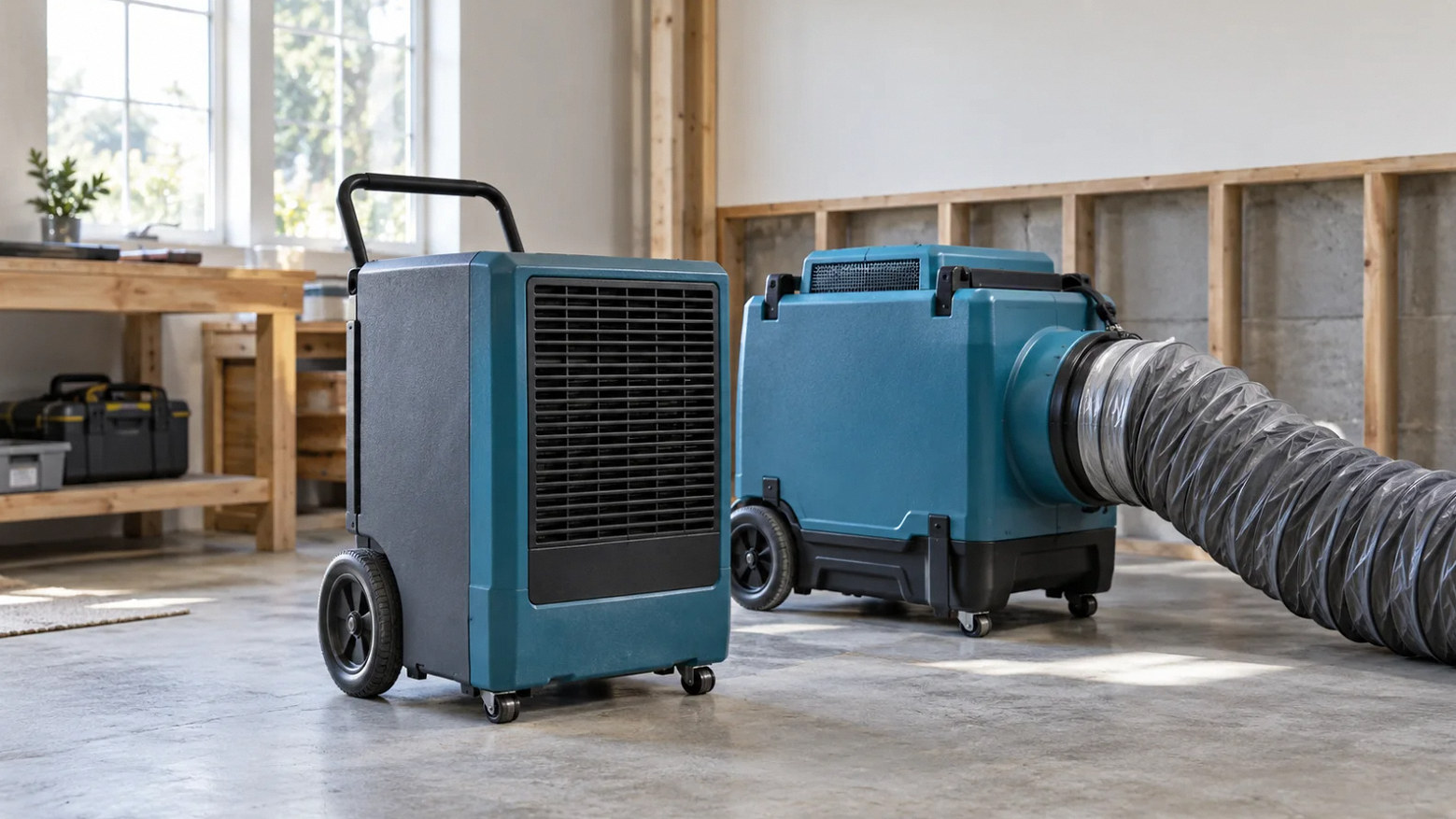
At a glance
Three things to keep in view.
Method
Condensation and desiccant regeneration differ.
Fit
Match the technology to the actual conditions.
Proof
Use material progress to evaluate the result.
The key point
LGR and desiccant equipment remove moisture by different methods. The choice should fit the materials, operating conditions, access, and measured drying response.
A proposal may specify an LGR unit, a desiccant system, or a combination. Knowing the basic distinction helps you ask why that equipment was selected. It does not require becoming an equipment buyer or assuming that the more specialized machine is always the better choice.
Understand the two methods
LGR means low-grain refrigerant. Refrigerant dehumidifiers condense moisture on a cooled surface and collect the resulting water. Desiccant systems use a moisture-attracting material that is regenerated so it can continue removing water vapor. Munters explains that process through its rotor technology.
Equipment performance remains model-specific. The Phoenix manual describes operating conditions and instructions for its LGR equipment. Neither technology's name tells you the complete temperature range, power requirement, or capacity of the machine actually proposed for your property.
Connect the choice to the affected materials
Ask what makes this job a fit for the proposed system. The contractor may discuss the environment, difficult-to-dry assemblies, or the ability to establish suitable conditions in a controlled area. The explanation should refer to your building rather than a general claim that one technology is “stronger.”
Keep the goal explicit: which materials will remain, how will they be assessed, and how will completion be established? A sophisticated machine does not resolve uncertainty about an inaccessible layer or make a damaged material suitable to keep.
Plan for hoses, drainage, and access
Different systems have different arrangements for collected water, air paths, and regeneration or exhaust. Ask which connections are needed, where they will go, and how the setup affects doors, windows, and walkways. Installation and operation should follow the actual equipment instructions.
Discuss these details before the machine arrives when possible. A property manager may need to arrange access or coordinate building operations. A homeowner may need a clear route to an occupied room. Identifying those constraints early helps the crew propose a workable location.
Ask how performance will be evaluated
The monitoring record should show the relevant room conditions and material progress. A contractor may also record equipment inlet and outlet conditions. Ask which readings demonstrate useful performance and what would prompt a change in the arrangement.
Do not compare unlike capacity figures as if they were the same unit. A moisture-removal rating and an airflow rating answer different questions. If proposals describe equipment differently, ask the contractor to translate each specification into the purpose it serves on this job.
Evaluate the whole proposal
Compare the expected work boundary, setup requirements, monitoring, and repair plan alongside the equipment charge. A lower daily rental rate does not settle whether a complete proposal is suitable. Conversely, a specialized unit needs a job-specific reason just as an ordinary one does.
Before approving changes, ask what the new equipment is expected to improve and how that improvement will be checked. Keep the explanation with the daily record. This gives you a practical way to follow the decision without pretending that a technology label is proof of completion.
Common questions
Does difficult-to-dry material always require a desiccant?
No universal equipment choice follows from that phrase alone. The assessment must consider the assembly, actual conditions, equipment capabilities, and response to the plan. Ask for the reason for the selected method and the evidence used to evaluate it.
Sources and further reading
References checked 2026-10-03. Guidance depends on the loss, affected materials, scope of work and property conditions.
Discuss the next step for your property.
Share what happened, which areas are affected and the decisions you need help with.
Discuss water damage restorationRelated decisions
Drying and equipment · 3 min read
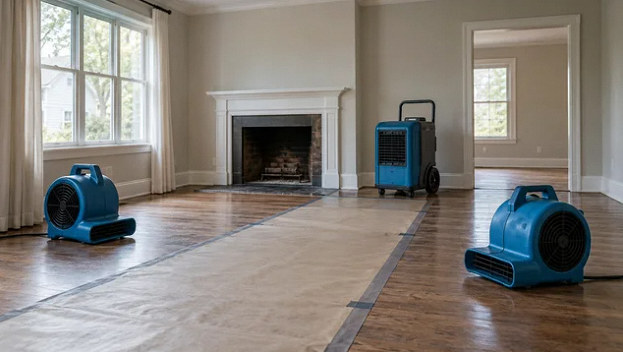
How Much Drying Equipment Does a Water Damage Job Need?
Compare a drying equipment plan using affected materials, room dimensions, machine capacity, and documented progress.
Read the guide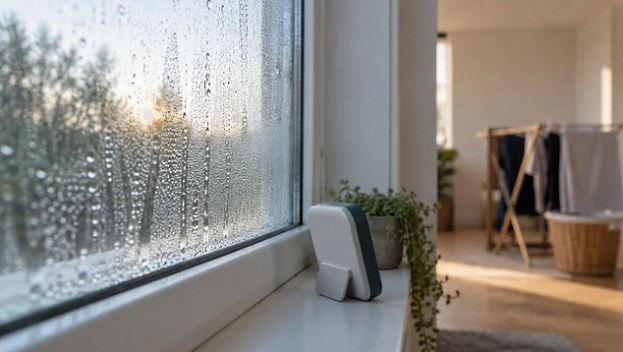
Drying and equipment · 3 min read
Humidity, Dew Point, and GPP During Water Damage Drying
Understand the air readings on a drying report and why lower relative humidity does not prove a wall is dry.
Read the guide