
Burst pipe · 6 min read
High Water Use but No Visible Leak: What to Verify First
Use meter and billing records to narrow a hidden-leak investigation before authorizing a slab opening or extensive water-damage work.
YKCA · References checked 2026-10-03
Start with the essentials
A practical decision sequence
At a glance
Three things to keep in view.
Verify consumption
Compare actual readings and known water uses.
Locate the source
Request qualified testing and its stated limits.
Verify the outcome
Review repair results and building moisture separately.
The key point
Confirm the unexplained consumption, then have a qualified plumber isolate and locate the source. A high bill is a reason to investigate, not proof that the slab or every supply pipe must be opened.
Your water use has climbed for several billing periods, but no room looks flooded. A contractor suggests a leak beneath the slab; someone else suspects irrigation. You are being asked to consider opening finished flooring before anyone has explained how the location was established.
The useful first decision is which evidence will narrow the search. Keep consumption verification, plumbing diagnosis and building-moisture assessment separate so an assumption in one area does not become an expensive repair instruction in another.
Related service: Burst pipe questions and planning
Compare water consumption before comparing the bill
Start with the recorded volume, billing dates and number of days in each period. A higher dollar amount can reflect rates or billing adjustments as well as water use. Ask the serving utility whether readings were actual or estimated and whether a meter replacement, account correction or unusual interval affects the comparison.
List known changes during the same periods, such as irrigation schedules, guests, filling a pool or construction activity. You are not trying to explain away a leak; you are preventing ordinary demand from being confused with unexplained flow. Keep the original bills and utility responses together. A plumber can use a dated pattern more effectively than a recollection that the last bill was unusually expensive.
Sources for this section
Check whether flow continues when use is paused
EPA WaterSense recommends comparing meter readings before and after a two-hour period when no water is used; movement suggests a leak. Follow your utility's instructions for reading an accessible meter. Do not enter a dangerous or restricted location, remove utility equipment or force a valve to carry out the check.
Account for equipment that may use water automatically, including irrigation and treatment systems. Record the test interval, readings and anything that operated during it. A no-use observation can establish unexplained consumption during that interval, but it cannot identify the leaking pipe or exclude an intermittent problem. Give the record to the plumber instead of treating the meter as a map of what lies beneath the floor.
Sources for this section
Ask for a diagnosis with stated confidence
Tell the plumber what is known and ask which tests will distinguish a fixture leak, service-line problem, buried supply leak or another source. Request an explanation of what each proposed test can establish and what remains uncertain. The appropriate methods depend on the piping, access and site conditions; they cannot be selected reliably from a utility bill alone.
Before approving a destructive opening, ask how the suspected location was determined and whether the evidence supports that location strongly enough to proceed. A marked point on the floor should come with an explanation, not merely a label. If findings conflict, obtain clarification or another qualified assessment. An investigation fee can be evaluated separately from the much larger decision to remove a cabinet or finished floor.
Document symptoms without turning them into a diagnosis
Record a new sound, localized warmth, a recurring stain or a change in fixture performance with its location and time. Note whether it occurs while particular fixtures run, after irrigation or continuously. Report what you observed without deciding that a warm tile proves a hot-water leak or a damp edge proves that water traveled directly upward.
Avoid opening walls, drilling flooring or operating unfamiliar equipment to reproduce a symptom. If water appears near electrical equipment or a ceiling becomes unstable, keep clear and obtain the appropriate urgent response. Otherwise, a simple observation log helps the professionals compare conditions with their tests. Photographs show visible changes; they do not reveal the full route of concealed water or the condition of the slab.
Arrange a separate assessment of affected materials
Stopping a supply leak and evaluating wet building materials are different assignments. EPA's moisture guidance emphasizes correcting water problems as part of mold prevention. Ask who will inspect the areas that may have received water and whether the proposed investigation can evaluate concealed assemblies without assuming every nearby material is damaged.
Give the restoration assessor the plumber's findings, including confirmed and uncertain locations. Request a map of inspected materials and any areas that remain inaccessible. An absence of standing water does not substitute for assessment where other evidence indicates concealed wetting. Conversely, a large utility loss alone does not prove that the same volume entered the living space or justify removing every finish above the suspected pipe.
Sources for this section
Set boundaries for exploratory work and repair choices
If an opening is needed, have the proposal identify its expected location, purpose, protection measures and stopping point. Ask how additional findings will be priced and approved, and who repairs the opening afterward. Identify any required assessment of older finishes before disturbance with the contractor responsible for that work.
Keep diagnosis separate from the choice between a localized repair, reroute or broader repipe. Those options become more meaningful once the failed segment and accessible routes are understood. Ask the plumber to explain which uncertainty each option resolves and which it leaves. A contractor should be able to describe the proposed work without promising that a single investigation will reveal every future weakness in the plumbing system.
Verify the result through more than one record
After repair, request a written description of the defect found, work performed and verification completed. Repeat consumption observations under comparable conditions as advised by the utility or plumber, and watch subsequent actual meter data. Keep in mind that a later bill may still include water used before the repair or a different billing interval.
Review the building-moisture findings separately before closing openings or replacing finishes. This article cannot locate a buried leak or decide whether a slab opening is necessary. It can help you obtain a defensible sequence: verify abnormal use, investigate the source, bound the repair and confirm the remaining damage conditions. That sequence makes it easier to question an unsupported assumption without delaying a documented problem indefinitely.
Common questions
Does a high water bill prove I have a slab leak?
No. Compare actual consumption and billing periods, account for known uses, and ask a qualified plumber to investigate unexplained flow. A meter observation can support further investigation but does not locate a leak beneath the slab.
Sources for this section
Should restoration start before the hidden leak is located?
Ask what assessment or protection can safely proceed while plumbing diagnosis continues. The two tasks can be coordinated, but a broad demolition scope should identify the affected materials and evidence rather than rely only on the size of the water bill.
Sources and further reading
References checked 2026-10-03. Guidance depends on the loss, affected materials, scope of work and property conditions.
The homeowner question behind this guide
These public discussions informed the questions addressed here. Personal experiences and comments are not technical findings or proof of insurance coverage.
Discuss the next step for your property.
Share what happened, which areas are affected and the decisions you need help with.
Discuss burst pipeRelated decisions
First decisions · 4 min read
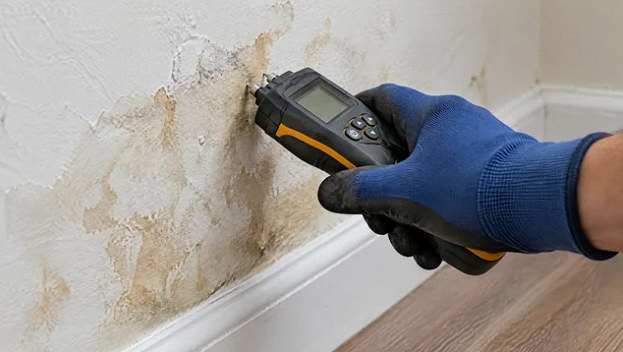
Hidden Moisture: What Meters and Thermal Cameras Can Tell You
Learn how to read a moisture report, distinguish instrument scales, and ask useful questions about concealed walls, floors, and ceilings.
Read the guide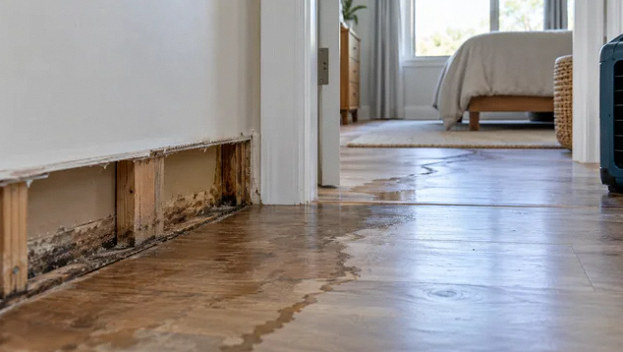
First decisions · 4 min read
How Water Travels Beyond the Visible Leak
Learn why walls, nearby rooms, and belongings can need assessment even when they never sat in a puddle.
Read the guide