
First decisions · 3 min read
Containment and Air Filtration During Restoration
Understand drying barriers, containment, HEPA filtration, and the household arrangements that keep work areas controlled.
YKCA · References checked 2026-10-03
Start with the essentials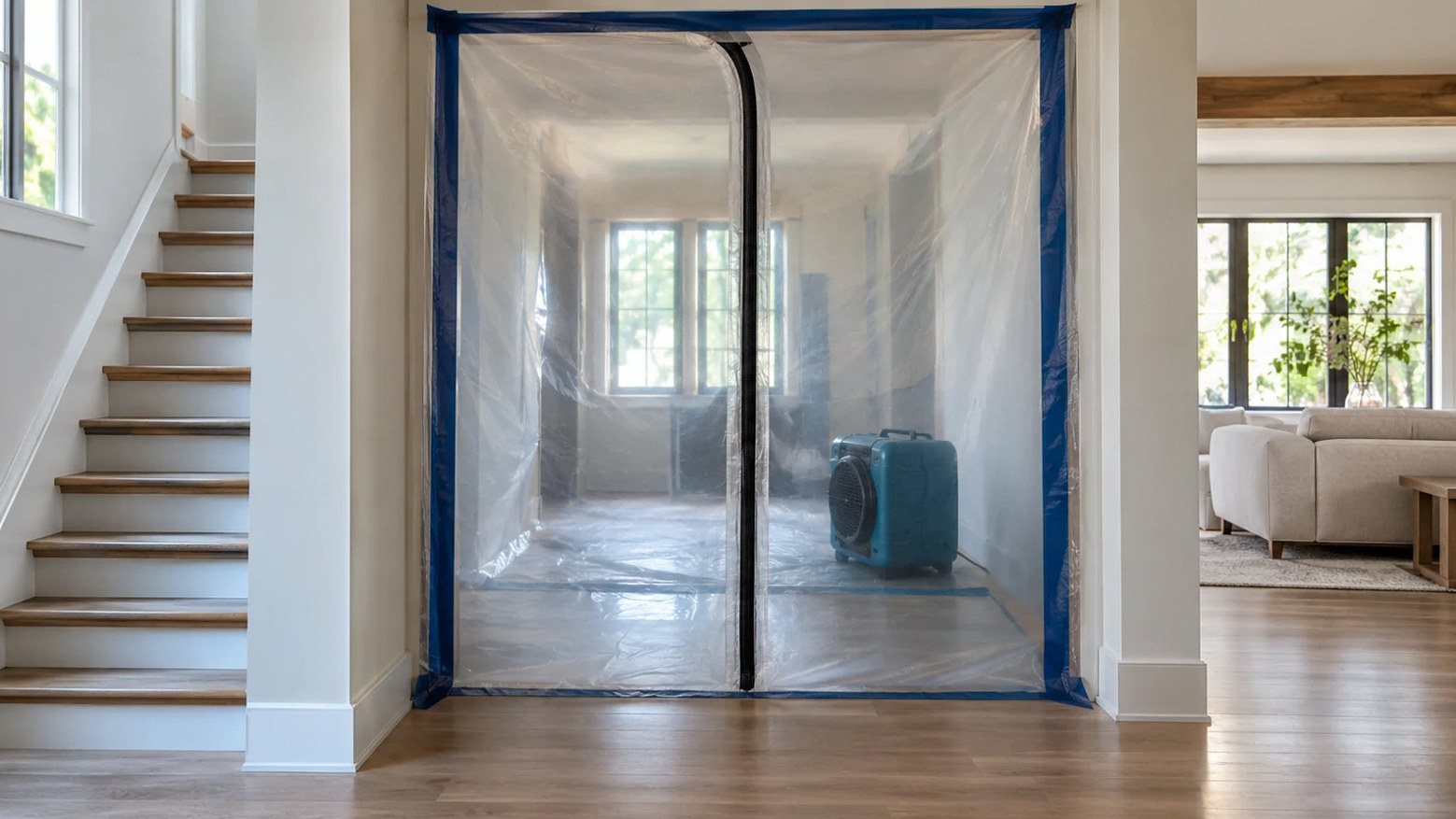
At a glance
Three things to keep in view.
Purpose
Identify drying control or contamination containment.
Access
Agree on routes, doors, and household restrictions.
Release
Confirm the steps before barriers are removed.
The key point
A plastic barrier can serve different purposes. Establish whether it controls a drying zone, contains a contaminated work area, or protects a route through the home.
Plastic sheeting and a machine with a large hose can look much the same from one job to another. The function matters more than the appearance. A household needs to know where it can go, which systems can run, and who checks that the arrangement remains intact.
Understand what the barrier is meant to do
EPA describes containment as a way to limit the spread of mold and debris during remediation. A smaller enclosed drying zone may instead be intended to control the volume of air being treated. These are different purposes even when some materials look similar.
HEPA filters capture particles; they do not remove all gases or solve every contamination concern. A machine with a HEPA label therefore does not establish that a room is safe for occupancy. The work plan must explain its purpose and any separate controls required.
Sources for this section
Mold Remediation in Schools and Commercial Buildings Guide: Chapter 3What is a HEPA filter?
Distinguish filtration from pressure control
An air-cleaning device can filter air without necessarily establishing a pressure relationship between rooms. A system intended to keep air moving into a work zone rather than out needs a designed arrangement and checks appropriate to that purpose. Ask which function the setup is performing.
For residents, the practical instruction may be simple: use a designated route and leave the barrier closed. The contractor should explain that instruction without expecting you to inspect or adjust the system. Report a loose seam, damaged barrier, or changed airflow to the named contact.
Map everyday movement through the home
Before work begins, walk through the access plan with the crew from a safe area. Identify bathrooms, exits, sleeping spaces, deliveries, and pet routes. A barrier is only workable if people understand how to reach the spaces they are permitted to use.
Keep children's activities and stored belongings away from the work boundary. Decide how technicians will enter without sending equipment through an occupied clean area unnecessarily. If access becomes impractical, request a revised plan instead of creating an unofficial opening in the sheeting.
Coordinate heating and ventilation
Ask who is responsible for any ventilation changes and when the usual operation can resume. Do not assume an open window, closed register, or additional household fan is compatible with the intended arrangement. The answer depends on the work and the building.
If odors or uncomfortable temperatures develop outside the work zone, report the location and timing. A complaint should prompt assessment of the condition, rather than an assurance based only on the presence of a filtration machine. Keep the response with the daily job record.
Plan removal of the controls
The barrier should come down as part of an explained transition. Ask what cleaning or verification occurs before the surrounding space returns to normal use and which areas remain unfinished. Equipment removal alone is not a description of that transition.
At handoff, confirm who restores any temporarily changed ventilation arrangements, removes protective materials, and addresses damage to finishes. A short completion note prevents the homeowner, restorer, and repair contractor from each assuming someone else handled those details.
Common questions
Does a carbon filter make sewage gas harmless?
No. A filter choice is not a substitute for evaluating the atmosphere or controlling contamination. Do not enter a restricted area because a machine is running or an odor has diminished. Follow the site-specific access instructions.
Sources and further reading
References checked 2026-10-03. Guidance depends on the loss, affected materials, scope of work and property conditions.
Discuss the next step for your property.
Share what happened, which areas are affected and the decisions you need help with.
Discuss water damage restorationRelated decisions
Drying and equipment · 5 min read
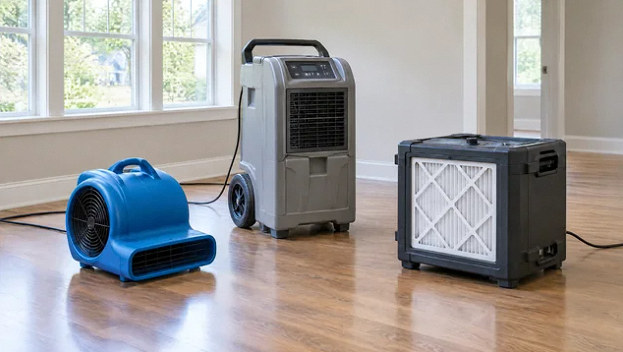
Fans, Dehumidifiers, and Air Scrubbers: What Each One Does
Understand the different jobs of restoration equipment and ask how the setup will reach wet materials and verify progress.
Read the guide
First decisions · 5 min read
Can You Stay Home During Water Damage Restoration?
Discuss safe access, usable rooms, household health needs, equipment, and temporary accommodation before deciding to stay home.
Read the guide