
Documentation · 3 min read
A Water Damage Response Plan for an Occupied Business
Coordinate access, tenants, staff, equipment, records, and reopening decisions after water affects a commercial property.
YKCA · References checked 2026-10-03
Start with the essentials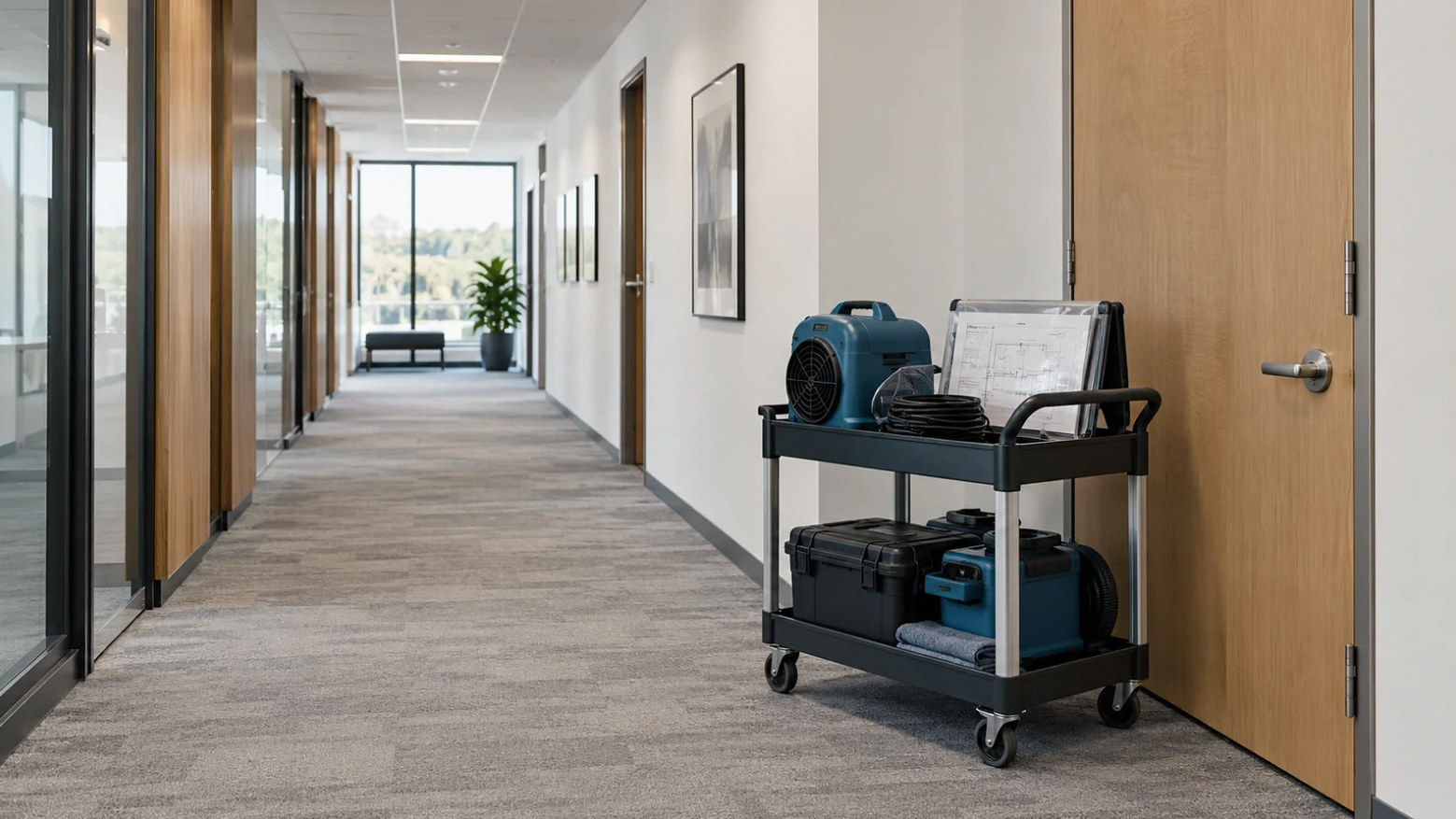
At a glance
Three things to keep in view.
Responsibility
Name authorizers and building-system contacts.
Continuity
Plan access and temporary business arrangements.
Reopening
Confirm each area and function separately.
The key point
An occupied business needs both a restoration plan and an operations plan. Name the people who control access, authorize work, communicate with occupants, and approve each return-to-use decision.
A leak in an office or retail space can affect neighboring tenants, shared ventilation, deliveries, stored goods, and business records. The technical drying work is only one part of organizing the response. A simple responsibility map helps people act without issuing conflicting instructions.
Start with the building and its occupants
EPA's commercial-building mold resources address assessment, remediation planning, and communication with occupants. IICRC's public S500 overview includes commercial buildings, contents, and large projects within the standard's scope. A residential checklist can provide useful prompts, but it does not capture every operational dependency of a business.
Identify the affected rooms, neighboring spaces, shared systems, and people who need access. Separate confirmed findings from areas that still need assessment. This gives the building manager a basis for deciding what requires immediate coordination.
Sources for this section
EPA: Mold in Schools and Commercial BuildingsStandard for Professional Water Damage Restoration
Assign one contact for each decision
Name the person who authorizes restoration work, the building contact for common areas and systems, and the business contact for operations. Include backups for after-hours decisions. A technician should not have to choose between contradictory instructions from several occupants.
Keep a shared decision record with time, person, and scope. For example, moving inventory, restricting a corridor, and opening a ceiling may have different approval paths. Clarify those paths before urgency turns a verbal request into a disputed commitment.
Protect continuity without compromising the work zone
Identify functions that can move safely and functions that must pause. Plan alternate access, secure storage, deliveries, and handling of confidential records. Do not assume that a room on the other side of a temporary barrier is suitable for continued use without the relevant assessment.
Ask how the restoration arrangement interacts with exits and shared ventilation. Changes to building systems need the appropriate responsible provider. Staff should receive clear practical instructions rather than being expected to interpret equipment readings or decide whether a barrier can be moved.
Communicate changes in useful terms
A daily update should describe which areas remain restricted, what work changed, and what decisions are needed next. Distinguish “drying continues” from “repairs can start” and “the space can reopen.” Those phrases affect staffing and customer commitments differently.
Give occupants a route for reporting new water, odors, access problems, or equipment interruptions. Record observations without diagnosing them in the message. The technical lead can then evaluate the condition and issue revised instructions consistently.
Reopen by area and function
Before reopening, reconcile restoration, electrical or HVAC assessment, repairs, cleaning, and any applicable operational requirements. A completed drying phase does not automatically authorize every business activity to resume. The responsible parties need to confirm the conditions relevant to their role.
Keep unresolved areas and temporary arrangements in the handoff. If part of the property reopens first, mark that boundary clearly and assign follow-ups for the rest. This avoids turning a partial success into an unsupported statement that the entire commercial recovery is complete.
Common questions
Can the building stay open while one room is drying?
Possibly, but that decision depends on access, hazards, work methods, affected systems, and the activities taking place. It needs a site-specific operations and safety assessment. The presence of a closed door alone does not resolve those questions.
Sources and further reading
References checked 2026-10-03. Guidance depends on the loss, affected materials, scope of work and property conditions.
Discuss the next step for your property.
Share what happened, which areas are affected and the decisions you need help with.
Discuss water damage restorationRelated decisions
First decisions · 3 min read
Containment and Air Filtration During Restoration
Understand drying barriers, containment, HEPA filtration, and the household arrangements that keep work areas controlled.
Read the guide
Documentation · 3 min read
Before You Sign a Water Damage Work Authorization
Clarify the initial scope, payment responsibility, equipment charges, changes, and handoff before restoration work begins.
Read the guide