
Residential electrical · 7 min read
Can you stay home during a rewire? Build a room-by-room operating plan
Plan occupied-home rewiring around real circuit boundaries, daily living needs, dust control, access, and finishing responsibilities.
YKCA Journal · Sources reviewed October 3, 2026
Explore the guide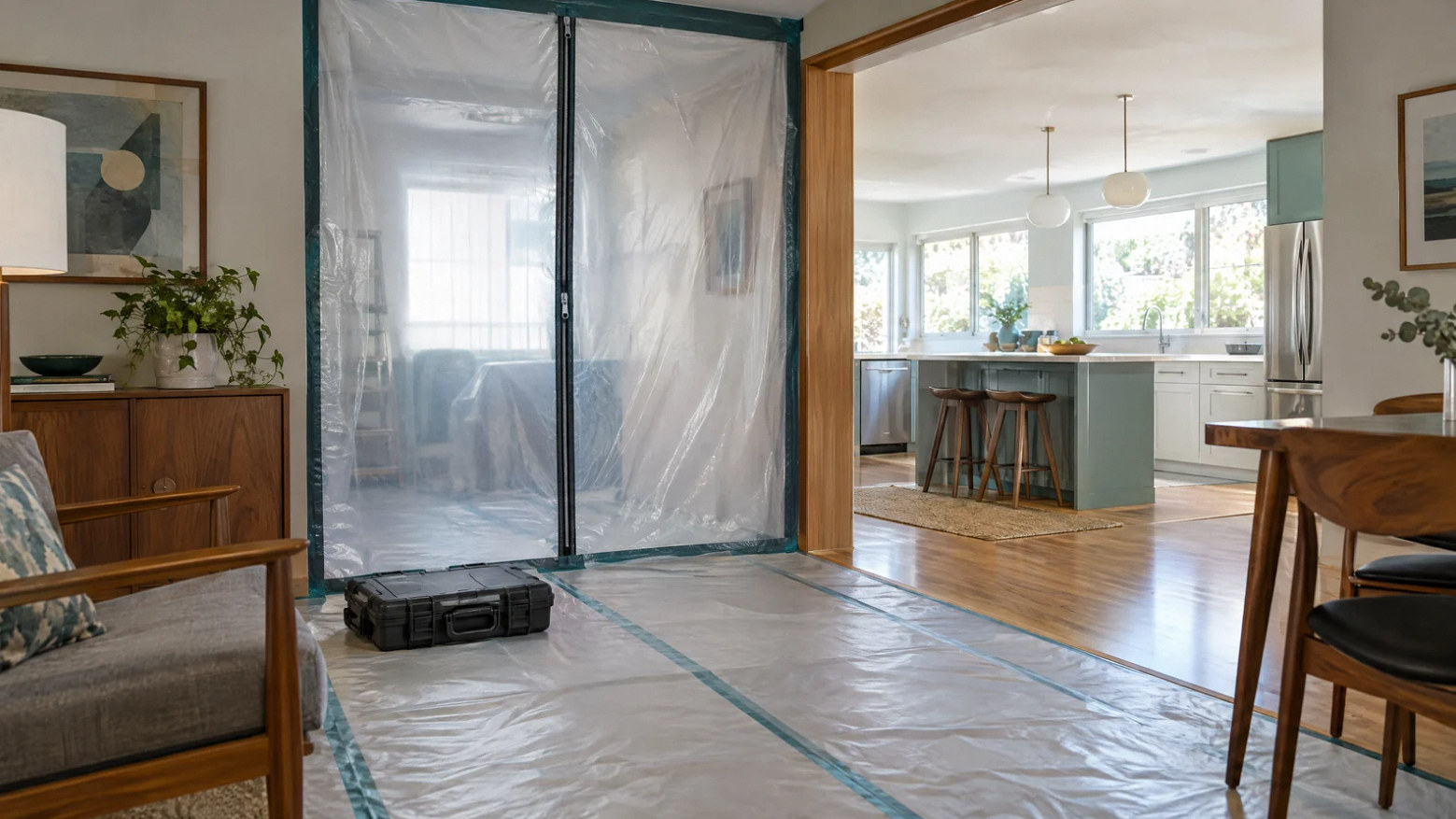
Residential electrical: browse all five guides ↗
The key decision
You may be able to stay home during a rewire, but a room-by-room work plan must make that possible. Ask which areas remain usable each day, which circuits will be unavailable, how dust and openings are controlled, and what condition the home will be left in overnight. If those questions cannot be answered, living through the work is an assumption rather than an agreed project arrangement.
Occupancy is a scope decision
A house that is technically occupied is not necessarily comfortable or practical to occupy. You still need safe access, a usable bathroom, food preparation, sleep, and reliable arrangements for anyone who depends on electricity. Pets, children, remote work, mobility needs, and shared walls all affect the sequence. Discuss them during the site visit. The decision to remain or temporarily relocate should follow the actual work areas and access constraints, not a generic claim that rewiring always requires moving out or never does.
Define what whole-house means before planning the week
An updated panel does not prove the branch wiring throughout the home was replaced. Older homes often contain several generations of wiring, and a rewire proposal may cover only identified old circuits. Ask for an inventory showing which circuits and devices will be replaced, which will remain, and which concealed areas cannot be confirmed until work starts. A general room list is less useful than a scope tied to the circuits serving it.
A retained circuit should have a documented reason for remaining. A partial rewire can be a legitimate defined project, but it should not be described as removal of all old wiring unless that result can be verified. At the same time, do not turn every age-related concern into an automatic requirement to gut the house. The electrician's findings should separate observed damage, known system limitations, and elective improvements. That separation makes both the sequence and the quote easier to understand.
Access determines both disruption and finish work
Attic or crawlspace access can reduce some openings, yet it does not make every wall cavity accessible. Finished ceilings, additions, cabinets, framing changes, and previous repairs may change the route. Ask the estimator where access is expected and where limited exploratory openings may be necessary. If historic trim or plaster must be preserved, state that explicitly and request alternatives before the contract assumes ordinary drywall patching.
Write down who moves furniture, protects floors, removes and reinstalls fixtures, repairs wall surfaces, and paints. An electrical quote that excludes finishing can still be appropriate, provided a separate finishing plan exists. The homeowner should not discover that responsibility after the electrician leaves. Also clarify how openings will be made safe between visits and whether rooms can be returned to normal use before final painting. The phase boundary should describe a usable condition, not simply say the wiring in a room is finished.
Dust planning is separate from electrical isolation
Older painted homes require a conversation about lead-safe renovation. EPA explains that paid renovation work covered by its RRP program has certification and work-practice requirements. Ask the contractor to identify the applicable requirements and the people responsible for containment, cleanup, and any required records. This is particularly relevant when electrical work involves repeated openings in painted walls rather than only accessible utility spaces.
Do not assume an electrical permit resolves environmental material issues. Suspected asbestos-containing material, unusual insulation, or other unknown building materials require an appropriate evaluation before disturbance. A wiring crew and a specialist performing environmental work may need different scheduling and access arrangements. Put the coordination into the plan. For a family staying in the home, the usable boundary between living space and work space matters just as much as the electrical outage boundary. Bedrooms should not become informal storage areas for debris simply because work elsewhere is inconvenient.
Source: EPA Renovation, Repair and Painting Program: Consumers
An illustrative two-zone sequence
Imagine a small home with bedrooms on one side and the kitchen and living room on the other. The electrician proposes two work zones after inspecting the routes. During the first zone, the family uses an agreed bedroom and bathroom outside the work area; during the second, it uses a different agreed arrangement. The schedule lists expected interruptions, access restrictions, cleanup responsibilities, and the circumstances that would require temporary relocation.
This is an illustrative planning scenario, not a promise that your home can be divided the same way. Shared circuits or inaccessible routes may prevent a simple split. The important step is testing the plan against the actual circuit map, not drawing two boxes on a floor plan and assuming the electricity follows them. If one circuit serves rooms in both zones, the electrician needs to explain how that affects the sequence. The family can then choose a realistic operating arrangement before work begins.
Design the new layout while access is available
A rewire is an opportunity to correct inconvenient outlet locations, confusing switches, and missing circuits for planned appliances. Walk through the rooms with furniture positions and appliance information. Decide where everyday tasks occur, where cords currently cross walking paths, and which changes are essential versus optional. Record those choices before cables are routed and surfaces are closed.
Keep low-voltage cabling, lighting redesign, smart controls, and future appliance circuits as named scope items. They can share access opportunities without becoming invisible extras. Ask whether the quote includes fixture installation, device styles, circuit labeling, and verification of retained circuits. If several trades are working, assign responsibility for the final opening and closing schedule. Avoid allowing insulation or finishing work to conceal areas before the electrician and inspector have completed the checks required for that phase. A shared sequence is more effective than asking each trade independently when it hopes to finish.
Before the first workday, walk the planned access route with the crew lead. Establish where materials will be stored, which doors remain usable, and how furniture is returned or left between phases. Decide how the household will receive the next day’s outage information and who can approve a scope change while work is underway. If a family member works remotely, agree on a usable area outside the work zone instead of expecting the crew to improvise around calls. These arrangements do not replace the electrical design, but they turn an abstract room-by-room promise into a practical operating plan for the people actually living there.
Agree on changes and completion evidence
Concealed work creates uncertainty. Set a process for documenting unexpected conditions, pausing the affected portion, presenting options, and agreeing to changes. A reasonable allowance can cover a defined unknown; it should not become an unlimited authorization. Request photographs and a clear description of the finding when it changes the scope. Never ask a crew to conceal a known problem merely to preserve the original calendar.
At completion, request an updated circuit directory, a list of replaced and retained circuits, inspection status, and the remaining finish-work items. Check the room layout against the agreed device plan. The whole-house rewiring service is the appropriate starting point for assessing access and phasing. An occupancy plan succeeds when the family knows how the home will operate throughout the work and the finished records explain what was actually renewed.
Put it into practice
A decision table to keep handy
| Situation | What to clarify | Planning implication |
|---|---|---|
| Family wants to remain | Which rooms and essential functions stay available? | Require daily operating and access boundaries. |
| Old panel was replaced earlier | Which branch circuits actually changed? | Inventory wiring independently of panel appearance. |
| Plaster or older paint | Who handles openings and material precautions? | Coordinate finishing and qualified renovation work. |
Bring this to the conversation
Your next-step checklist
Common questions
Do I need to move out during a rewire?
That depends on the inspected routes, work zones, outages, dust control, and household needs. Ask for a written daily operating plan; temporary relocation may be the practical choice when essential rooms or safe access cannot remain available.
Can the electrician promise no wall damage?
Access should be assessed, but concealed framing and routes can require openings. Ask for anticipated access points, a process for unforeseen conditions, and clear patching and painting responsibilities.
Does a new panel mean the house has modern wiring?
No. Panel work and branch-circuit replacement are different scopes. Request records identifying which circuits were replaced and which wiring remains.
The questions behind this guide
Problems people are trying to solve.
These public discussions illustrate reader concerns. They are not technical instructions, local survey results or evidence of work performed by YKCA.
- Re-wire older house
Owner has an updated panel but uncertain partial versus whole-house wiring scope and widely varying estimates
Check the original guidance
Sources & review date
Primary guidance and available source excerpts reviewed October 3, 2026. Requirements and program terms can change; verify the current instructions for your property and project before committing to work.
Continue with the next decision
Related guides
Ready to discuss work at your property?
Discuss this service with YKCA ↗