
Home EV charging · 7 min read
Hardwired EV charger or NEMA 14-50: compare the complete installation
Choose the connection method after checking the charger, existing circuit and intended use. A familiar outlet shape does not establish that an installation is suitable for years of EV charging.
YKCA Journal · Sources reviewed October 3, 2026
Explore the guide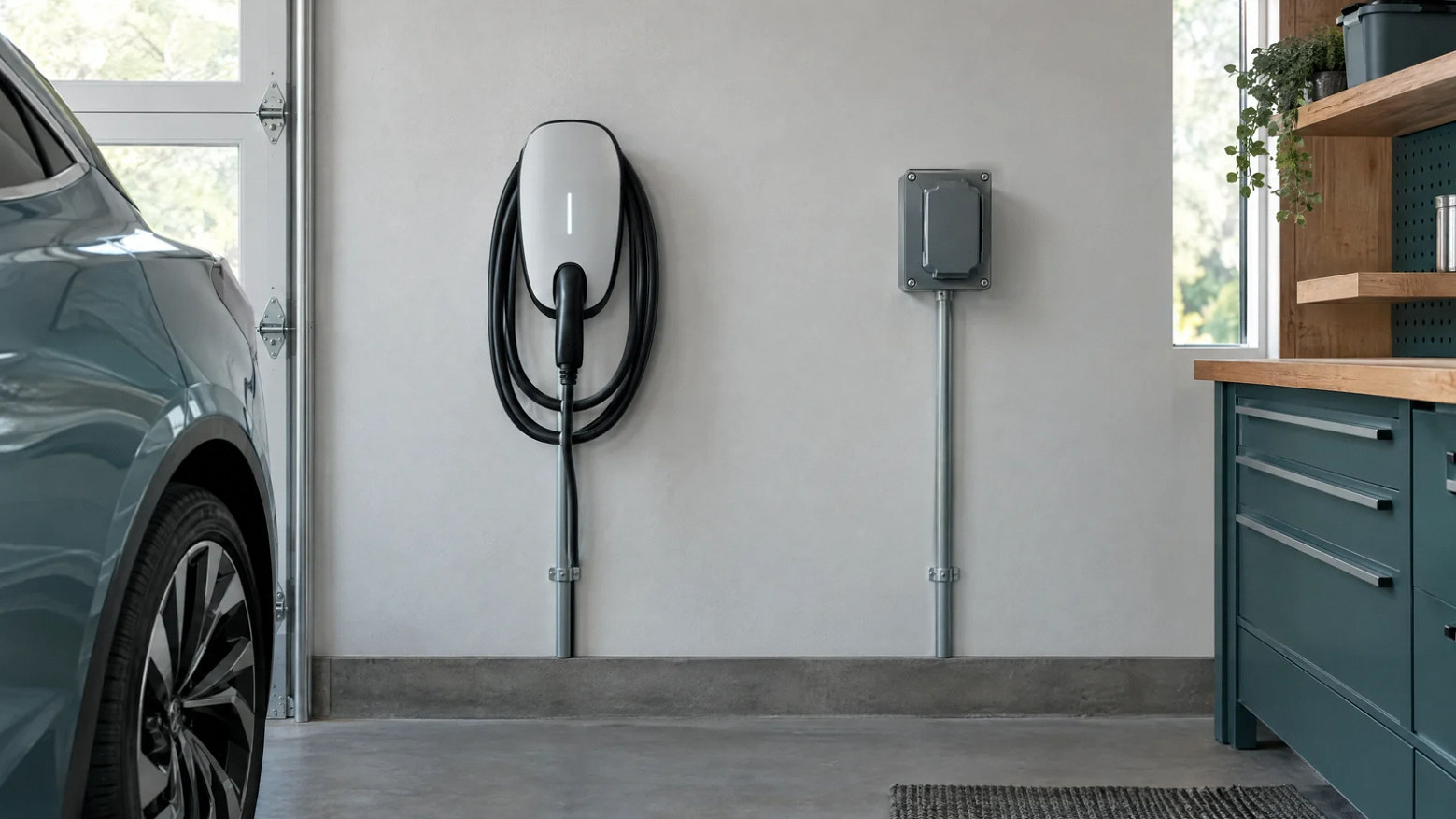
Home EV charging: browse all five guides ↗
The key decision
Choose the connection method after checking the charger, existing circuit and intended use. A familiar outlet shape does not establish that an installation is suitable for years of EV charging.
Make the comparison at the installation level
A hardwired charging station is connected directly through the installation arrangement its manufacturer supports. A plug-in station uses a compatible receptacle and supply cord. Both can be appropriate when the complete system is correctly selected, installed and approved. The decision should consider the exact station, circuit, location, charging limit and household use. Comparing only the retail charger price misses much of the scope.
For a permanent charging location, a hardwired proposal deserves serious consideration because it avoids a plug-and-receptacle connection in that arrangement. If portability or a specific compatible portable charger is a real requirement, a receptacle may have a practical role. Ask what flexibility you would actually use. Being able to unplug a station sounds convenient, but it has little value if the station will remain in the same garage for its entire life.
The model determines the allowed choices
Manufacturer instructions define which connection methods and ratings a charging station supports. ChargePoint offers distinct plug-in and hardwired Home Flex arrangements and publishes installation guidance for qualified installers. A station advertised with a high maximum rating does not mean every supplied plug, circuit or existing garage outlet supports that output. The installer must configure the station for the installed circuit.
Do not assume a cord can be cut off to create a hardwired product. Some equipment supports conversion by an approved procedure; some configurations do not. Ask for the instruction that covers the exact model and revision. The same discipline applies to adapters: matching physical shapes is not evidence that an arrangement is approved for the intended charging use. Resolve compatibility before ordering equipment or committing to a connection method.
Source: ChargePoint: Home Flex Installation · Department of Energy: Charging Electric Vehicles at Home
An existing outlet requires an assessment
A garage receptacle may have been installed for a welder, an RV, a future car or a previous owner. Its face cannot reveal the entire circuit behind it. Before relying on it, have the installer review the supply, protective device, conductors, connections, equipment compatibility and condition. A successful brief charge shows that energy reached the vehicle; it does not document every installation requirement.
Tell the contractor whether the outlet has a permit record, what used it before, whether the plug is regularly removed and whether there has been heat, odor, discoloration or an interruption. Do not open the receptacle or panel yourself to gather this information. Accessible labels and records help the inspection. If records are missing, quote the investigation explicitly rather than treating the existing circuit as free, verified infrastructure.
Source: ChargePoint: Home Flex Installation · Department of Energy: Charging Electric Vehicles at Home
Heat damage changes the task
A warm or damaged connection is a service problem before it is a shopping decision. If there is smoke, arcing, melting, a burning odor or another immediate hazard, stop charging and use the appropriate emergency response. Do not touch or manipulate damaged equipment to produce a better photo. A contractor should determine the extent of damage and whether any portion of the circuit or station can remain.
A replacement receptacle alone may not resolve damage to the plug, cord, box, conductors or another connection. Conversely, a photo of a damaged outlet cannot establish which component first caused the problem. Online discussions often jump directly to a product brand or wire size. The useful lesson is that the complete installation needs assessment. Turning the current down is not a repair for a damaged connection, even if the next session appears uneventful.
Consider how the household will use it
List the normal parking position, the vehicle inlet location, cable storage and whether a second vehicle will be added. A station mounted close to the panel may be inexpensive to connect but inconvenient to use every night. A receptacle installed too far from the car can encourage unsupported extensions or adapters. Plan the charging position with the actual cable and manufacturer instructions.
If you want to take a portable station on trips, distinguish travel use from the home installation. The household may prefer a fixed home station and a separate supported travel solution. If you rent, ask who owns the equipment, who approves construction and what happens at move-out. These decisions can matter more than an abstract preference for hardwire or plug-in. An installer should compare options that meet the stated use rather than assume everyone needs maximum output.
An illustrative side-by-side quote
Imagine a homeowner with an undocumented 14-50 outlet near the garage door and a vehicle that parks farther inside. Proposal A reuses the outlet after an assessment and installs a supported plug-in station. Proposal B assesses the existing circuit, extends or reroutes the supply as needed and mounts a supported hardwired station beside the normal parking position. Neither proposal can be judged from the charger line item alone.
The owner should compare investigation, equipment, connection method, route work, permit handling, surface repair and commissioning. If the existing circuit needs correction, both alternatives may change. If the owner regularly moves a portable station between approved locations, that use may support the receptacle option. If the station never moves and the mounting position improves cable reach, the hardwired scope may be more practical. This illustrative comparison turns the same parking and equipment needs into two scopes that can be evaluated fairly.
Ask for a complete written scope
A useful proposal identifies the station model, connection method, installation limit and circuit work. For a receptacle arrangement, it should specify the selected device and required protective arrangement rather than say install standard outlet. For hardwiring, it should identify whether the station is supplied by the owner, what conversion is supported if relevant and what existing infrastructure has been verified.
Include mounting, cable management, weather exposure, labeling, permit responsibilities and the acceptance demonstration. Clarify whether the contractor repairs opened finishes or leaves that work to another trade. Ask how concealed conditions or a failed existing circuit affect the estimate. The Department of Energy home-charging guide supports evaluating electrical work with a qualified contractor; it does not offer a universal installed price for a garage with unknown wiring.
Avoid buying a solution before defining the problem
The common mistake is purchasing a charger and asking an electrician to make it fit. Another is selecting an outlet solely because a neighbor uses that shape. Start with the vehicle, parking arrangement and electrical assessment; then choose a supported station and connection method. Protecting the circuit, matching equipment and obtaining the required approval are parts of one installation, not optional accessories.
Keep the final configuration and product instructions with the home records. Know what normal status indicators mean and whom to contact if charging changes. If you later replace a station, have the installer verify that the new equipment remains within the documented circuit design. The NEMA 14-50 service page is a starting point for comparing a receptacle with a hardwired alternative. Describe what already exists and what flexibility you actually need.
Put it into practice
A decision table to keep handy
| Situation | Decision to resolve | Evidence to request |
|---|---|---|
| Permanent station, rarely moved | Compare hardwire with a supported plug-in design | Exact model installation instructions |
| Undocumented existing outlet | Assess before assuming reuse | Circuit condition and approval records |
| Visible heat damage or burning odor | Stop use and assess damage | Qualified diagnosis of complete arrangement |
| Portable use is genuinely needed | Specify approved connection and locations | Supported cord, receptacle and protection |
Bring this to the conversation
Your next-step checklist
Common questions
Is a 14-50 outlet automatically suitable for EV charging?
No. The circuit, receptacle, protective arrangement, condition and charger configuration all require review. The shape alone does not establish suitability.
Can any plug-in charger be converted to hardwire?
Only if the exact manufacturer instructions support that conversion. Do not cut a cord or improvise an adapter arrangement to create a different installation.
Will hardwiring guarantee there are no charging faults?
No. It changes the connection arrangement, but the supply, equipment, configuration and vehicle still need to work correctly. A complete design and commissioning record remain necessary.
The questions behind this guide
Problems people are trying to solve.
These public discussions illustrate reader concerns. They are not technical instructions, local survey results or evidence of work performed by YKCA.
- What went wrong with this burned Nema 14-50?
Homeowner paid for installation and was sold plug-in flexibility, then experienced a damaged receptacle and uncertainty about reuse.
Check the original guidance
Sources & review date
Primary guidance and available source excerpts reviewed October 3, 2026. Requirements and program terms can change; verify the current instructions for your property and project before committing to work.
Continue with the next decision
Related guides
Ready to discuss work at your property?
Discuss this service with YKCA ↗