
Odor removal & duct cleaning · 5 min read
A Strange Odor Appears Only When the HVAC Runs: Where to Start
Build a useful odor record and separate equipment inspection, building sources and duct cleaning without guessing by smell.
YKCA · References checked 2026-10-03
Start with the essentials
Decisions before approving work
At a glance
Three things to keep in view.
Record timing
Describe operating mode, rooms and recent changes without self-diagnosing.
Inspect the source
Request equipment and adjacent-building assessment before treatment.
Check the result
Verify the defined correction under appropriate operating conditions.
The key point
Describe operating mode, rooms and recent changes without self-diagnosing.
The room smells normal until the fan starts. That timing is useful evidence, but it does not prove the ducts are dirty or identify the substance involved. Air movement can make a source more noticeable, and different operating modes can involve different components. The first task is a structured service request, not a deodorizer purchase. If there is a suspected gas leak, smoke, a carbon monoxide alarm or another immediate hazard, leave the area and contact the appropriate emergency service or utility.
Related service: Odor removal & duct cleaning questions and planning
Record normal observations without provoking exposure
Note when the odor occurs, which rooms receive it and whether the system is heating, cooling or using fan-only operation at the time. Record only ordinary observations; do not cycle equipment repeatedly to reproduce a troubling smell. Include when the complaint began and whether recent cleaning, remodeling, water damage or equipment service preceded it.
Describe the odor in your own words but avoid assigning a diagnosis. “Sharp odor at the bedroom supply when cooling starts” gives the technician a location and timing. “Toxic mold in every duct” asserts conclusions the observation cannot support. Save the record for the service visit and identify any operating restrictions already given by a qualified professional.
Make the equipment visit broader than duct cleaning
Ask the HVAC technician to assess the equipment and relevant components for the reported operating condition. The assignment should include looking for a cause, not merely confirming that dust exists somewhere. Request documentation of accessible findings and components that require further inspection. A duct-cleaning company and an equipment-service technician may have different responsibilities.
Discuss whether the system should remain off pending inspection. If heating or cooling is essential for household needs, ask for a safe temporary plan rather than overriding that advice. Any decision about operating damaged or potentially contaminated equipment needs the actual site conditions. An online description cannot establish that running the fan longer is safe or useful.
Map the building conditions around the system
Tell the technician about adjacent rooms, storage, recent product use and known moisture issues. Ask whether the odor may be entering the air path from somewhere outside the ducts. EPA emphasizes identifying and controlling pollutant sources; cleaning a transport pathway alone may miss the condition producing the complaint.
Create a simple map showing the strongest observation, returns, supplies and recent work. Ask the assessor to mark which possibilities were inspected, ruled out or left unresolved. Do not treat a lack of visible growth at one register as proof of a clean system, or an odor in several rooms as proof that every branch requires replacement.
Use findings to choose the next trade
An equipment defect should lead to a defined repair recommendation. A plumbing concern should be referred to the appropriate plumber. A moisture finding may require building-envelope or restoration investigation. Ask the first technician to describe the observation that supports the referral so the next person does not begin with only a vague report of a bad smell.
Keep the assignments connected. For example, a report may identify a damp area near equipment while leaving its source undetermined. The next scope should investigate that source and report back, rather than authorize a broad treatment based on the word “damp.” This maintains a chain from observed condition to investigation to the work you approve.
Decide whether duct cleaning addresses a finding
If cleaning is recommended, ask which components are contaminated, how that was established and whether the material can be cleaned appropriately. Request a scope covering the relevant system rather than only the visible grille. EPA's duct guidance supports condition-based decisions and cautions that underlying causes must be addressed.
If no duct contamination has been identified, ask why cleaning is expected to resolve this particular complaint. A technician may recommend further access or investigation, which should have its own purpose and authorization. Avoid treating the purchase of a service as a diagnostic test when the expected information and cost are undefined.
Avoid masking the inspection target
Tell the evaluator about air fresheners, sprays or treatments already used. Ask whether further products would interfere with locating the original source. A different smell after treatment can make the complaint harder to describe without demonstrating correction. Do not add products to ducts or equipment without appropriate product and system instructions.
Air filtration also has limits. A device selected for particles does not automatically address every gaseous odor, and it does not repair a moisture or equipment defect. If an air cleaner is proposed, request its intended role alongside source correction and appropriate maintenance. Keep a performance claim separate from a promise that the original problem has been diagnosed.
Review the repair under agreed conditions
After a defined correction, arrange the appropriate operational check with the technician. Record what mode was used, what was inspected and whether the original complaint remained. If it persists, keep the case open with the same chronology and findings. Avoid beginning another round of unrelated treatments without reviewing what the previous step established.
A successful odor observation is useful, but it cannot certify every aspect of indoor air quality or explain an individual's symptoms. Seek medical advice for health concerns. The practical goal is a documented cause or a candid remaining uncertainty, followed by a justified next action. That is more reliable than making the ducts the default culprit simply because the fan reveals the smell.
Common questions
Does an odor only when the fan runs mean I need duct cleaning?
Not necessarily. Ask for equipment and source investigation first. The air path may make an odor noticeable without being its source. Cleaning should be tied to identified conditions and a clear scope.
Can an air purifier solve an unexplained HVAC odor?
It may have a limited supporting role, but it cannot establish the source or repair a defect. Particle filtration does not address every gas. Match any device to the documented concern and follow the equipment assessment.
Sources and further reading
References checked 2026-10-03. Guidance depends on the loss, affected materials, scope of work and property conditions.
The homeowner question behind this guide
These public discussions informed the questions addressed here. Personal experiences and comments are not technical findings or proof of insurance coverage.
Discuss the next step for your property.
Share what happened, which areas are affected and the decisions you need help with.
Discuss odor removal & duct cleaningRelated decisions
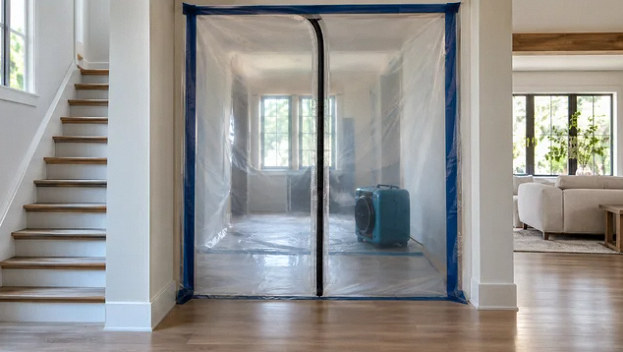
First decisions · 3 min read
Containment and Air Filtration During Restoration
Understand drying barriers, containment, HEPA filtration, and the household arrangements that keep work areas controlled.
Read the guide
Documentation · 3 min read
Choosing a Water Restoration Contractor: What to Verify
Compare qualifications, inspection methods, documentation, and repair responsibility before choosing restoration help.
Read the guide