
Mold remediation · 5 min read
After Mold Remediation: What to Check Before the Walls Close
Review source correction, cleaned surfaces and agreed completion criteria before containment comes down or reconstruction starts.
YKCA · References checked 2026-10-03
Start with the essentials
Decisions before approving work
At a glance
Three things to keep in view.
Check the scope
Compare completed work with the original authorization and changes.
Review the evidence
Inspect accessible materials and interpret any tests in context.
Authorize closure
Pass a documented handoff with unresolved items clearly identified.
The key point
Compare completed work with the original authorization and changes.
The crew says remediation is complete and the reconstruction contractor is ready to close the wall. Your next decision should be based on the agreed work and the evidence available while the area is still accessible. A laboratory page, a fresh smell or a contractor's confidence cannot stand in for every part of that review. This guide describes a completion handoff; it does not establish a universal mold clearance standard or diagnose health conditions.
Related service: Mold remediation questions and planning
Bring back the original scope
Start with the work authorization, assessment and any approved changes. Identify the spaces, materials and moisture correction included. Compare that list with the actual completed work. If a scope expanded after a wall was opened, the final record should explain why and show the added work rather than leave the original estimate as the only description.
Mark exclusions and pending assignments clearly. The remediator may have completed cleaning while a plumber still owes a leak repair or a roofer has only installed temporary protection. Those facts change the reconstruction decision. A single invoice marked complete should not erase unfinished work assigned to another person.
Verify the source correction independently of appearance
Request the record of the repair intended to stop the moisture. Ask what was done, who performed it and how the result was checked. A clean surface says little about a plumbing connection concealed elsewhere. Keep photographs, repair invoices and relevant test or inspection records with the remediation file.
Where the cause could not be conclusively established, require that uncertainty to remain visible in the handoff. Agree on whether more investigation or a monitoring plan is needed before rebuilding. Do not let a planned future inspection be reported as a passed inspection. The record should distinguish a completed correction from a plausible explanation still awaiting confirmation.
Inspect before access disappears
Arrange the agreed review before finish layers obscure the affected area. Identify which surfaces need to remain exposed and who needs access. Ask the remediator to explain any remaining staining, retained material or inaccessible cavity. An unexplained mark deserves a documented answer; it should not automatically be called either harmless staining or active mold.
Photograph the reviewed areas with location labels. Include the boundaries where removed material meets retained material. If the inspection identifies unfinished cleaning or debris, place those items on a punch list and assign responsibility. Reconstruction scheduling should reflect that list instead of assuming every issue can be addressed after the wall closes.
Put any sampling result in its proper role
If sampling was agreed, review the purpose, locations, conditions and interpretation with the assessor. EPA states that federal airborne mold limits have not been established. A number alone therefore should not be presented as proof of compliance with a universal federal indoor mold standard. Ask what conclusion the professional actually draws for this project.
Request the full report rather than a cropped result or a verbal “pass.” Determine whether the report addresses only samples or also the inspected conditions. If its conclusion relies on assumptions, make sure those assumptions fit the site. A report can support a decision while still having limits; the limits should travel with it into the reconstruction record.
Resolve deficiencies through a defined loop
When the review finds an issue, write the location, finding, corrective task and person responsible. Agree on what follow-up review is needed after correction. This avoids the unproductive cycle of repeated broad treatments and repeated tests without a shared explanation of what failed. Each additional step should answer a specific unresolved question.
Keep the cost and authorization for follow-up clear. Ask whether it is part of completing the original scope or a newly discovered condition requiring added work. The answer should be supported by the record, not merely by which party sends the invoice. If there is a genuine dispute, an independent assessment can focus on that limited question.
Separate project completion from individual health advice
A construction review cannot determine whether a particular person's symptoms were caused by the building or whether that person should remain during cleanup. CDC identifies groups who should not participate in mold cleanup, including people with certain respiratory conditions or immune suppression. Discuss individual concerns with a healthcare professional rather than asking the crew to make a medical decision.
Give your clinician factual information if useful: the affected location, dates, products used and the nature of ongoing work. Avoid converting a restoration report into a diagnosis. Likewise, do not treat feeling better or worse on a particular day as the only evidence of whether the contracted material work was completed.
Hand reconstruction a usable package
Provide the builder with the final scope, repair records, completion review, photographs and unresolved limitations. Identify who authorizes removal of containment and return of affected building systems. Ask the builder to acknowledge any remaining conditions that influence its work. The handoff should say exactly what is ready to close and what is still on hold.
Retain the package after the project ends. Include operating or maintenance instructions relevant to preventing recurrence and the appropriate callback contacts. This does not promise a mold-free building forever. It provides a traceable account of a particular problem, the work performed and the basis for proceeding, which is the practical information future owners and contractors will need.
Common questions
What should I receive before rebuilding after mold remediation?
Request the completed scope and changes, source-repair record, photographs and the agreed completion review. Keep any unresolved findings or access limitations explicit before new finishes conceal the area.
Does one passing air sample prove the whole house is safe?
No. Sampling has a defined scope and must be interpreted with the inspection and project conditions. There is no universal federal airborne mold limit, and a construction report does not determine an individual’s medical risk.
Sources and further reading
References checked 2026-10-03. Guidance depends on the loss, affected materials, scope of work and property conditions.
The homeowner question behind this guide
These public discussions informed the questions addressed here. Personal experiences and comments are not technical findings or proof of insurance coverage.
Discuss the next step for your property.
Share what happened, which areas are affected and the decisions you need help with.
Discuss mold remediationRelated decisions
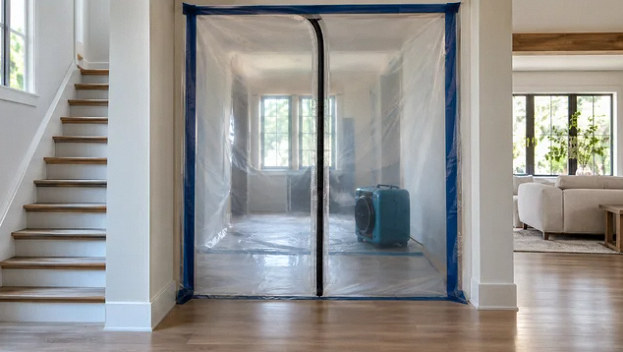
First decisions · 3 min read
Containment and Air Filtration During Restoration
Understand drying barriers, containment, HEPA filtration, and the household arrangements that keep work areas controlled.
Read the guide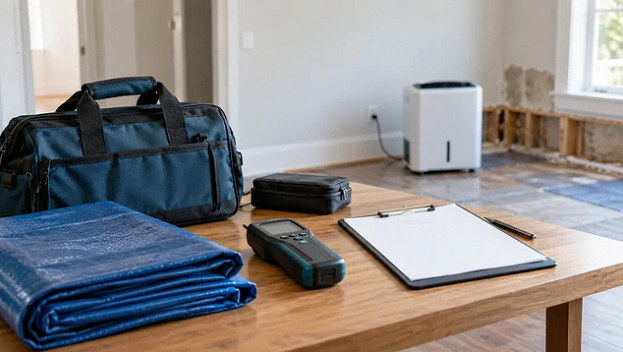
Documentation · 3 min read
Choosing a Water Restoration Contractor: What to Verify
Compare qualifications, inspection methods, documentation, and repair responsibility before choosing restoration help.
Read the guide