
Odor removal & duct cleaning · 5 min read
A Duct-Cleaning Quote Turned Into a Bigger Job: What to Verify
Review the inspection evidence, included components and change authorization before accepting duct-cleaning add-ons.
YKCA · References checked 2026-10-03
Start with the essentials
Decisions before approving work
At a glance
Three things to keep in view.
Identify the reason
Tie the cleaning recommendation to a documented condition.
Review additions
Require evidence, included components and a revised total.
Check completion
Match the finished work to the agreed scope and original complaint.
The key point
Tie the cleaning recommendation to a documented condition.
You booked a basic duct cleaning. At the door, the technician shows a close-up photograph and proposes a much larger package of treatments and equipment. There may be a real finding, but the new price deserves a clear explanation before work expands. A good decision starts with the reason for cleaning and the actual system components involved. This guide does not diagnose a photographed substance or establish what a particular house should cost.
Related service: Odor removal & duct cleaning questions and planning
Revisit why the appointment was booked
Write down the original concern: material being released from registers, a known contamination event, an unusual odor or simply an advertisement. Those are different starting points. EPA recommends considering duct cleaning as needed rather than treating it as routine preventive healthcare. A calendar interval or a dusty return grille alone does not explain a whole-system remediation proposal.
Ask the technician to connect the recommended work to your stated problem. If the visit discovers a separate equipment defect, list it separately. You can decide to investigate a new finding without immediately purchasing every service offered beside it. The aim is to keep each recommendation attached to evidence and a specific intended result.
Ask where the photograph was taken
Request a view that identifies the component and its location, followed by the close-up. Confirm that the image shows your system and the area under discussion. A dark patch can warrant evaluation, but it should not be labeled conclusively from an ambiguous photograph. Ask what further identification is needed and whether it changes the proposed work.
Keep copies of the images with the estimate. Record which areas were inspected and which were not accessible. If the recommendation extends from one photographed location to the entire system, ask for the reasoning. A limited image may reveal an issue without establishing its full extent, so the scope should state that uncertainty.
Define the equipment and components included
Have the provider list supply ducts, returns, registers and the relevant air-handling components included in the proposal. Ask who handles components outside the cleaner's competence. A phrase such as “whole house” can refer to a count of openings while leaving key equipment unaddressed. You need the actual included work, not a marketing label.
Identify how many systems serve the property and whether the estimate assumes one or several. Note access restrictions, fragile materials and areas excluded from cleaning. If opening access panels is necessary, ask how they will be restored. The written scope should make it possible to inspect whether the promised work occurred without relying on the technician's memory.
Make every add-on answer a question
For a chemical treatment, request the product, intended use, label and reason it is needed after physical cleaning. For a filter or air-cleaning device, request the model and compatibility assessment. EPA distinguishes particle filtration from other indoor-air problems; a device should not be sold as an undefined solution to everything that might be in the air.
Ask whether the add-on is required to complete the original scope or is optional. If it is described as urgent, ask what evidence supports that urgency and what happens if you obtain another opinion. Avoid accepting health or energy-savings promises that are not supported for the specific proposed work. The technician should explain the service without diagnosing your family's symptoms.
Authorize changed work in writing
Pause the added work long enough to obtain a revised total and scope. Include labor, materials, equipment, access restoration and any separate follow-up. Ask whether the original visit charge still applies if you decline the new proposal. Clarify this before the truck's equipment or an opened access point makes you feel committed.
A legitimate discovery can change a price, so a changed total is not proof of wrongdoing. The important distinction is whether the discovery is documented and the additional work remains your decision. Keep the original advertisement, booking details and revised proposal together. If explanations remain unclear, seek an independent HVAC assessment before authorizing extensive treatment or replacement.
Agree on what the final review will show
Before work begins, ask what before-and-after views will be available and how the technician will identify the cleaned components. Request a walk-through of accessible work and a record of anything that could not be completed. Decide how damage or newly discovered defects will be reported. A generic photograph of collected debris does not identify the condition of every component in your system.
Include the original complaint in the closeout. If it was a specific odor or particles from a register, record the remaining observation without treating it as the sole measure of work quality. A complaint can persist because its source was outside the cleaning scope. The next step should investigate that possibility, not automatically repeat the same service.
Keep maintenance and remediation distinct
After the visit, retain the component list, photographs, products used and any recommended repair. Ask the HVAC service provider for the maintenance instructions appropriate to the installed equipment. Do not confuse routine filter care with a requirement to purchase periodic whole-system cleaning from the same company.
If an indoor-air concern remains, organize a new assessment around the actual condition. Health concerns belong with a clinician; equipment operation belongs with an appropriately qualified technician. A documented cleaning can be useful when there was a defined need. Its value should be judged by the work performed and the problem addressed, rather than a broad promise that the home is now healthier.
Common questions
Should I reject any duct quote that increases on arrival?
Not automatically. A real newly documented condition can change scope. Ask for identified evidence, a revised itemized price and an explanation before approving added work. Pressure without a clear finding is a reason to pause.
Does a photograph prove the technician found mold?
Not by itself. Ask where it was taken, what is visible and whether qualified identification is needed. A scope should not treat an uncertain substance as a confirmed whole-system condition.
Sources and further reading
References checked 2026-10-03. Guidance depends on the loss, affected materials, scope of work and property conditions.
The homeowner question behind this guide
These public discussions informed the questions addressed here. Personal experiences and comments are not technical findings or proof of insurance coverage.
Discuss the next step for your property.
Share what happened, which areas are affected and the decisions you need help with.
Discuss odor removal & duct cleaningRelated decisions
First decisions · 3 min read
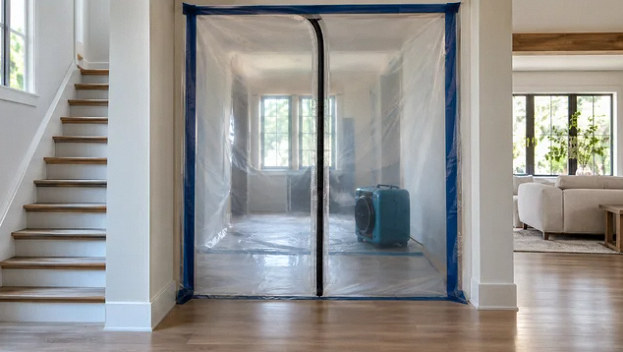
Containment and Air Filtration During Restoration
Understand drying barriers, containment, HEPA filtration, and the household arrangements that keep work areas controlled.
Read the guide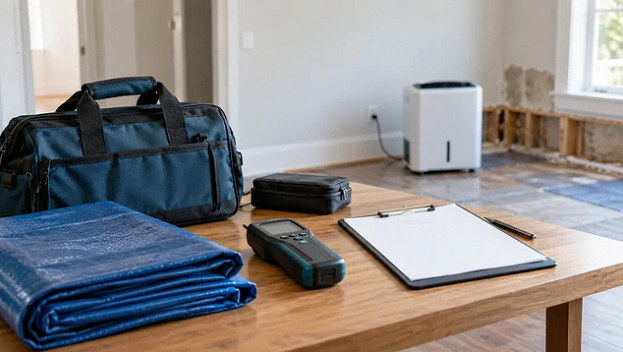
Documentation · 3 min read
Choosing a Water Restoration Contractor: What to Verify
Compare qualifications, inspection methods, documentation, and repair responsibility before choosing restoration help.
Read the guide