
Mold remediation · 5 min read
Attic Mold and a Misrouted Bathroom Fan: What Belongs in the Repair
Separate bathroom exhaust correction, attic assessment, insulation decisions and mold cleanup before approving a combined proposal.
YKCA · References checked 2026-10-03
Start with the essentials
Decisions before approving work
At a glance
Three things to keep in view.
Trace the exhaust
Verify the full route and the proposed outdoor termination.
Map affected material
Tie insulation and wood decisions to observed conditions.
Check the repair
Record source correction, cleanup and follow-up separately.
The key point
Verify the full route and the proposed outdoor termination.
An attic inspection finds suspicious growth near a bathroom exhaust duct. The estimate offers a basic spray or a much larger package with insulation and ventilation work. Before choosing, you need to know which conditions were actually found and why each item belongs in the scope. A fan exhausting into an attic is a meaningful finding, but it does not by itself establish how much insulation or wood must be replaced. This article helps organize a site assessment, not substitute for one.
Related service: Mold remediation questions and planning
Establish an attic record without unsafe entry
Ask the inspector for labeled photographs, the access point, inspected areas and limitations. A collage of close-ups is difficult to interpret without knowing where each image came from. Request a sketch showing the bathroom, exhaust route, roof areas and affected surfaces. Identify what was visible from the hatch and what required closer access.
Do not walk an unfamiliar attic to reproduce the inspection. Framing, wiring, access limitations and disturbed material can create hazards. Give your questions to a qualified person who can inspect under appropriate conditions. The useful homeowner role is to request a clear record and compare recommendations against it, rather than perform a hazardous survey to challenge an estimate.
Sources for this section
CDC: About MoldEPA: Mold Cleanup in Your HomeEPA: Mold Remediation Guide, Chapter 3
Trace the exhaust all the way to termination
Have the appropriate technician establish where the bathroom exhaust actually ends and whether the installed route is suitable. CDC recommends exhausting bathroom air outdoors. A duct pointing toward a vent or disappearing into insulation is not a complete route description. Ask for photographs that connect the fan, duct and termination in the final arrangement.
The correction proposal should describe the actual work and how completion will be checked. Separate a disconnected duct repair from a new roof penetration or fan replacement. These are different tasks with different coordination needs. Ask the contractor to identify applicable installation and permitting requirements for the chosen repair rather than copying a generic diagram from the internet.
Sources for this section
CDC: About MoldEPA: Mold Cleanup in Your HomeEPA: Mold Remediation Guide, Chapter 3
Keep other moisture sources in the assessment
The visible exhaust problem may not explain every affected area. Ask the assessor whether roof leakage, other exhausts, air leakage or additional moisture conditions were considered. Record the evidence for any proposed explanation. An assessment can identify one confirmed defect while leaving another possibility unresolved; it should not quietly convert both into certainty.
Use timing where available. A history tied to showers may support one line of investigation, while staining after storms may justify another. Do not treat timing as proof by itself. Ask which observation would distinguish the competing explanations and whether that investigation belongs before cleanup, during opening or in a planned follow-up.
Sources for this section
CDC: About MoldEPA: Mold Cleanup in Your HomeEPA: Mold Remediation Guide, Chapter 3
Evaluate insulation by condition and location
If insulation replacement is proposed, ask which areas are affected and why they cannot remain. Record the material, approximate quantity, observed condition and relationship to the moisture problem. EPA notes that porous mold-affected materials can be difficult to clean adequately. That does not establish a universal requirement to replace every piece of attic insulation after a local finding.
Ask how the contractor will handle boundaries between removed and retained material and how new insulation relates to the corrected exhaust route. If a broader energy improvement is offered, identify it separately from necessary remediation. Combining both may be convenient, but the owner should be able to distinguish the repair basis from an optional upgrade.
Sources for this section
CDC: About MoldEPA: Mold Cleanup in Your HomeEPA: Mold Remediation Guide, Chapter 3
Separate growth cleanup from structural judgment
Ask what evaluation supports keeping the affected wood and what finding would require a structural specialist. Surface appearance alone does not answer every question about the material's capacity or hidden condition. A remediation crew can document its observations, but a structural determination should come from someone qualified for that assignment when warranted.
For retained surfaces, request a material-specific cleaning approach and documentation before any coating. For replacement, ask how the proposed work affects connected roof or ceiling assemblies. The scope should explain who coordinates those trades. A line reading “remove bad wood” is too vague to support either a practical budget or an inspection of the completed result.
Sources for this section
CDC: About MoldEPA: Mold Cleanup in Your HomeEPA: Mold Remediation Guide, Chapter 3
Coordinate the order and the household impact
Write a sequence covering source correction, any necessary material removal, cleaning, inspection and insulation or finish restoration. Explain who owns the transitions. If a ventilation correction requires access through an occupied bathroom, plan that access alongside attic work. Ask where equipment and debris will travel and how adjoining areas will be protected.
Determine whether any system must remain off during the work and who will authorize its return to service. Make sure the household receives clear operating instructions afterward. An attic can look improved while a key repair remains pending, so ask for separate completion status on each assignment instead of one broad “done” message.
Sources for this section
CDC: About MoldEPA: Mold Cleanup in Your HomeEPA: Mold Remediation Guide, Chapter 3
Choose a follow-up that tests the explanation
Agree on what will be checked after repair and under what conditions. If the theory involves bathroom moisture, follow-up should consider ordinary bathroom operation. If a roof leak remains a concern, note the limitation of a dry-weather check. Keep the original photos and the final route documentation together for comparison.
This process cannot guarantee that no mold will ever recur. It can establish what was corrected, what was cleaned and what remains uncertain. If new growth or moisture appears, the record helps the next professional investigate rather than sell the same package again. The best final document is a clear explanation of the repairs and their evidence, not a broad promise unsupported by the inspection.
Sources for this section
CDC: About MoldEPA: Mold Cleanup in Your HomeEPA: Mold Remediation Guide, Chapter 3
Common questions
Does attic mold mean all insulation needs replacement?
Not automatically. Ask which material is affected, the condition observed and why cleaning or retention would be unsuitable. Separate necessary replacement from an optional whole-attic upgrade.
Sources for this section
CDC: About MoldEPA: Mold Cleanup in Your HomeEPA: Mold Remediation Guide, Chapter 3
Is fixing the bathroom exhaust enough by itself?
It may correct an important moisture source, but the affected materials still need assessment and appropriate cleanup. Other moisture sources may also require investigation. Document both source correction and the remediation outcome.
Sources for this section
CDC: About MoldEPA: Mold Cleanup in Your HomeEPA: Mold Remediation Guide, Chapter 3
Sources and further reading
References checked 2026-10-03. Guidance depends on the loss, affected materials, scope of work and property conditions.
The homeowner question behind this guide
These public discussions informed the questions addressed here. Personal experiences and comments are not technical findings or proof of insurance coverage.
Discuss the next step for your property.
Share what happened, which areas are affected and the decisions you need help with.
Discuss mold remediationRelated decisions
First decisions · 3 min read
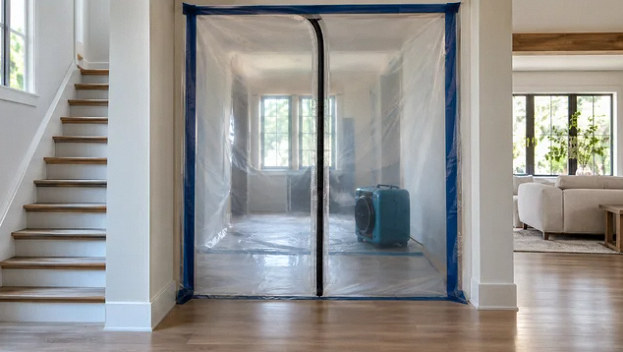
Containment and Air Filtration During Restoration
Understand drying barriers, containment, HEPA filtration, and the household arrangements that keep work areas controlled.
Read the guide
Documentation · 3 min read
Choosing a Water Restoration Contractor: What to Verify
Compare qualifications, inspection methods, documentation, and repair responsibility before choosing restoration help.
Read the guide